
Lake Wānaka rewards a carefully planned day in a small boat, provided skippers prepare for cold water, alpine weather and the Queenstown Lakes District Council’s navigation rules.
A remarkable lake, not a gentle pond
Lake Wānaka is one of New Zealand's most scenic inland boating destinations, with mountainous horizons and clear water that can look almost impossibly calm from shore. It is also a large alpine lake where the consequences of a mechanical problem, sudden wind or immersion are considerably more serious than the postcard view suggests. Queenstown Lakes District Council publishes specific boating-safety information and a Wānaka and Hāwea guide because these waters require informed operation. A small runabout is a wonderful way to appreciate the surroundings, but the route should be chosen around weather and safe return options rather than a distant landmark. Owners, hirers and passengers all benefit from recognising that this is a real navigation environment. The view is a reason to go; preparation is what makes the outing worth remembering.
Think of cold water first
Cold water changes every emergency calculation. A sunny day and a warm cockpit do not make an unplanned swim harmless, especially when the lake is deep and the nearest practical landing is far away. The council's boating guide highlights the alpine nature of these lakes. Proper lifejackets must fit each person and be suitable for the activity. Under the council's rules, a vessel less than six metres long requires everyone aboard to wear a lifejacket or personal flotation device while underway; boats of other sizes still need the appropriate equipment readily accessible. The skipper should verify the full current bylaw, particularly for children and higher-risk activities. Clothing should be selected with spray, wind and the prospect of waiting for help in mind. A light summer shirt is not an adequate safety layer on its own.
Let the forecast decide the route
Mountain lakes are influenced by terrain. Wind can strengthen or change direction, and a sheltered bay may conceal far rougher water beyond its protection. Check a forecast appropriate to Lake Wānaka and observe the lake before launching. Decide on a short outward leg first, with a time and position at which the trip will be reassessed. If the wind increases, do not continue merely because the destination is visible. On an exposed return, waves may approach from a different angle and demand slower speed than expected. Avoid a plan that requires crossing a broad reach late in the day. Good alpine boating is conservative by design: the skipper expects conditions to change and has an alternative that does not require bravado.
Understand the launch before arrival
A trailer launch is part of the outing, not an incidental detail. Queenstown Lakes District Council operates a boat-ramp permit system and states that the permit is required for each trailer and must be displayed. Check the latest fee and purchasing arrangements before driving to the lake; do not assume an old paper permit or a parking payment covers the requirement. Confirm where a ramp appropriate to the vessel is located, whether access is affected by current works or water levels, and how parking operates. Prepare the vessel in a staging area, clear the ramp promptly and use a competent crew member on the lines. Alpine scenery does not make a slippery ramp safer. A planned recovery time is just as important as the departure.
VHF, phones and the assistance plan
The council's safety guidance identifies VHF channel 66 for Lake Wānaka and channel 16 for a distress call. It also advises boaters to have more than one way to communicate. Those channels should be understood alongside the correct radio procedure and the equipment actually carried. A phone can be helpful, but mountain terrain and battery limitations make sole reliance on it unwise. In New Zealand, the council directs emergencies to 111, while the Coastguard assistance number *500 serves certain non-emergency situations by cellphone. Brief the crew on location reporting, the boat's name and what to do if the operator becomes incapacitated. Tell a responsible person ashore the intended route and expected return. Communications preparation is straightforward when done before the engine starts.
Keep close to sensible options
For an introductory small-boat day, choose an operating area with established launch access, familiar landmarks and a practical return route. This is not a suggestion to hug an unfamiliar shoreline so closely that rocks, shallow areas or private structures become a hazard. Use appropriate navigation information, give points and shallows safe clearance and do not assume a clear view reveals the underwater bottom. On a larger lake, reducing distance is often the simplest way to reduce exposure. There is much to appreciate without seeking a remote beach. A quiet cruise with the mountains as a backdrop, followed by a safe return and a walk around the Wānaka waterfront, can be a better family day than a prolonged crossing.
Moorings and shore access need permission
A structure extending into a lake may be privately owned even if it appears convenient for a short stop. The district has specific rules and information covering moorings and lake facilities. Do not assume that a jetty photographed in a travel guide is a public visitor berth. Confirm what access is authorised and whether fees, time limits or reservations apply. The same caution extends to beaches and lakeside land. An apparently empty shore may be sensitive habitat, subject to restrictions or unsuitable for landing a powered craft. If a picnic stop is important, choose a confirmed public and safe place in advance. The pleasure of having lunch ashore disappears quickly if the skipper has to improvise a risky beaching manoeuvre.
Equipment belongs to the specific craft
The council recommends checking the boat, motor and equipment before departure, carrying items such as a suitable anchor, bailer, spare fuel, torch and warm clothing, and avoiding overloading. Those are practical principles for a boat of any size, but the details should be tailored to the hull. An anchor inadequate for deep water and expected winds offers little reassurance; a spare fuel container improperly secured can become its own hazard. Inspect steering, battery terminals, engine cooling, propeller and hull fittings. Test the bilge pump if fitted. Keep loads low and secured without compromising access to safety gear. Make a short demonstration of how to stop the engine and where to find the communication device. Small boats are simple to operate only when their essential systems are reliable.
Share the lake with care
A responsible passage recognises anglers, paddlers, sailing boats, other powerboats and people enjoying the shoreline. Slow down near launching areas, beaches, jetties and where required by the bylaw. Watch for swimmers and low-profile craft against bright reflected light. Do not create unnecessary wash around moored vessels or erosion-prone banks. If towing water-sports participants, check the applicable rules, lookout requirements and safe operating areas separately. A clear-looking patch of lake is not by itself an invitation to tow at speed. Avoid noisy repeated circuits of the same sheltered bay. A low-impact small-boat visit helps protect the qualities that make Wānaka attractive and keeps the lake pleasant for many different users.
Remember the difference between a photograph and a chart
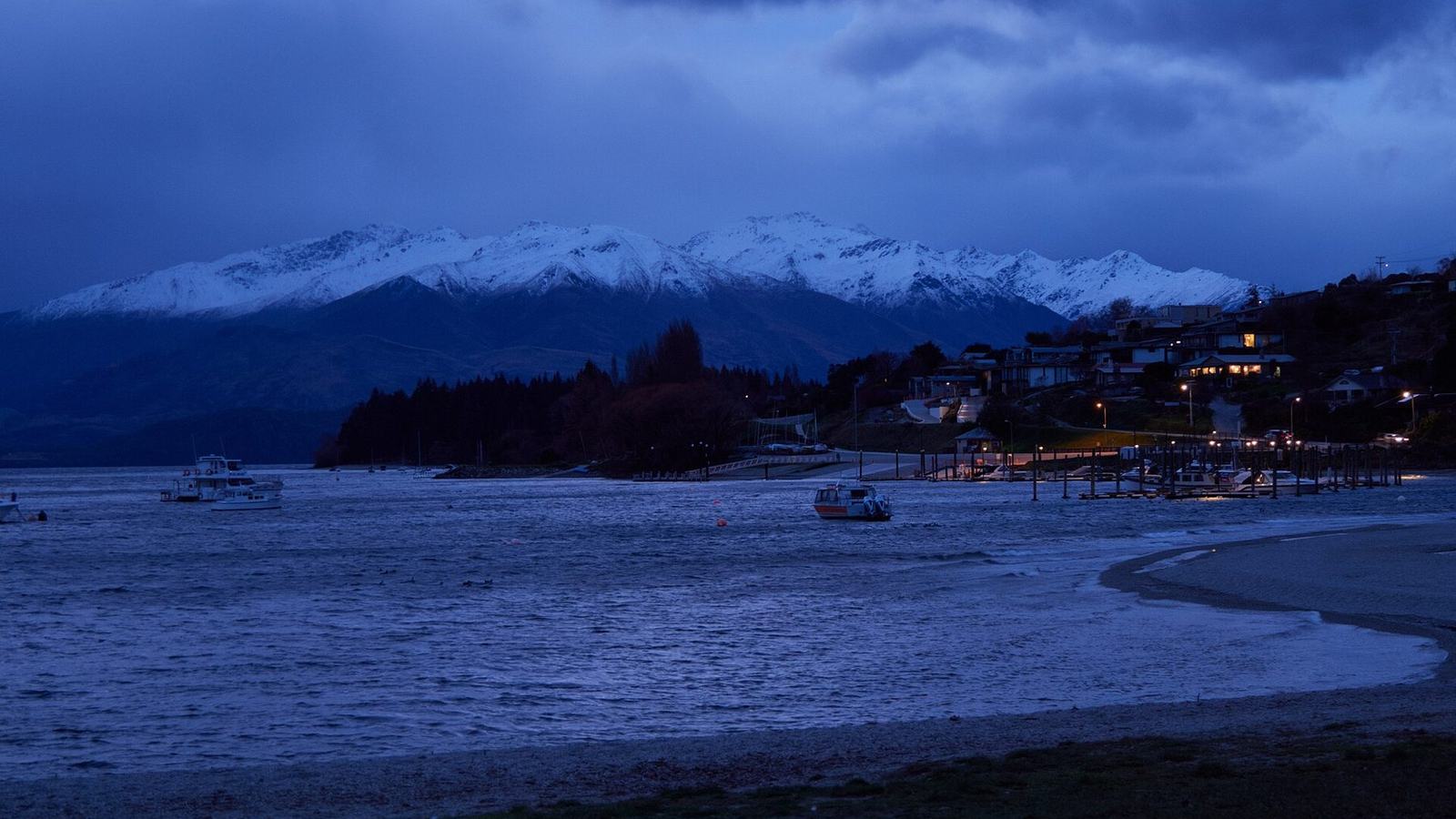
Wānaka is repeatedly photographed from dramatic viewpoints, often with peaks or islands forming a compelling composition. Those images show what makes the destination special, but they do not establish that a route to a feature is suitable for a particular small boat. Use official boating material and appropriate navigational charts to determine depths, restrictions, hazards and permitted access. The image accompanying this feature illustrates the lake landscape; it is not a navigation diagram. Familiarity with a shore view does not translate into knowledge of wind exposure on the water. If uncertain about a proposed passage, ask a qualified local operator or select a shorter route. Good judgement can be as valuable as new equipment.
Protect a pristine-looking environment
Clear water should encourage care, not complacency. Handle fuel well away from any likelihood of spillage, carry rubbish back to shore and use appropriate sanitary facilities. Respect wildlife and lake-edge vegetation, and follow any local biosecurity advice concerning moving boats or equipment between water bodies. A vessel hauled from another lake can transport unwanted organisms even when the hull appears tidy. Avoid anchoring where it may disturb sensitive habitats or obstruct others. The district's natural scenery is part of its livelihood and identity, and recreational boating should fit within that landscape. Low wake, clean gear and considerate shore access turn an attractive trip into a responsible one.
The best Wānaka trip is an easy return
Start with the current council boating guidance and bylaw, obtain the correct ramp permit and confirm the intended launch. Check lake weather, review communications and safety equipment, and agree a modest route with an early return option. Under-six-metre crews should pay particular attention to the council's mandatory lifejacket-wearing rule, while all vessels need properly sized personal flotation devices aboard. Leave a shore contact with the plan and reassess conditions repeatedly. If the wind or crew comfort argues against launching, enjoy Wānaka from land and return another day. With the right boundaries, a small pleasure boat can reveal the lake's breadth and beauty without treating the surrounding mountains as merely a backdrop for risk.
Sources and photograph credit
Official rules and emergency communication: QLDC boat-safety guidance, boat-ramp permits, and Lakes Wānaka and Hāwea boating guide. Photograph: lumoplank, Wānaka landscape, CC0 1.0; resized without cropping.
