
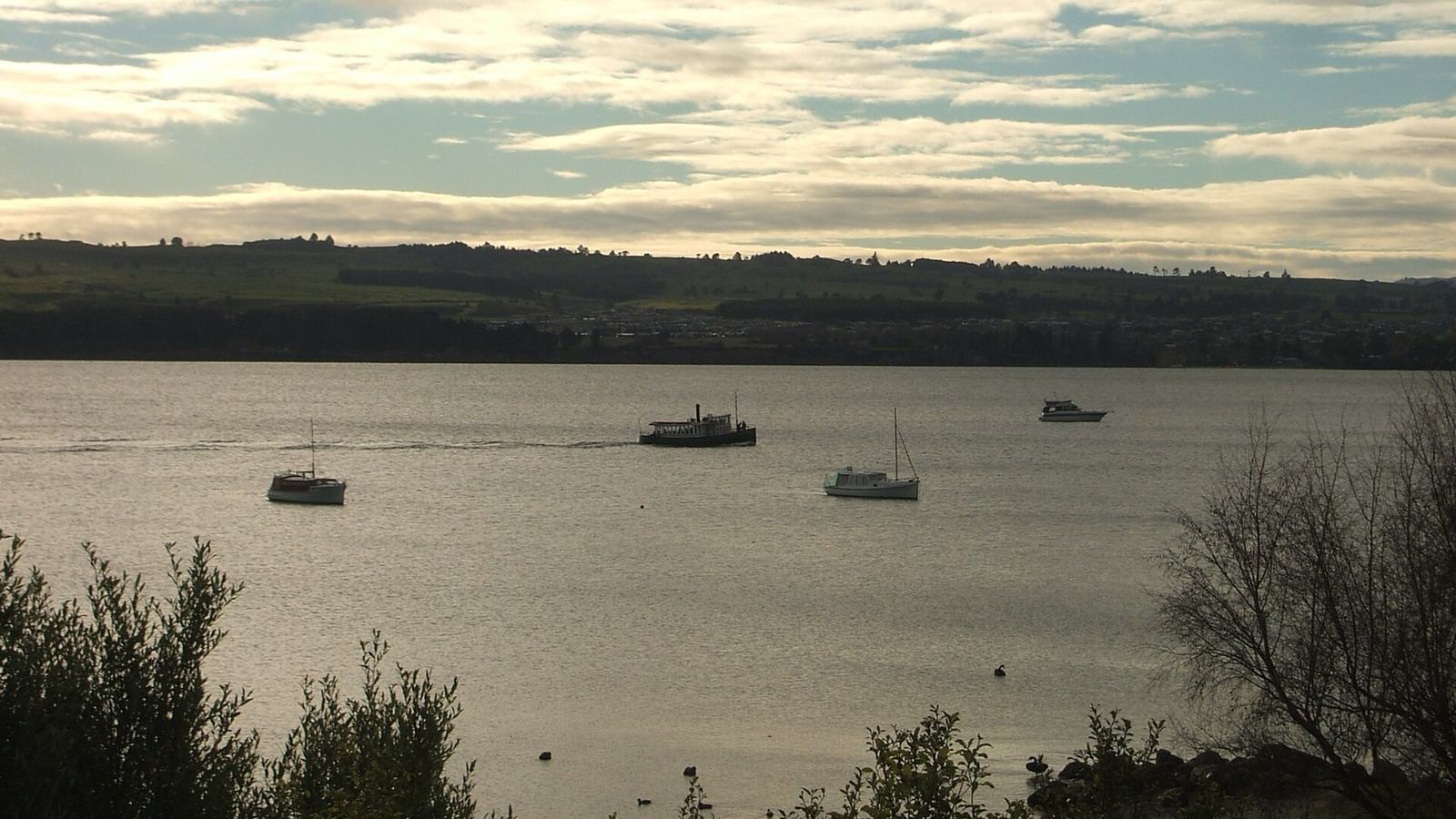
A small-boat guide to Lake Taupō's Mine Bay Māori Rock Carvings and the Western Bays, with guided kayaking, cultural heritage, safety and seasonal planning.
New Zealand's Lake Taupō offers an unusually rich combination of volcanic landscapes, sheltered inlets and cultural sights that can be experienced from a small kayak. One of its best-known destinations is the Ngātoroirangi Māori Rock Carvings at Mine Bay, which the official Taupō tourism organisation presents as an attraction reached by boat rather than by road. Guided paddling is particularly appealing because the journey brings visitors close to the lake's steep shores while allowing time to learn about the artwork and its cultural context. Farther west, tour operators offer kayaking excursions around more remote bays. These are distinct experiences, and a visitor should choose one appropriate to weather, fitness and available time instead of imagining that everything can be covered in a casual afternoon.
A giant lake shaped by volcanic history
Lake Taupō occupies a volcanic caldera in the central North Island, surrounded by mountains, forests, towns and broad stretches of open water. The lake is New Zealand's largest by surface area, an important fact for recreational paddlers who might otherwise underestimate the scale of the journey. A distant headland that seems just across the water may be much farther away than it looks. The local tourism office promotes kayaking, paddleboarding, sailing and boat trips, but the variety of activities should not be mistaken for uniform conditions. A sheltered corner suitable for a lesson can be dramatically different from the exposed lake beyond it. The weather and the crew's limits must guide the route.
Why the Mine Bay carvings attract paddlers
The Ngātoroirangi Māori Rock Carvings are located on a cliff face at Mine Bay and are recognised as a major local attraction. They are accessible from the water, which makes a kayak journey a memorable way of approaching them. A paddler can see how the artwork relates to its rocky surroundings rather than encountering it as an isolated image in a gallery. The carvings were created in the twentieth century by Māori artists led by Matahi Whakataka-Brightwell, celebrating cultural history and identity rather than representing an ancient prehistoric monument. Responsible interpretation matters: visitors should listen to knowledgeable guides, avoid touching or climbing the rock and treat the site with respect.
The benefit of a guided journey
The official Love Taupō website lists guided kayak experiences to the carvings, and this offers practical advantages to visitors who do not know the lake. A guide can select a suitable departure point and explain weather, paddling technique and how the group should approach the attraction. The operator may also share the cultural background of the artwork, giving the outing a meaning beyond the photograph everyone hopes to take. A booked excursion is not a guarantee of perfect conditions or a fixed route. Ask how cancellations are handled and whether participants need previous kayaking experience. For many travellers, local knowledge is worth more than the extra flexibility offered by independent hire.
Choosing the right size of kayak
An individual kayak can suit a confident paddler who prefers to control their own boat, while a tandem may be easier for a mixed-ability pair when handled together. The choice should reflect experience, physical fitness and the operator's assessment rather than the appealing appearance of the craft. The lake's water can be cold and wind may make progress difficult, so a stable kayak and suitable flotation are important. The crew should be briefed on turning, stopping and recovery after a capsize. Families need clear age restrictions and child-specific equipment from the provider. A paddling day is more pleasant when everyone is comfortable with the boat before setting off.
Looking at the cliffs without getting too close
The carved cliff face is impressive from water level, and it can be tempting to bring the bow right up to the rock. That is rarely necessary and may create danger through swell, boat wake or shallow obstructions. A guide should establish a sensible viewing position, with enough space for several kayaks to remain stable and for other boats to pass. Visitors should not attempt to land or scramble onto the rocks. A photograph taken from a respectful distance can show the artwork and the cliff setting more effectively than an intrusive close-up. Sharing space with other groups requires patience, particularly during busy holiday periods.
A different outing in the Western Bays
Love Taupō also promotes guided adventures in the Western Bays, where parts of the shoreline are mainly accessible by water. Tour descriptions refer to cliffs, secluded bays, caves and waterfall scenery, often combining a support vessel with a kayaking component. This is not the same as paddling independently from Taupō township to a remote shoreline. The distances involved may be significant, and access may depend on a commercial boat transfer. Visitors should distinguish between a half-day taster, a full-day guided excursion and private kayak hire before booking. The chosen format affects how much time is actually spent paddling and what the crew must be capable of doing.
Kinloch as a gateway to the western water
Kinloch is a lakeside settlement associated with access to the Western Bays, with marina facilities and tour departures described by regional tourism providers. The setting can offer an attractive alternative to the busier town waterfront. A visitor should not assume, however, that a marina berth or boat ramp provides unrestricted access for every paddlecraft. Hire operators and guided tour companies set their own departure arrangements, and private boat owners must investigate the appropriate launch and parking facilities. The shoreline beyond Kinloch can appear sheltered in photographs but may still be exposed to changing conditions. The safest itinerary is the one supported by an operator's current local advice.
Understanding the lake's wind and waves
Large inland lakes can develop steep, short-period waves that are particularly unpleasant for a kayak. Lake Taupō's size means a wind direction that appears harmless in one bay can create a much more demanding crossing elsewhere. A responsible paddler checks the latest marine or lake forecast, observes conditions at the water and maintains a conservative turnaround point. A guide may cancel a tour even when the sun is shining, because an approaching change could affect the return. Travellers should respect such decisions. The attraction will remain for another suitable day, while a difficult return into rising wind can turn an enjoyable outing into an emergency.
Cold water changes the safety calculation
Water temperature should never be judged by how warm the air feels on the shore. Immersion can affect breathing and muscle control, making a properly fitted lifejacket or buoyancy aid essential. Clothing should be suitable for getting wet and for the conditions that might follow a capsize, not solely for posing beside a kayak. Carry a dry change of clothes where appropriate, secure valuables and know the group's emergency procedure. In a guided trip, the operator should describe how participants will be assisted if a kayak overturns. Independent paddlers need an equally realistic rescue plan and should avoid routes beyond their ability to recover safely.
A cultural visit rather than a race
The paddling journey to Mine Bay is worth experiencing slowly. The view of the lake, the cliff and the artwork creates a sequence that cannot be reproduced by simply looking at a photograph online. Visitors should allow time to listen to the explanation of the carvings and appreciate the difference between modern carving dates and the much older cultural traditions they represent. It is inappropriate to treat the site as a challenge to reach as quickly as possible or to promote climbing the cliff. A respectful tour can help visitors understand the artwork while supporting operators who share reliable local knowledge.
Photography from a moving craft
Kayaking offers excellent photographic opportunities, but a camera can be a hazard if the paddler stops watching where the boat is drifting. Protect phones and cameras from water, and take photographs when the guide or crew has established a safe position. Do not move dangerously close to the carving or other kayaks merely to exclude them from the frame. A wider photograph that includes the surrounding lake may communicate the scale of the site better. Visitors should also be mindful of other groups waiting to view the carvings. The experience is shared, and safe boat handling should remain more important than collecting an uninterrupted photograph.
Combining kayaking with time in Taupō town
A guided outing may occupy only part of a day, leaving visitors time to explore the town waterfront, cafés or other attractions in the region. This makes the lake appealing for a wider holiday rather than an isolated watersports session. Plan the schedule with enough flexibility for weather delays. Booking a long-distance transfer immediately after the planned return can create pressure if the tour takes longer or conditions require changes. Families with younger children may prefer a short introductory activity on a calm shoreline instead of a more demanding trip to Mine Bay. The most successful itinerary is one that matches the people travelling.
Preventing the spread of freshwater pests
New Zealand places considerable importance on freshwater biosecurity, and visitors should follow current Check Clean Dry practices when moving kayaking equipment between waterways. Hulls, seats, paddles and footwear can retain moisture and transport unwanted organisms. A hire company usually manages its own equipment, but visitors bringing private craft remain responsible for proper cleaning and drying. This matters particularly on a holiday involving multiple lakes and rivers. The Department of Conservation and regional authorities publish guidance that should be checked before travelling. A paddling holiday depends on the water remaining healthy, so biosecurity is a practical part of enjoying the destination rather than an administrative afterthought.
Choosing between kayaking and a passenger cruise
The carvings can also be reached on commercial cruises, which may be more appropriate for visitors who do not want to paddle or who have mobility or fitness limitations. A cruise and a kayak tour can provide different perspectives, and neither needs to be presented as the only authentic experience. Kayaking gives closer physical engagement with the water and a sense of having made the journey under one's own power. A larger passenger boat may offer shelter and the ability to include people of varied ages. Check actual departure points, schedules and the accessibility arrangements with individual providers. A mixed group can still share the cultural destination even if its members choose different boats.
Seasonal availability and careful booking
This guide is published in November, and commercial tour schedules can vary with demand and weather. Readers should verify that a chosen operator is running on their intended date rather than assume that every experience listed on a tourism site is available daily. Ask about the meeting location, transport, included equipment, time on the water, minimum age and cancellation arrangements. The Western Bays tours may involve different logistics from a Mine Bay outing. Booking with a clear understanding of those differences helps prevent an exhausting or disappointing day. Weather remains a valid reason to change a plan, even after reservations have been made.
Discovering Taupō at kayak speed
Lake Taupō rewards paddlers with a combination of large-scale volcanic scenery and culturally important destinations that can be appreciated slowly. The Mine Bay carvings provide a meaningful focus for a guided trip, while the Western Bays offer a different sort of landscape exploration, sometimes involving support vessels and more remote water. Choose the outing that suits the crew, respect the cultural site and prepare for cold water and changeable wind. The journey does not need to be long to be memorable. In a well-managed kayak, a visitor can experience the lake's natural setting without sacrificing the care it deserves.
Sources and photograph attribution
Official destination and boating guidance: Love Taupō — Official Taupō Kayaking Guide. Current access, rules, weather and reservations must be checked independently before travel.
Photograph: Frozen-Coke-Rocks ( talk ) ( Uploads ) — “Boats on Lake Taupo.jpg” (Public domain), via Wikimedia Commons. Resized and converted to JPEG for editorial display. Source: https://commons.wikimedia.org/wiki/File:Boats_on_Lake_Taupo.jpg. Licence: https://creativecommons.org/publicdomain/mark/1.0/. Original rights remain with the credited creator or as specified by the source and licence.
