
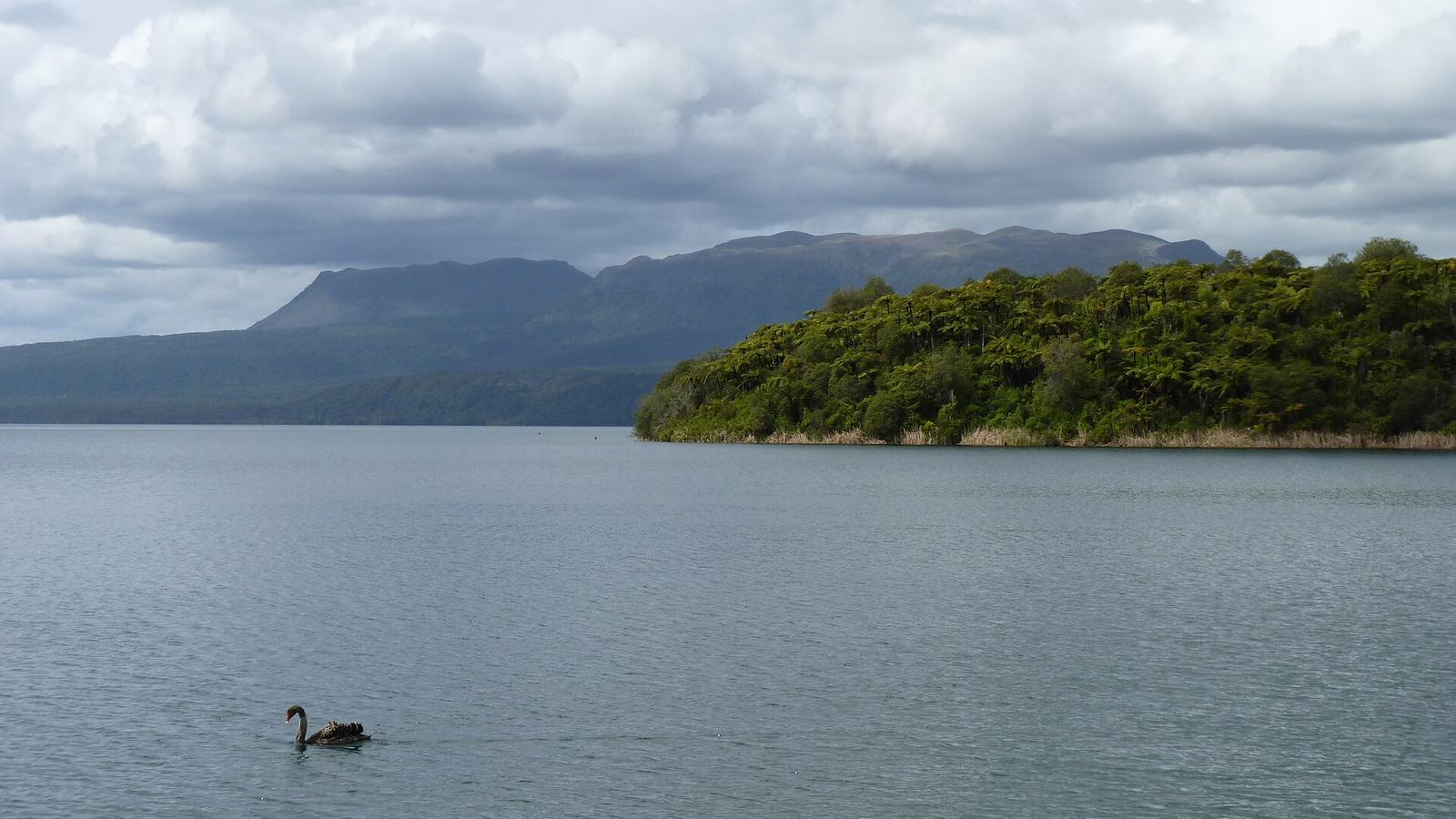
Plan an under-12-metre boat or kayak trip on Lake Tarawera, including Stoney Point, the boat-accessible Hot Water Beach and volcanic-lake safety.
A volcanic lake where the destination matters
Lake Tarawera in New Zealand’s Rotorua region invites small-boat exploration, but it is not the kind of place where a long circuit is automatically the best plan. The lake sits in a volcanic landscape with distinctive shorelines, walking routes and places of cultural significance. Rotorua Lakes Council identifies public recreation areas and ramp access, while the Department of Conservation manages important land attractions around the lake. The right outing begins with a choice: an easy local paddle, a motorboat excursion with a shore stop, or a journey towards the much-discussed Hot Water Beach. These are different levels of commitment and should not be grouped together simply because they all involve a small boat.
The council is the starting point
Rotorua Lakes Council’s Lake Tarawera page describes lakeside reserves, including Stoney Point, and identifies boating facilities. It is a better starting point than an old itinerary that may assume a particular ramp, jetty or shoreline is always usable. Read the current council lake-information page for levels, navigational hazards and freshwater biosecurity before leaving home. A visitor with a trailer should also check local parking, launching access and whether the planned ramp matches the vessel. An inflatable or kayak may be easier to handle, but still needs a permitted place to launch and a safe way to return. Give the shore logistics as much thought as the destination on the map.
Stoney Point as a practical anchor
Stoney Point is singled out by the council as a popular place for swimming and boating, with a ramp and reserve facilities. That makes it a possible focus for a modest family day, provided current access and local notices support the plan. A waterfront reserve is a public recreation area, not an unlimited parking or launching guarantee. Arrive with equipment organised, make room for other users and check the actual wind before committing to the water. The nearby shore can be an enjoyable destination in its own right, particularly for families with children or people who prefer to alternate between boating and picnicking. A short cruise from a secure base is often enough.
Hot Water Beach takes more planning
Rotorua Lakes Council notes that the lake’s Hot Water Beach is managed by the Department of Conservation and can be accessed by boat or by walking the Tarawera Trail, which it describes as taking about five to six hours. The name sounds like an easy attraction, but boat access does not eliminate the hazards of a remote landing. A visitor must assess forecast wind, available daylight, landing conditions and rules for the area. Do not assume that every boat can safely beach there, that a commercial water taxi will be available on demand or that camping is automatically permitted. Verify current DOC access advice and reservations where appropriate before heading out.
The shoreline is not a uniform landing stage
A small craft can approach shore more easily than a large yacht, but this advantage can become a problem if the skipper assumes every beach is suitable. The lake has vegetation, rocks, variable gradients and areas managed for conservation or cultural reasons. A sandy patch visible from the boat may have little room above the waterline, while a rocky section can damage an inflatable. Inspect conditions from a safe distance and use designated landing places. If a shore stop appears awkward, remain afloat and return to the known launch. Photographing the landscape from a respectful distance is preferable to damaging a bank or entering an area where public access is restricted.
A weather window is an actual decision
Lake Tarawera can appear wonderfully calm in photographs, but a broad inland lake may develop wind-driven chop that taxes an open boat. A small outboard-powered vessel can cover ground faster than a kayak, yet both can be exposed when a sheltered inlet gives way to open water. Check the forecast and observe conditions at the ramp. Plan for the return leg, including the possibility of working into a headwind. If the crew is inexperienced or travelling with children, use a shorter route close to a reliable shore instead of a distant destination. Turn-back decisions should be made before leaving rather than after the weather has changed.
Kayaks belong to a different timetable
A kayaker might prefer Lake Tarawera’s quieter margins, but a motorboat itinerary cannot simply be copied into a paddling schedule. Even a short-looking crossing becomes demanding if wind increases or the crew must paddle against chop. Choose a launch and route with a realistic sheltered return, carry appropriate flotation and communication, and leave time for breaks. Avoid depending on the presence of other boats for a rescue. If several paddlers travel together, agree on the slowest member’s pace and a common turn-around point. The pleasure of a paddle is often in the nearshore details rather than in reaching the farthest attraction shown on a tourist map.
The national five-knot protections
Maritime New Zealand explains the need to obey general navigation rules and five-knot limits in specified situations, such as near people in the water and other close-quarters circumstances. Check the current wording and local regional bylaws rather than assuming that an open lake means unrestricted speed everywhere. A safe speed also depends on visibility, traffic and weather even where no special numerical limit applies. Give swimmers, paddlers and anchored boats room, and avoid a wake that could unsettle someone approaching a bank. The legal responsibility lies with the skipper of the actual boat, not with a general holiday guide.
Freshwater biosecurity before and after
The Rotorua Lakes Council lake-information page states that public-ramp users must certify their boats and trailers are free of freshwater pests under the regional plan. That responsibility applies to paddling equipment as well as motorboats. Check, Clean, Dry procedures are particularly important when visiting several Rotorua lakes on one holiday. A kayak carried between lakes can transport organisms or trapped water just as a larger craft can. Inspect and clean hulls, trailer parts, ropes and wet gear according to current official guidance. Keep a record of the required certification and allow time for it before using the launch. Protecting the water is part of a responsible trip, not an administrative nuisance.
Respect protected and culturally significant areas
The Tarawera landscape carries profound cultural importance, as well as scientific and ecological interest linked to its volcanic setting. The lake and its surrounding lands should not be treated as unclaimed recreation space. Follow iwi and land-manager guidance, observe access controls and avoid entering areas beyond marked tracks. A shore excursion to a geothermal feature is not a reason to improvise a path or dig into delicate ground. Protected plants and wildlife can be affected by surprisingly small disturbances from a beached boat. Treat local instructions as part of the destination’s identity and make room for other people whose relationships with this place predate any visitor’s holiday.
Fishing requires its own checks
Angling from a small boat can be an enjoyable way to experience a Rotorua lake, but fishing rights, seasons, locations and permitted methods are governed separately from general boating access. Verify the appropriate current fisheries rules and licence requirements before carrying gear. Do not anchor where you obstruct other craft or where a shift in wind could push the boat into a hazardous bank. Secure hooks so passengers can move safely, and keep a proper lookout even when fishing activity is absorbing. A skipper who is handling a line still has responsibility for avoiding collisions and keeping the boat within safe water.
A one-day itinerary with a safe margin
For an introductory visit, make the ramp and weather check the first activity of the day. Begin at a suitable council-listed facility, confirm biosecurity compliance and take a short shakedown run or paddle while remaining close to shore. If the conditions and crew are comfortable, extend the route towards one preselected feature; do not add several distant stops merely because the morning started calmly. Set a time at which you will turn back regardless of progress. Leave daylight for retrieval and the drive home, and enjoy a shore picnic if the weather makes further boating unattractive. This slower itinerary can deliver more pleasure with far less stress.
Why the Hot Water Beach option is different
A trip that aims specifically for Hot Water Beach should involve a separate level of preparation. Confirm with DOC what activities and access are currently allowed, whether there are booking requirements and how the shoreline should be approached. Check conditions for the actual type of vessel, including the possibility that a kayak landing is easier in one weather direction but much harder on departure. Carry enough water, food, warm clothing and communications for a delay. Do not depend on finding sheltered mooring or assistance at the destination. For an uncertain forecast, the best decision may be to admire the distant shore from a closer, safer route.
What to do if conditions change
Weather, lake level or a public notice can make even a well-researched plan unsuitable. Rotorua Lakes Council directs visitors to current regional lake data and hazard information, while Maritime NZ publishes general safety rules and before-you-go guidance. Check these shortly before departure. If a ramp is unsuitable, if biosecurity certification cannot be completed or if wind is above the crew’s comfortable range, postpone the water portion. The Rotorua region has worthwhile land-based experiences, and it is better to return another day than make an avoidable emergency call. Good seamanship includes a realistic alternative plan before the engine starts.
A small boat is enough to understand the place
Lake Tarawera’s attraction does not require a large yacht or a long passage. A quiet hour near a permitted shore, a carefully planned family outing from Stoney Point or an appropriately prepared visit towards Hot Water Beach can all reveal a different side of the volcanic landscape. The essential choices are modest: check official access and rules, select a route for the actual crew and avoid damaging the margins. A boat under twelve metres can feel close to the place without overwhelming it. When the trip ends with safety, respect and curiosity intact, the lake has delivered more than any rushed circuit could.
Sources and photograph credit
Verified primary sources: Primary source: Rotorua Lakes Council; Council lake levels, navigation hazards and biosecurity; Maritime NZ navigation rules; Maritime NZ before-you-go guidance. Photograph: Lake Tarawera, New Zealand (1).JPG, Michal Klajban, Wikimedia Commons, licensed under CC BY-SA 4.0. Archival photograph resized for the website.

Source
Rotorua Lakes Council