
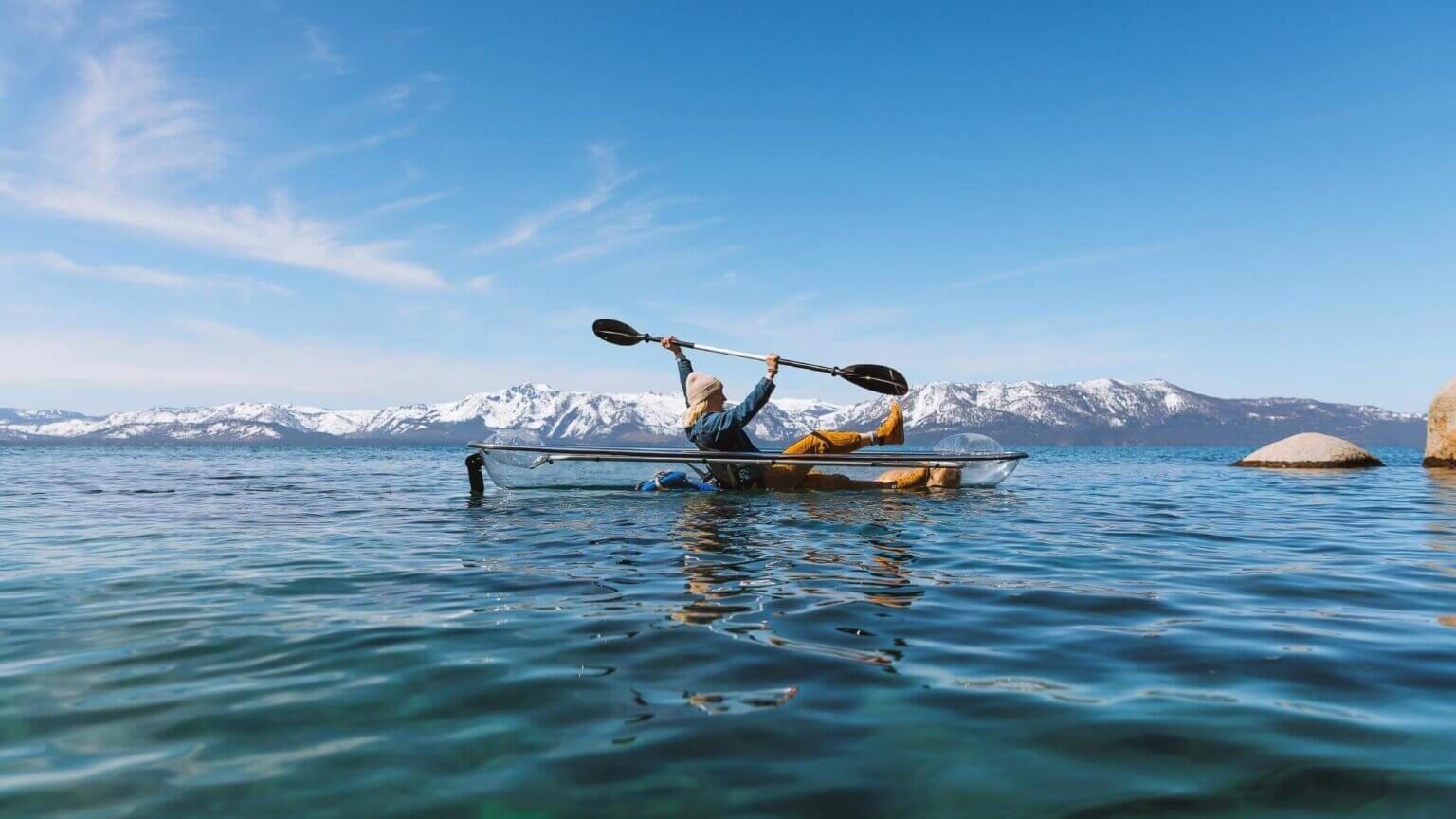
Lake Tahoe's remarkably clear water and mountain backdrop make it a superb kayaking destination, provided paddlers respect sudden wind changes, cold water and local launch guidance.
The appeal of paddling a mountain lake
Lake Tahoe can look almost tropical on a calm, sunny morning, when sunlight penetrates the extraordinarily clear water and boulders show beneath a kayak. The setting, however, belongs to a high-altitude mountain environment rather than a sheltered summer lagoon. The beauty of kayaking here comes from the contrast between quiet coves, forested slopes and deep blue open water that extends towards distant peaks.
A small craft allows visitors to experience shoreline detail at a human pace. The splash of a paddle, the changing colour of the lakebed and the scale of the granite rocks are easy to miss from a faster motorboat. For families and beginners, a short guided outing can be more satisfying than a long exposed crossing, especially when the goal is to enjoy clear water and photographs rather than cover a large distance.
Visit Lake Tahoe highlights options around areas such as Emerald Bay, the south shore and D.L. Bliss State Park, where the variety of beaches and headlands creates very different paddling experiences. That choice is part of the attraction, but it also requires homework. An appealing photograph of a beach does not confirm that launching is currently allowed there or that the wind will be manageable when a paddler needs to return.
Selecting the right shoreline experience
Emerald Bay is an understandable favourite, with dramatic landforms and sheltered-looking water that can reward careful early-day planning. It can also attract considerable boating activity in popular periods, so a kayak outing needs a route that accounts for traffic and any local restrictions. Treat the bay as a place to explore patiently, allowing time to stop and appreciate the landscape without obstructing other users.
Farther along the western shore, D.L. Bliss State Park includes access around Lester Beach, which the tourism authority identifies as a kayak launching area. Parking and trailer rules are relevant, and the destination's visitor information notes that trailers are not allowed in certain day-use lots. Checking the current park access arrangements before departure avoids arriving with a boat that cannot be unloaded where expected.
Clear-kayak excursions provide another way to enjoy the shoreline's transparency, particularly for those who like to observe underwater rock formations. They are organised experiences rather than a guarantee that the lakebed will remain visible at every depth or in all lighting conditions. Ask operators about group size, route length, guide qualifications and their approach to changing weather before booking.
Cold water and alpine weather are not minor details
Lake Tahoe's visual clarity can disguise water temperatures that are much less forgiving than the scenery suggests. Unexpected immersion is a serious concern, particularly when a paddler is far from shore or inadequately dressed for the season. A properly fitted personal flotation device, appropriate thermal protection and knowledge of self-rescue techniques are central to a sensible trip, even during a pleasant warm afternoon.
Wind is another decisive factor, because open sections of the lake can develop difficult conditions relatively quickly. Beginning early may help in some periods, but no time of day guarantees a calm return. Check a reliable local forecast and be willing to shorten or cancel an excursion if the route would leave inexperienced paddlers exposed, or if the group cannot comfortably make progress against an unexpected headwind.
Altitude and strong sunlight add to the day's demands. Pack enough drinking water, protect skin and eyes, and remember that glare off the water can make a short outing surprisingly tiring. Keep essentials in a dry bag attached securely to the boat, and communicate a return plan to someone ashore. The objective is to finish still enjoying the experience, not to discover the limits of the group midway across open water.
Launch etiquette and protecting the lake
Lake Tahoe's ecosystem is particularly sensitive to the movement of aquatic invasive species between lakes and rivers. Visitors bringing their own equipment should review the applicable inspection and decontamination requirements, including guidance for kayaks and paddleboards. Draining, cleaning and drying equipment is a useful habit, but it does not replace any legally required inspection or the specific instructions in force at the launch site.
Popular beaches serve swimmers, powerboats, paddleboards and other kayakers, so clear communication matters. Avoid lingering in traffic channels or approaching motorised vessels unpredictably, and give wildlife space along the shoreline. Respect private waterfront property and any no-landing areas, and pack out every piece of litter, however small it seems in such a large landscape.
The most rewarding Lake Tahoe outing may be modest: a carefully chosen sheltered route, a pause over clear rock-strewn water and an unhurried return before conditions change. This is a destination where the ability to say no to a longer crossing is part of good boating. Plan for the mountain lake that exists today, not the perfectly flat blue expanse pictured in a brochure. An experienced guide or reputable outfitter can help visitors choose a launch that is suited to their abilities. The decision should always be revised if weather, access or the group's confidence changes.