
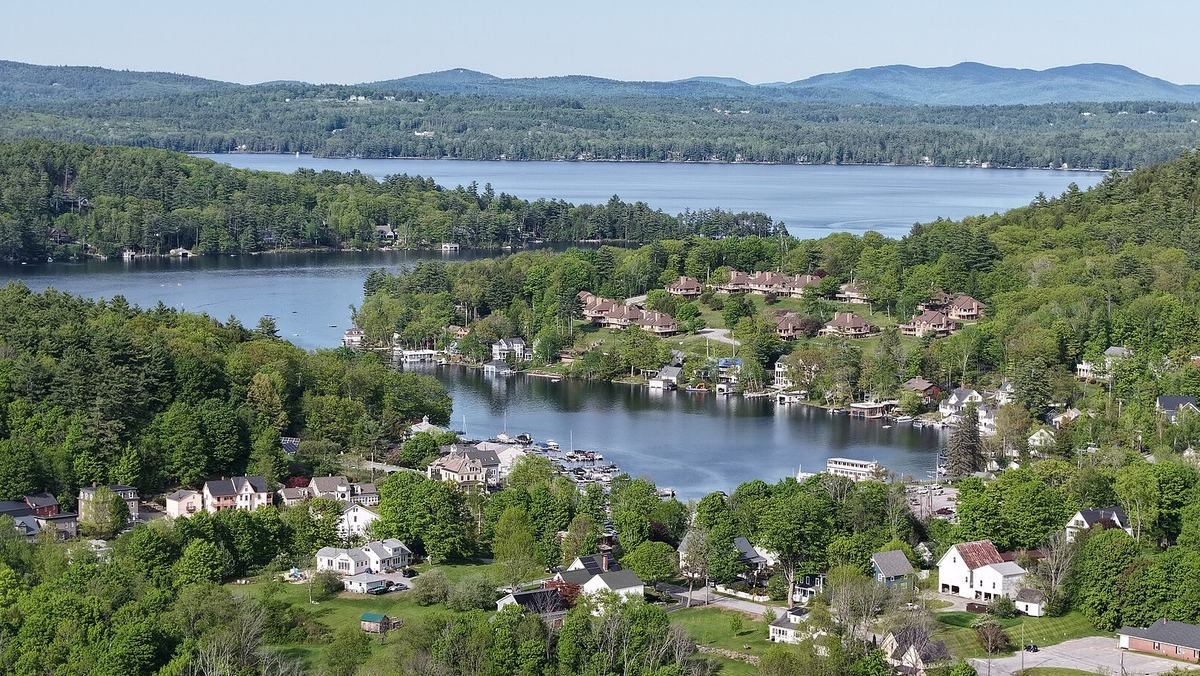
A Lake Sunapee canoeing guide to Mount Sunapee State Park's official rentals, public harbour and state beach access, responsible family kayaking and lake safety.
An approachable lake with different ways to go afloat
Lake Sunapee in western New Hampshire offers the pleasures of a New England freshwater holiday without requiring visitors to arrive with their own boat. Mount Sunapee State Park provides a recognised beach setting, and the New Hampshire Division of Parks and Recreation lists canoes, kayaks and stand-up paddleboards among the craft available for hire at Mount Sunapee. The lake's harbours and other public launches provide further options for people travelling with a boat, although the arrangements differ from one access point to another.
It is important to distinguish a summer rental programme from an assurance of current availability. The official state-park listing establishes the type of recreation offered, not a guarantee that equipment can be collected on a particular November date. For a future warm-weather visit, check the operating period, access conditions and weather with the park before setting out. The best small-boat experience begins with a straightforward departure and an achievable route.
Mount Sunapee State Beach as a first destination
Mount Sunapee State Park Beach in Newbury is a particularly useful introduction for families because it combines a formal recreation area with lake access. New Hampshire's official state-park pages describe the beach facilities, and state tourism guidance identifies the park as a family destination. A visitor who wants to paddle for an hour rather than spend a whole day towing a trailer can begin by checking the state's rental information.
The presence of a beach does not mean every section is a designated boat launch. Swimming zones, changing use rules and staff instructions must be respected. Before bringing equipment to the water, ask where paddlers may enter, where boats can be left while passengers prepare and whether other users have priority. A calm, orderly launch will make the trip considerably more pleasant than carrying a canoe through a crowded swimming area.
The state park's rental craft
The New Hampshire Division of Parks and Recreation maintains an official boat-rental schedule identifying the craft available at participating parks. For Mount Sunapee, its table marks canoes, kayaks and SUPs as available and does not list pedal boats or rowboats at that location. This specificity is useful: a holidaymaker should not assume the facility rents every kind of small craft because it has a lakefront.
State-published rental prices can change, so discuss the current rates and availability directly rather than relying on a screenshot or an old guidebook. Ask whether a flotation device and paddle are provided, what identification is needed and how the operator handles poor weather. An inexperienced group should select a stable craft suited to its abilities rather than choose equipment solely by how fast it appears to travel.
Canoe, kayak or paddleboard?
A canoe offers a seated way to explore the water and can be convenient for a pair of adults or an appropriately supervised family. It needs coordinated paddling and careful weight distribution. A kayak may provide a more compact solo experience, while a stand-up paddleboard gives a different view of the scenery in suitable calm conditions. Each vessel has limitations, particularly when the wind increases or the water becomes uncomfortable.
The decision should be based on the least experienced participant. A confident adult might enjoy a solo kayak while a child is more comfortable on a short tandem or canoe outing with supervision. A SUP is not a universal substitute for a kayak because an upright paddler can be more exposed to wind. Discuss actual conditions with the provider and choose a route close enough to shore for a simple return.
Sunapee Harbor as a separate boating centre
The village of Sunapee Harbor forms another focus of lake activity. The local harbour organisation describes its public parks and boat launch, while the Lake Sunapee Protective Association identifies a range of access points around the water. A visitor who plans to bring a privately owned craft should therefore select a specific launch rather than treat the state beach and the village harbour as interchangeable facilities.
Harbor approaches can be busy and may have limited trailer parking. Check directions, fees, authorised use and any restrictions before towing. Arrive prepared to launch promptly without blocking the space used by other vehicles. A family renting at the state beach may have no need to visit the harbour at all; the two options suit different kinds of outing.
Launch choices for private boats
The Lake Sunapee Protective Association's watershed information identifies public ramps around the lake, including Sunapee Harbor, Georges Mills, the state beach and Blodgett Landing, along with a privately operated access option. Their existence does not guarantee that every ramp is appropriate for a particular vessel or open at the moment of arrival. Water level, ramp condition, parking and local operating rules can change the practical choice.
Private owners should confirm the appropriate facility with the local authority and check current state boating rules. A kayak carried by hand may need a different access arrangement from a trailer boat with a deep hull. Never attempt to launch across sensitive vegetation or a private bank simply because a recognised ramp is crowded. Proper access protects the lake and avoids a difficult recovery later.
The value of a short shoreline paddle
For a first visit, the ideal outing may involve only a small section of Lake Sunapee. Begin near the chosen recognised launch, practise controlling the craft and agree on a visible turnaround point. A modest route lets the party appreciate the mountain backdrop and wooded shore without making a commitment to cross open water. It also leaves time to return when the group is still enjoying the experience.
A lake can appear smaller from a map than it feels from a kayak. Wind, waves and the shape of the shoreline influence the effort needed to travel. A short out-and-back is easier to adapt than a route that depends on reaching another harbour or a distant island. The objective is not distance covered but an enjoyable outing completed safely.
Watching weather change
Freshwater lakes can develop uncomfortable conditions when the wind strengthens, even if the morning began calm. A canoe travelling outward with a following breeze may be considerably harder to paddle home. Check the local forecast and observe the actual surface before launching. The advice of a park employee or experienced rental operator is particularly useful for visitors unfamiliar with the lake.
If small waves build or a participant becomes tired, turn back promptly. The fact that rental equipment has been paid for should not influence a safety decision. A group that has chosen a short route can simply return to shore and enjoy the rest of the park. In colder seasons, rental service may be unavailable, and water temperature can make an unexpected immersion dangerous.
Safety equipment for families
A properly fitted personal flotation device is fundamental for every passenger. New Hampshire's boating rules determine when lifejackets must be worn, while a rental operator may impose stricter requirements. Children need correctly sized equipment, and parents should check buckles and straps rather than assume a jacket is adequate because it is supplied. Carry suitable clothing, water, sun protection and a means of communication.
Agree on simple rules before launching. Nobody should stand suddenly in a canoe, lean beyond the gunwale for a photograph or attempt to change seats while the boat is under way. In a tandem kayak, partners should communicate about steering and rest stops. A clear turnaround signal prevents one person from feeling pressured to continue after becoming uncomfortable.
A lake shared with faster boats
Lake Sunapee is used by powered recreational vessels and sailors as well as paddlers. A kayak moving close to the shore may still encounter wakes from boats travelling farther out. Keep a lookout and make movements predictable. Avoid stopping in a narrow channel or on an approach used by larger craft. The slower boat should not assume every skipper has seen it against a bright reflective surface.
Powered-boat operators have corresponding responsibilities to observe local speed, distance and wake rules. Courtesy matters around harbours and ramps, where several users may be manoeuvring at low speed. A small-craft holiday becomes more relaxing when paddlers allow plenty of room and do not feel compelled to pass through congested areas.
Protecting Sunapee's water
The Lake Sunapee Protective Association works to conserve the watershed, and its guidance highlights the importance of protecting the lake from aquatic invasive species. People moving private canoes, kayaks or trailers between waterbodies should follow applicable inspection, cleaning, draining and drying rules. Even a small craft can carry unwanted plants or organisms in water trapped around equipment.
Respect vegetation along the shoreline and do not land in an area simply because it looks secluded. Carry rubbish back to the correct facilities, secure loose items and keep a respectful distance from wildlife. A quiet paddle can be a low-impact way to enjoy nature, but only when the people aboard behave as carefully as the craft itself appears to move.
An afternoon ashore
The state beach and surrounding area provide a natural setting for a mixed family day. A short morning paddle might be followed by lunch or a walk, leaving the group free to enjoy the lake from land. Some visitors will be interested in the nearby mountain or regional heritage, while others may prefer time at the beach. A flexible schedule reduces the temptation to extend a boating trip when the weather is changing.
If travelling with friends whose interests differ, establish a meeting point before launching. Those staying on shore should know the intended route and expected return time. The day's success need not depend on every person boarding the same canoe or remaining afloat for the full rental period.
A seasonal programme needs verification
New Hampshire State Parks publishes a current boat-rental table and information about Mount Sunapee State Park. These are the authoritative starting points for finding suitable equipment and identifying the state beach, but rental operations are seasonal and subject to staffing, weather and park conditions. Confirm the actual hire period, booking arrangements and permitted launch area before travelling. November visitors should not assume an ordinary summer rental is operating.
For private boat owners, the town's harbour information and the Lake Sunapee Protective Association's launch inventory are helpful supplements. Check the particular ramp and current local rules independently. A named launch in a historical or static source is not a guarantee that a trailer can be used safely on any given date.
A modest boat and a large landscape
Lake Sunapee demonstrates the appeal of an uncomplicated inland holiday. A canoe or kayak permits quiet movement past wooded shores, while the state beach offers a practical place for many visitors to begin. Those with private boats have additional options, but they also need to take responsibility for access, navigation and the condition of the vessel.
With a suitable weather window, properly fitted flotation equipment and a conservative route, a short paddle can be the centrepiece of a memorable day. The pleasure lies not in travelling as far as possible but in seeing a classic New Hampshire lake from a human-powered perspective.
Sources and photograph attribution
Official destination and boating guidance: New Hampshire Division of Parks and Recreation — Official Boat Rentals. Current access, rules, weather and reservations must be checked independently before travel.
Photograph: Ascended Dreamer — “Lake Sunapee NH 5-22-26.jpg” (CC BY-SA 4.0), via Wikimedia Commons. Resized to JPEG 1200×800 for editorial display. Source: https://commons.wikimedia.org/wiki/File:Lake_Sunapee_NH_5-22-26.jpg. Licence: https://creativecommons.org/licenses/by-sa/4.0. Original rights remain with the credited creator or as specified by the source and licence.
