
A guide to Lake St Clair in Tasmania's national park, combining scenic lake transport, responsibly planned paddling, Cynthia Bay, Echo Point and alpine walks.
Lake St Clair in Tasmania offers a different boating holiday from a warm coastal anchorage. Set within Cradle Mountain–Lake St Clair National Park, this deep alpine lake is framed by wooded slopes, mountain ridges and walking routes that connect water with Tasmania's wider wilderness landscape. The Tasmanian Parks and Wildlife Service identifies the Aboriginal name *leeawuleena*, commonly translated as “sleeping water,” a description that suits the lake on a still day but should not be mistaken for a promise of calm conditions. For travellers planning a small-craft or lake-boat experience, the appeal lies in combining a journey across the water with thoughtful shore exploration, wildlife awareness and respect for a protected World Heritage environment.
The lake and its national park setting
Lake St Clair forms part of a landscape internationally recognised for its natural heritage. Forest, high-country weather and long glacially shaped waters give the setting a distinctive atmosphere. A small boat changes how this landscape is experienced: mountains that look distant from a viewpoint form the backdrop to an extended shoreline, while a landing may open the way to quiet forest walks. Yet a national park is not simply an unrestricted playground. Visitors need to follow approved access routes, current park notices and the rules for any boating activity. The value of the setting depends on keeping its natural and cultural features intact.
The meaning of leeawuleena
The park's official information records *leeawuleena* as an Aboriginal name associated with Lake St Clair and translates it as sleeping water. This is a reminder that the landscape has a cultural history extending far beyond contemporary tourism. Visitors should approach that history with respect and seek interpretation from authoritative Tasmanian Aboriginal and park sources rather than turning a name into a romanticised story. Cultural significance is part of understanding a place, just as geology and ecology are. On the water, the name also encourages a useful distinction between a calm appearance and the lake's capacity to change with wind and weather.
Cynthia Bay is a practical visitor reference point
The southern end of the lake around Cynthia Bay is a familiar gateway for visitors, with the Lake St Clair Visitor Centre and access to walking routes. It is a sensible starting place for researching a trip because park staff and official information can clarify current services, closures and rules. Travellers should not assume a slipway or launching opportunity shown on an old map remains available in the same form. Confirm whether a private boat may be launched, what permits or biosecurity precautions apply and where parking and equipment handling are permitted. These questions should be answered before bringing a trailer or carrying a kayak on a long drive.
A ferry journey can provide the small-boat experience
Not every visitor needs to operate a craft independently. A commercial lake ferry or authorised boat service can make it possible to see more of Lake St Clair without taking responsibility for navigating open alpine water. The availability, route and timetable of such a service must be checked with the operator, and weather may affect departures. A boat journey can add perspective to the mountains and forests while also connecting with selected walking opportunities. Travellers should confirm whether the service is transport-only or part of an organised experience and whether any walk requires a one-way ticket or advance arrangement.
Why the open water deserves respect
A lake in a mountain setting can feel sheltered at the shore while developing strong wind and waves farther out. Long stretches of open water, cold temperatures and limited landing opportunities may place a paddler under considerable pressure. Conditions can change quickly, so a leisure visitor should use a local forecast and obtain advice specific to Lake St Clair. A small open boat needs a route suited to the crew's skill and equipment, not merely a destination that appears close on a map. Cold-water immersion is a serious risk even on a fine Tasmanian summer day. Wearing suitable flotation equipment is a minimum precaution.
Kayaking requires more than hiring a paddle
Tasmania's Parks and Wildlife Service provides general advice for rafting and kayaking within the state's parks, including checking equipment, assessing weather and gaining experience before attempting demanding outings. Such guidance is particularly relevant to an alpine lake. Anyone wishing to paddle Lake St Clair should first confirm permitted areas, local launch access and any current restrictions with the park. The fact that kayaking is discussed elsewhere within Cradle Mountain–Lake St Clair National Park does not mean all lakes share identical access rules. A guided or professionally supported experience may be a better option than setting off alone on unfamiliar open water.
Walking pairs naturally with a lake visit
Lake St Clair is well known as the southern end of the Overland Track, Tasmania's celebrated multi-day walking journey. A casual visitor need not undertake that route to appreciate the forest and lakeside scenery. The park offers shorter walks around the visitor area, and some routes can connect with lake transport depending on current operations. Such pairings appeal to groups with mixed interests: one person may prefer a short scenic cruise while another wants to explore the forest on foot. Choose a walk according to fitness and available daylight, and check track conditions rather than relying on a holiday photograph.
Echo Point offers another perspective
Echo Point is associated with a lakeside walkers' hut and a particularly forested part of the Lake St Clair setting. Its appeal is less about shops or a busy waterfront and more about the feeling of entering a remote, mossy landscape. A visitor considering a ferry-assisted walk must confirm current access, landing arrangements and whether the intended return route is reasonable for the group. Small landing stages are not always suitable for a private boat, and overnight facilities may be subject to park rules. The forest's quiet atmosphere is best enjoyed with sufficient time and appropriate clothing.
The weather can change the character of a day
Tasmania's alpine environment does not offer consistently warm, calm boating weather simply because the Southern Hemisphere is approaching summer. Cloud, rain and cold wind can move through mountain valleys and make exposed water uncomfortable. A good itinerary includes an indoor alternative, such as interpretation at the visitor centre where available, or a short walk that can be curtailed safely. Travellers should bring waterproof layers and allow time to dry clothing between activities. A boat trip postponed for weather should be seen as prudent planning rather than a ruined holiday.
A place for watching the landscape slowly
The reward of being on Lake St Clair is often visual rather than mechanical. Clouds can move across dark slopes, bands of forest rise from the water and the shoreline may appear quite different as the viewing angle changes. A small boat lets passengers notice these transitions without needing a complicated activity programme. The experience works especially well for people interested in nature photography, provided cameras are secured and operating them does not compromise safety. Taking fewer photographs and spending more time looking can be equally rewarding. The aim is to appreciate the environment, not race through a checklist of viewpoints.
Wildlife belongs at a distance
Protected Tasmanian landscapes support native plants and animals that may be sensitive to human disturbance. Visitors should remain on permitted tracks, avoid feeding wildlife and keep a respectful distance from birds along the shore. A small boat can sometimes approach a quiet place almost unnoticed, but that is not an invitation to land wherever wildlife appears interesting. Use binoculars for observation rather than entering habitat. Fishing, if pursued, requires checking applicable licences and park restrictions. A responsible boating holiday treats the lake's ecological health as part of the experience, not as an inconvenience.
Watercraft cleaning supports conservation
Moving a canoe, kayak or trailer between waterways can spread organisms and contaminants, even when no visible plants remain attached. Visitors bringing private equipment should follow Tasmania's current biosecurity and park advice, including any inspection or cleaning requirements. Watercraft and boots should be cleaned appropriately before arrival and after departure. Do not dispose of bait, fish or aquarium organisms in the lake. Protected freshwater systems are particularly worth safeguarding because a single careless introduction can have lasting consequences. Renting suitable local equipment, where an authorised provider exists, may reduce some travel logistics but does not replace responsible use.
What a lakeside overnight stay adds
An overnight visit can transform a rushed day trip into a more relaxed encounter with the lake. Staying near the park allows time to walk, observe changing light and perhaps take an authorised boat journey without a long return drive on the same day. Accommodation and camping availability should be checked separately from any boat service. Booked visitors must still be prepared for cold evenings and variable weather. A simple itinerary with one main activity each day often leaves more room for enjoyment than trying to combine a major walk, boat trip and lengthy road journey.
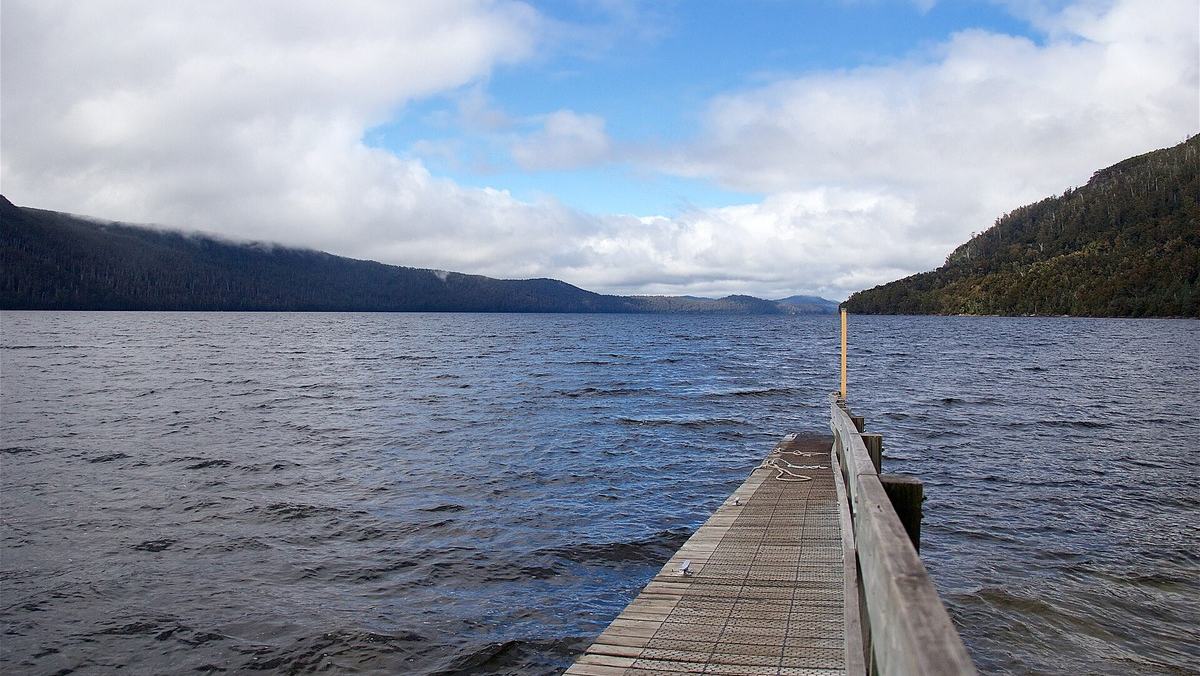
A photograph from Echo Point shows the real setting
The accompanying documentary photograph, “Lake St Clair from Echo Point,” was made by photographer Jeanetienne and is published on Wikimedia Commons under Creative Commons Attribution-ShareAlike 4.0. It depicts an actual lakeside view, with a timber landing and mountain slopes beyond. The original file and licence are credited. It does not establish a current ferry stop, safe landing for a private boat or the conditions on 23 November 2026. Its value is the trustworthy portrayal of the lake's landscape. Operational information must come from Tasmania's park authority and the relevant approved service providers.
Planning a thoughtful Lake St Clair visit
Start with the Parks and Wildlife Service's official Lake St Clair page, review current notices and decide whether the group is better served by a lake ferry, guided paddling where permitted or shore-based walking. Check transport, accommodation and season-specific opening information before committing to the trip. If bringing a private watercraft, obtain explicit advice on launching, safety and any permits. Pack for mountain conditions even during summer and be prepared to rearrange the programme for wind or rain. Lake St Clair offers a memorable form of boating lifestyle in which the surroundings matter far more than the boat's size.
Sources and photograph attribution
Official destination and boating guidance: Tasmania Parks and Wildlife Service — Lake St Clair. Current access, rules, weather and reservations must be checked independently before travel.
Photograph: Jeanetienne — “Lake St Clair from Echo Point.jpg” (CC BY-SA 4.0), via Wikimedia Commons. Resized to JPEG 1200×800 for editorial display. Source: https://commons.wikimedia.org/wiki/File:Lake_St_Clair_from_Echo_Point.jpg. Licence: https://creativecommons.org/licenses/by-sa/4.0. Original rights remain with the credited creator or as specified by the source and licence.
