
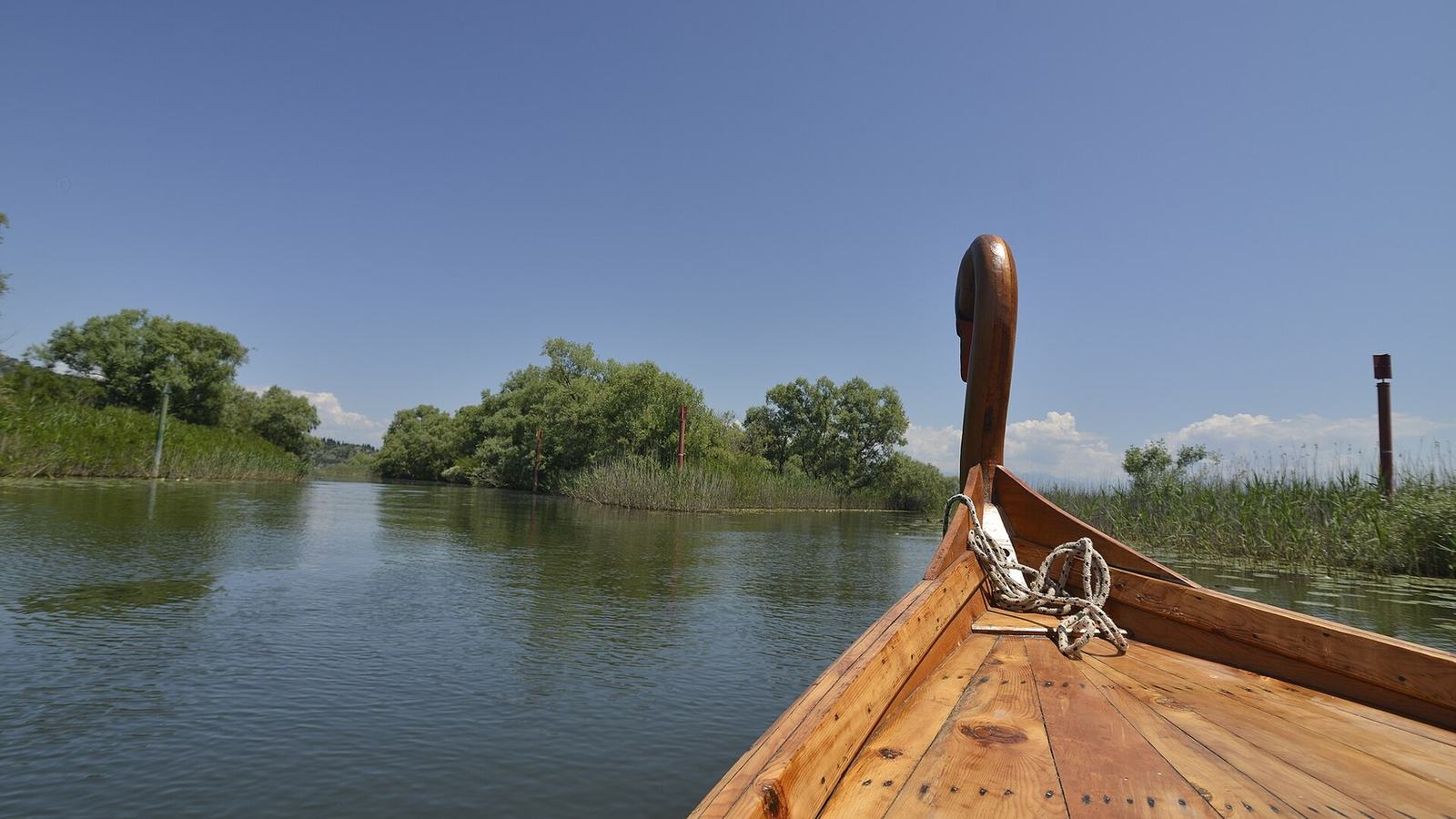
A Montenegro kayaking guide to Lake Skadar National Park, with Virpazar, Vranjina, wetlands, wildlife and small-craft safety and access guidance.
Lake Skadar, shared by Montenegro and Albania, is an extraordinary destination for slow boating, with broad open water, quiet channels, wetlands and villages whose waterfronts have long been connected to fishing and local travel. Montenegro's official tourism organisation presents kayaking as one of the most rewarding ways to explore the national park, with rentals available at Virpazar and at the Vranjina visitor centre. The opportunity is compelling for anyone who prefers observing a landscape rather than moving quickly through it. But a large protected lake is not simply a playground: park fees, wildlife sensitivities, changing water levels and the need for a realistic route all influence a safe and satisfying day afloat.
A lake that changes with the seasons
Official Montenegro tourism information describes Lake Skadar as covering approximately 370 square kilometres in summer and expanding considerably during wetter winter conditions. That variation helps explain why the shoreline can feel almost like a different place between seasons. Water extends into low-lying areas, channels change character and reedbeds can dominate the view. A visitor planning from a photograph should not assume that a particular landing or route is unchanged throughout the year. The setting invites exploration, but changing levels and local restrictions make current advice essential. A short guided outing can offer a better introduction than attempting to navigate unfamiliar wetland passages independently.
Why a kayak suits this environment
A kayak moves quietly and has a low viewpoint, allowing visitors to appreciate the contrast between open water and sheltered reed-lined channels. The official tourism site specifically recommends kayaking for discovering the lake, and local operators have developed trips for visitors who may not own a boat. This does not mean every waterway can be entered freely or that a paddler should approach wildlife as closely as possible. The craft's advantage is a small physical presence and a slow pace, both of which are most valuable when used responsibly. The ideal route offers interesting scenery while keeping the crew within a distance it can comfortably paddle back.
Virpazar as a place to begin
Virpazar is a well-known gateway to Lake Skadar National Park, with tourism facilities and boat operators providing opportunities to see the wetlands. Montenegro's official travel information identifies it as the most visited settlement on the lake and a place to hire boats or kayaks. That makes it a practical starting point for someone travelling without their own equipment. A visitor should contact a reputable operator in advance to check what is included in the hire, where the boat must be returned and which park fees apply. The charm of a small lakeside settlement is best enjoyed with a clear plan, not by rushing toward the water without understanding local arrangements.
The Vranjina visitor centre option
The official destination guide also identifies the visitor centre at Vranjina as a place where visitors can arrange a kayak or boat. That provides an alternative to focusing every outing on Virpazar, and may be useful for travellers approaching the lake from a different direction. Availability, seasonal opening hours and transport still need to be confirmed. A visitor centre is a good place to ask about sensitive habitats, wildlife restrictions and suitable short routes. It may also help explain how the national park is managed and what visitors can do to avoid disturbance. A paddler should treat local staff as a source of current guidance rather than rely exclusively on an old online itinerary.
The importance of national park rules
Lake Skadar became a national park on the Montenegrin side in 1983, according to the official tourism description. Conservation is therefore part of the reason for visiting, rather than an inconvenience that gets in the way of boating. Park entry charges and rules can apply to organised excursions and independent visitors, and some areas may have additional restrictions. Anyone arranging a kayak should check current requirements directly with the national park or operator instead of treating a fee in an older advertisement as permanent. A properly authorised day helps support the protection of habitats while giving the visitor a clearer understanding of where boating is appropriate.
Birdwatching from a respectful distance
Lake Skadar is especially associated with birdlife, including waterbirds that depend on its wetlands. The official tourism organisation highlights birdwatching as one of the park's principal attractions. A quiet kayak can be an effective observation platform, but its shallow draft should not encourage paddling into nesting areas or following birds that move away. Use binoculars, remain outside restricted zones and allow wildlife to behave naturally. A bird repeatedly taking flight in response to an approaching boat is a sign that the crew may be too close. The pleasure comes from observing the birds in their habitat rather than forcing an encounter for a photograph.
Reeds and narrow channels
Reedbeds can make a journey feel intimate even on a very large lake. They also present practical navigation issues because channels may look similar and sheltered water can obscure how far a paddler has travelled. A guide who knows the local water is valuable when a route includes complex wetland passages. Solo visitors should establish clear boundaries and carry appropriate navigation information rather than rely on following another boat by chance. Avoid pushing through vegetation or creating shortcuts that damage habitat. The most attractive-looking gap is not necessarily a public navigation channel, and changing water levels can make a route used earlier in the season unsuitable later.
Open-water exposure deserves respect
Much of Lake Skadar is broad enough for wind to build uncomfortable waves, which can be especially difficult for a kayak returning against a headwind. The weather may also vary between channels and open reaches. A plan developed on a quiet sheltered shore should include the possibility that the middle of the lake will feel very different. Ask local operators about the forecast, wind direction and the length of any proposed crossing. An inexperienced group should stay within a safe operating area and turn back early when conditions change. A guided short route may offer more enjoyment and less risk than attempting to reach a distant viewpoint simply because it looks close on a map.
Boat excursions for non-paddlers
The official Montenegro tourism guide suggests organised boat excursions as an alternative for visitors who do not want the physical effort of kayaking. Such trips may include scenery, cultural stops and a look at island or lakeside heritage, depending on the operator and current park rules. This can be useful for families with young children or travellers whose mobility limits their ability to use a kayak. A boat tour also introduces the area to visitors considering an independent paddling trip later. It is worth asking about the vessel's safety equipment, exact itinerary and whether the experience includes park admission rather than selecting purely on the basis of a short advertised duration.
The cultural landscape around the water
Lake Skadar is more than a natural habitat. Villages, older waterfront routes, fishing traditions and historic buildings contribute to its sense of place. Montenegro's tourism material mentions smaller islands with monasteries and villages around the wider lake district. A boat outing can reveal how the settlements relate to the water, while a stop ashore provides a different perspective. But access to cultural sites may depend on their operators, permitted landing places and whether a guided visit is required. A kayak should not be landed on a private or sensitive shore simply because an old building is visible. Local advice can help travellers combine a nature outing with a respectful cultural visit.
Rijeka Crnojevića as a separate excursion
The tourism organisation recommends Rijeka Crnojevića as another place that helps visitors understand the region, including opportunities to explore the surrounding countryside by bicycle. It is tempting to imagine reaching every attractive settlement by kayak, but that may involve a far longer or more complicated journey than a casual holiday paddle. A visitor should plan a road or guided excursion separately when appropriate, rather than assume that all points of interest are connected by easy navigable water. That flexibility allows time to appreciate villages and viewpoints without making the boat trip unnecessarily ambitious. The lake is large enough to reward several different outings.
Hiring equipment with care
A proper hire handover should establish the craft's size and suitability, the paddler's intended route, flotation equipment and the operator's emergency contact arrangements. Tandem kayaks can be useful for couples or families, while single kayaks may suit experienced paddlers who prefer independent control. The best choice is not automatically the boat with the most space or the lowest rental price. Ask whether the company provides dry bags, a current map and guidance on weather cancellation. If a guided tour is chosen, confirm the group size and whether the guide remains with participants throughout the trip. Being comfortable with the equipment helps the visitor focus on the surroundings.
Sun, warmth and drinking water
Summer in the region can bring strong sunshine, and reflections from the lake can increase exposure during a long paddle. A hat, sunscreen, drinking water and clothing that protects against sun are practical essentials. Heat also affects how much effort a crew can sustain; a route that seems short in cool weather may become tiring in midday sunshine. The crew should allow time for rest and avoid using all its water before the return leg. Sudden changes in weather remain possible even during a warm season. A paddler should prepare for both sun and unexpected wind or rain, rather than interpreting a beautiful morning as a guarantee for the whole day.
Taking photographs from a moving kayak
The lakescape is naturally photogenic, with mountain shapes, islands, reeds and changing light across the surface. Photography is best handled by a passenger in a stable tandem craft or during a safe stop away from traffic and sensitive wildlife. A solo paddler should not release the paddle or drift into an unknown channel merely to frame a picture. Waterproof cases help preserve cameras and phones, but they do not make an unstable position safe. If the aim is bird photography, binoculars and a longer lens can reduce the temptation to approach animals too closely. The most memorable images are those made without changing the scene or putting a crew member at risk.
Respecting the shared international lake
Lake Skadar crosses the Montenegro–Albania border, and a visitor should not assume that a boat hired on one side can freely enter the other country's waters. International boundaries, park regulations and the operator's permissions may affect any such journey. For a casual day trip, remaining within an agreed local area is generally simpler and less uncertain than trying to navigate toward a distant shore. Anyone contemplating a longer passage needs reliable advice about border procedures and permitted routes. The lake's international character is part of its fascination, but a recreational kayak should not be treated as an exemption from ordinary legal requirements.
A quiet journey with conservation at its centre
Lake Skadar offers a rare opportunity to enjoy wetland scenery at small-boat speed while discovering a landscape shaped by wildlife and human history. Virpazar and Vranjina provide practical starting points for organised paddling, and guided boat trips can accommodate visitors who prefer not to kayak. The most important decisions are to understand park access, select a manageable route and avoid disturbing sensitive habitats. An hour of careful observation in a quiet channel can be a more meaningful experience than a long crossing with little time to look around. For leisure boaters, the lake rewards patience, local knowledge and a willingness to let nature set the pace.
Sources and photograph attribution
Official destination and boating guidance: National Tourism Organisation of Montenegro — Skadar Lake National Park. Current access, rules, weather and reservations must be checked independently before travel.
Photograph: Miomir Magdevski — “Skadar Lake, Montenegro 09.jpg” (CC BY-SA 4.0), via Wikimedia Commons. Resized and converted to JPEG for editorial display. Source: https://commons.wikimedia.org/wiki/File:Skadar_Lake,_Montenegro_09.jpg. Licence: https://creativecommons.org/licenses/by-sa/4.0. Original rights remain with the credited creator or as specified by the source and licence.
