
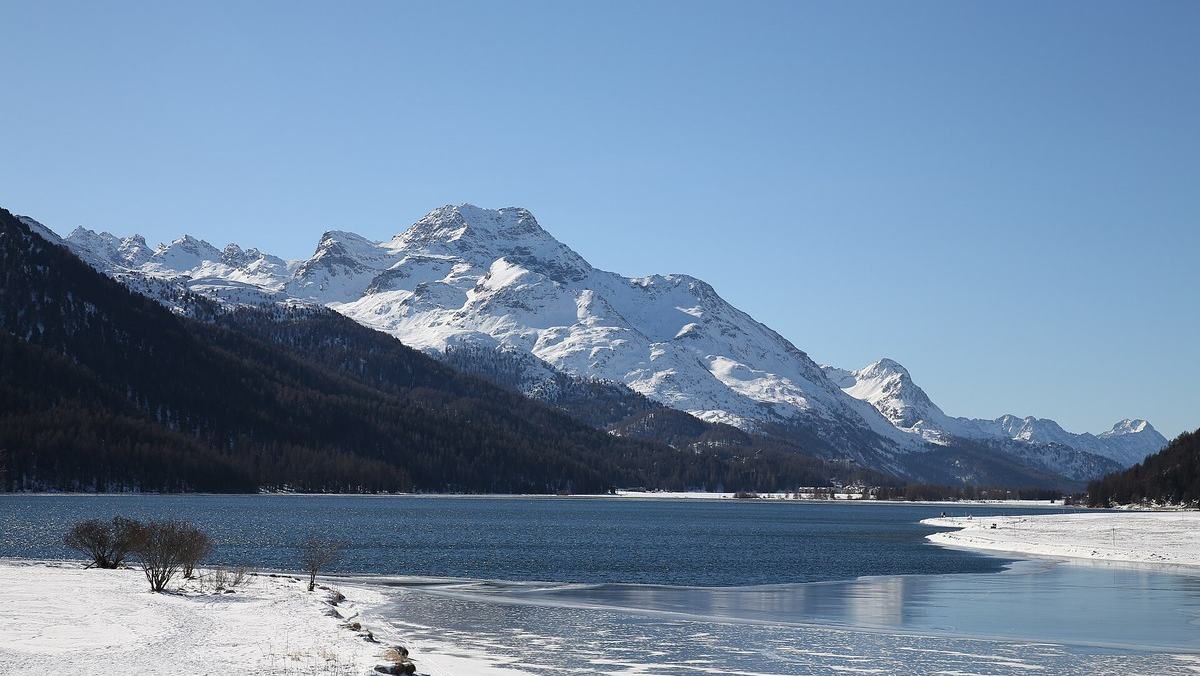
A practical Upper Engadin guide to Lake Silvaplana's calmer SUP mornings, Maloja wind, public watersports access points, rental options and alpine lake precautions.
An Engadin lake with two contrasting personalities
Lake Silvaplana in Switzerland's Upper Engadin offers a particularly vivid lesson in how the same water can support very different kinds of small-craft recreation. At one time of day the surface can be calm enough for a relaxed stand-up paddleboard outing; later, the Maloja wind can draw windsurfers, kiteboarders and other wind-powered sports to the lake. The municipality's official tourism pages describe both uses, while its SUP guidance points visitors toward recognised local schools and equipment providers. For a beginner, the distinction is not merely atmospheric. Choosing the appropriate part of the day can determine whether an outing is comfortable or too demanding to enjoy.
Silvaplana is a high-altitude mountain destination, not a sheltered resort lagoon. Its dramatic landscape, clear water and strong local winds require practical judgment even on a seemingly simple board. November is not the season to assume summer rental services are operating. The official watersports information describes a summer programme, and anyone considering a future visit must confirm actual availability, permitted access and conditions immediately beforehand.
The Maloja wind shapes a day on the water
Silvaplana is widely associated with the Maloja wind, a recurring local airflow that helps make the lake attractive to wind sports. The official Silvaplana tourism website explains how visitors take advantage of the wind and how the morning can present a different experience. A stand-up paddler who is content in calm conditions may find the same section difficult when the breeze builds. This is why the time chosen for a rental is a meaningful part of the itinerary, not simply a matter of personal convenience.
Before hiring a board, ask a local instructor what the forecast suggests for the specific date. A general summer pattern does not promise wind on every afternoon or calm on every morning. Wind direction can also influence which shore offers the easiest return. A safe plan leaves enough time to turn back before changes become uncomfortable. Visitors who are principally interested in windsurfing should choose equipment and instruction suited to that activity rather than treating a recreational SUP as an alternative in stronger conditions.
Where visitors may launch
The lake's shore includes protected areas, and not every attractive stretch of grass or beach is a permitted launch. The official Surf Center listing identifies three public access points for watersports around the Silvaplana shore: the beach beside the surf-centre parking area, an access at the campsite near the harbour's end, and the beach at Camping Silvaplana. Visitors should verify current access arrangements before unloading equipment. A recognised point offers a much better starting position than attempting to reach the water over vegetation.
For somebody bringing a privately owned paddleboard, this is a key distinction. A portable inflatable board does not grant permission to enter the lake from any convenient bank. The route between car and water should be planned so that the board can be carried without disturbing sensitive ground or blocking other visitors. Follow the signs and local directions even if an improvised entry appears quicker. Responsible use of the limited access areas helps preserve the quiet and natural character that makes the destination attractive.
Hiring a board and preparing for the first paddle
Silvaplana's tourism guidance refers visitors to local providers for SUP boards, paddles and lifejackets. This offers a practical option for travellers who would rather not transport bulky equipment across Switzerland. Before booking, confirm the actual type and size of board, the hire duration, the level of instruction included and whether a buoyancy aid will be supplied. Not every board is equally stable or suitable for a first-time paddler; a broad recreational design is generally more forgiving than specialised performance equipment.
A short introductory session can be worthwhile. Learning how to stand, turn, kneel and recover after falling makes the outing both safer and more enjoyable. An instructor can explain where beginners should remain and which areas are used by other sports. A visitor should not assume that being a confident swimmer is enough to handle sudden cold-water immersion or a strong offshore breeze. Equipment familiarisation is part of a real boating experience, not an administrative step to skip.
High altitude changes expectations
The Upper Engadin's altitude contributes to the appeal of the landscape but also to conditions that can catch a visitor unprepared. Sunshine may feel intense beside the water, yet wind and immersion can make a paddler cold quickly. Water temperature should be checked rather than estimated from air temperature or a holiday photograph. Suitable clothing, sun protection and a properly fitted personal flotation device are important. A novice should consider whether a wetsuit or other protection is appropriate to the day's conditions.
Physical effort is also worth considering. Visitors who have spent little time at altitude may find an unexpectedly long paddle more tiring than the same distance at home. The best first outing should be brief, close to a permitted launch and flexible enough to end as soon as somebody becomes uncomfortable. Choosing a shorter circuit is not a compromise when the main purpose is to experience the setting and return with confidence.
A calm morning itinerary
A practical beginner's morning begins by checking the latest forecast and the local watersports notices. Arrive early enough to talk with the provider, fit equipment and examine the water before launching. Choose a sheltered section within the operator's permitted area and remain near enough to the departure point for an uncomplicated return. Spend the first minutes practising balance and turning instead of making immediate progress toward a distant view.
If conditions remain suitable, a short shoreline excursion can reveal changing reflections and views toward the surrounding peaks. A companion who prefers not to paddle can enjoy the scenery from a recognised shore path while maintaining an agreed meeting point. Do not base the outing around reaching an island or distant feature merely because it is visible from shore. At Silvaplana, the character of the water and the experience of moving quietly across it are reason enough to be there.
When wind sports take over
As wind becomes more prominent, visitors may see windsurfers, kiteboarders and other specialist craft using sections of the lake. They travel at very different speeds from a beginner on a SUP, and their equipment can require space to manoeuvre. A recreational paddler should respect designated watersports zones and avoid crossing the path of faster boards when an alternative is available. Staying clear of lines, foils and sails is a matter of safety rather than simply courtesy.
People observing from shore can enjoy the display without interrupting the athletes' launch areas. Photographing a dramatic manoeuvre from a vulnerable position in the water is unwise. If the wind strengthens beyond the skill of the SUP party, return promptly to shore rather than attempting to push on. A different activity after lunch may make the day more interesting than insisting on several hours of one sport.
Reading the landscape from a small craft
The lake's surface offers an intimate perspective on the Upper Engadin landscape. From a paddleboard, the view is low and close to the water, with the mountain backdrop stretching beyond wooded and grassy shorelines. The simplest pleasure is often the ability to slow down, listen to the paddle and notice how reflected colour changes with the light. This is a very different kind of experience from travelling quickly across the lake in a powered vessel.
Photographs are easier to take safely from a stable, stationary position. Secure the camera or phone and avoid leaning beyond the board to capture a reflection. A paddler who stops to look backward should first make sure there is enough space from other users. No image is worth a sudden fall into cold water or a collision. The mountain scenery is not going anywhere, and a measured pace gives a visitor ample opportunity to appreciate it.
A place shared by several sports
Silvaplana's watersports identity depends on cooperation among people with different abilities and ambitions. A novice paddler might be taking a first lesson while experienced windsurfers are preparing for fast runs across the lake. The two groups should not compete for the same narrow launch space. Follow the local zoning and advice from surf-school staff, keep equipment clear of paths, and allow other people sufficient room to prepare and recover their craft.
When taking a rest, move out of active traffic rather than stopping in the middle of an approach. Inflatable boards and paddles should not be left across shared access areas where they could cause a trip. A small amount of organisation makes the shore more welcoming to families, spectators and other lake users. The attraction of a high-quality watersports destination is partly that visitors can enjoy different activities without interfering with one another.
Wildlife and protected shorelines
The official access restrictions are also a reminder that the lakeshore is an environment to be protected. Avoid trampling plants to create a shortcut, do not launch through reeds and do not disturb wildlife for a photograph. A board permits quiet travel, but quietness does not justify approaching animals closely. Observe birds and shore activity at a distance and leave the habitat as undisturbed as possible.
Carry all waste back to an appropriate bin and keep small items secured. A lost plastic bottle or food wrapper is no less harmful because the outing lasts only an hour. Owners moving private boards between lakes should clean and dry them where recommended to reduce the risk of carrying unwanted organisms. These habits are easy to incorporate into a recreational trip and protect the quality of future visits.
Weather decisions for families
Families should assess the ability of the least experienced participant, not the most athletic adult. A child may enjoy balancing near shore but be unwilling or unable to paddle against a developing wind. Set clear boundaries before launching, agree how to communicate and keep the group together. Never treat a board as a reliable child-transport system without confirming its rated capacity and the provider's safety rules.
A forecast of increasing wind is a reason to schedule SUP earlier, not to rush a late departure. If the conditions are unsuitable, stay ashore or choose a different activity. Swimming ability is only one part of water safety; fatigue, cold and difficulty remounting a board can create serious problems. A thoughtful itinerary includes an alternative plan so that no one feels pressure to continue merely because hire equipment has been paid for.
Exploring Silvaplana beyond the water
The surrounding villages and trails can make a short SUP outing part of a fuller Engadin holiday. A morning on the lake might be followed by lunch or a walk, while another day could be reserved for a more advanced watersports session with instruction. This is often preferable to fitting several demanding activities into the same afternoon. Visitors spending more than a day in the region can observe the wind pattern before selecting the most suitable rental window.
Accommodation and transport should be planned with the actual watersports access in mind. A scenic lakeside road does not necessarily lead to a legal launch, and parking arrangements can change with local events and seasonal demand. Ask the operator where to arrive and how far equipment must be carried. Being properly organised on land gives the group more time to enjoy the water.
Summer dates should be verified
The municipality publishes seasonal watersports information rather than a guarantee of service throughout the calendar year. Its 2026 material refers to a summer operating period and explains the seasonal wind pattern. As a result, a November visitor should not assume that board rental or instruction is available. Confirm the latest opening dates, equipment inventory, teaching schedules and weather restrictions with the provider. If a trip depends on a particular activity, check again shortly before travel.
The same approach applies to private boards. Make sure the chosen public access remains open and that a planned route follows current local rules. A summer guide is an invitation to plan carefully, not a real-time assurance that the water is safe on any given day. Alpine conditions deserve more respect than a still photograph can convey.
The right experience at the right hour
Silvaplana rewards visitors who understand the relationship between timing, wind and choice of craft. A calm morning on a recreational SUP can be a gentle introduction to the Upper Engadin; the windier part of the day may be better appreciated by experienced sportspeople or from shore. Neither experience is inherently superior. The value lies in recognising the conditions and selecting an activity that matches them.
Using official launch areas, obtaining suitable instruction and protecting the lakeshore preserve the simplicity of the visit. A few metres of quiet paddling against an extraordinary mountain backdrop may prove more memorable than a long and exhausting route. With realistic expectations, Silvaplana becomes a destination where small-craft travel can be as peaceful or as energetic as the conditions and the crew appropriately allow.
Sources and photograph attribution
Official destination and boating guidance: Silvaplana Tourism — Stand-Up Paddling on Lake Silvaplana. Current access, rules, weather and reservations must be checked independently before travel.
Photograph: Paradise Chronicle — “Lake Silvaplana with Piz da la Margna.jpg” (CC BY-SA 4.0), via Wikimedia Commons. Resized to JPEG 1200×800 for editorial display. Source: https://commons.wikimedia.org/wiki/File:Lake_Silvaplana_with_Piz_da_la_Margna.jpg. Licence: https://creativecommons.org/licenses/by-sa/4.0. Original rights remain with the credited creator or as specified by the source and licence.
