
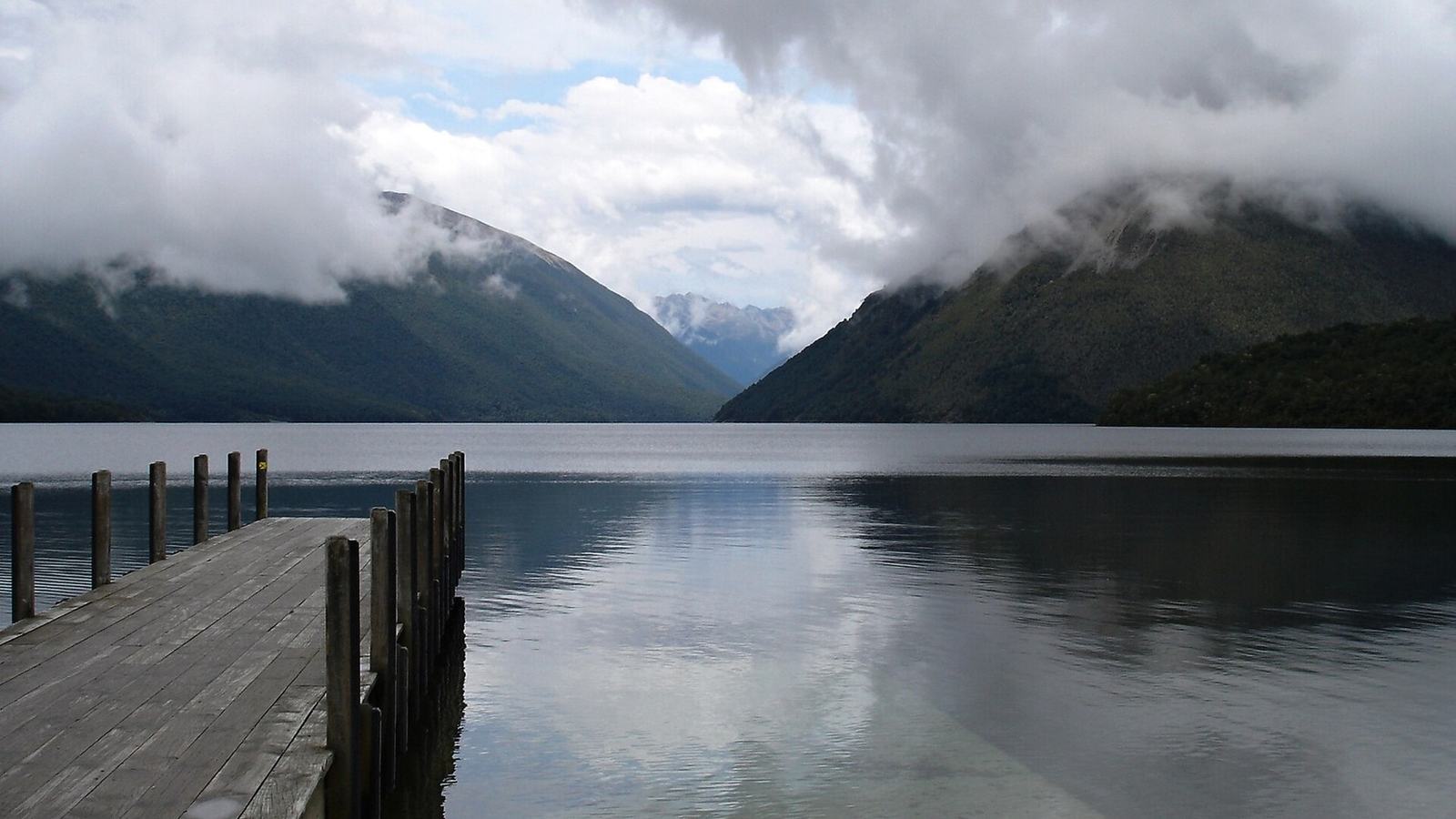
A canoe and kayak guide to Lake Rotoiti in New Zealand’s Nelson Lakes National Park, featuring St Arnaud, Kerr Bay and essential lindavia precautions.
Lake Rotoiti at St Arnaud, in the northern part of New Zealand's South Island, offers a memorable setting for a canoe or kayak trip among beech forests and mountain scenery. The Department of Conservation identifies the lake as part of Nelson Lakes National Park and lists kayak and canoe hire alongside water taxis, walking routes and campsites. It is a destination that encourages quiet observation, but the lake also supports other activities and requires care to prevent the spread of invasive freshwater algae. This is the Lake Rotoiti near St Arnaud, not the different lake of the same name in the North Island's Bay of Plenty. That distinction matters when selecting maps, equipment providers and photographs.
Approaching the park through St Arnaud
The Department of Conservation describes St Arnaud as the main gateway to Nelson Lakes National Park, reached by State Highway 63 from Nelson or Blenheim. This village makes a practical base for arranging a paddle and collecting local information before going onto the lake. Its proximity to the water can create the impression that a short trip needs little preparation, but an Alpine environment deserves respect. A visitor should obtain the latest weather forecast, understand the available launch and hire arrangements, and select a route suited to the crew. A short outing near a recognised access point can be as enjoyable as an ambitious crossing because the forest and mountain setting are part of the experience from the outset.
The character of the South Island lake
The Nelson Lakes region is known for water bordered by native beech forest, with mountain slopes rising beyond. From a canoe, the view can change with the light, as the darker water near the shore gives way to reflections of distant ridges. A paddle-powered craft lets travellers appreciate these details without rushing through them. Yet the same surrounding mountains can contribute to rapidly changing weather, and broad sections of the lake may be more exposed than they appear from a sheltered landing. The intention should be to enjoy a manageable part of the landscape while retaining a simple and safe way to return.
What the Department of Conservation lists
The official national park page includes boating as an activity and identifies freedom kayak and canoe hire at Lake Rotoiti. It also describes water taxi services that operate on both Lake Rotoiti and neighbouring Lake Rotoroa. Availability should be checked directly with the relevant provider; a listing is not a guarantee that someone can rent a craft on any particular day. The Department provides visitor information and updates on facilities and access, which are more useful than an old holiday photograph when making practical arrangements. An operator can also explain the parts of the lake suitable for novices and where other water traffic is most common.
The Kerr Bay access area
The Department of Conservation identifies Kerr Bay Campsite beside Lake Rotoiti and notes that a boat-launching ramp is nearby. This makes the area relevant to people arriving with a small trailerable boat or a roof-carried kayak. The presence of a ramp does not establish that every vessel type may be launched without additional requirements. Parking, campsite bookings and local restrictions should be confirmed before arrival. A canoeist should avoid preparing gear on the ramp where other users need space for manoeuvring. The best launch is organised calmly, with flotation checked, luggage secured and the crew ready to paddle before moving the boat into the water.
Rotoiti and Rotoroa have different rules
Lake Rotoiti and Lake Rotoroa are closely associated within the national park, but their boating arrangements are not identical. The Department specifically states that water-skiing is permitted on Rotoiti but not Rotoroa. That difference is an important warning against treating a regional name as sufficient guidance for every lake. A skipper should verify other lake-specific restrictions and the permitted operating area before taking powered equipment afloat. Paddlers may also encounter boat wake or other recreational traffic in some parts of Rotoiti. The most comfortable route for a novice often avoids unnecessary exposure to busy areas, even when the water is generally open to leisure boating.
Water taxis and different kinds of access
Water taxis can be useful in a region where walking tracks and remote shore destinations are part of the attraction. They also mean that a paddler needs to remain aware of other vessel movements, especially near recognised pickup points. A canoe should not drift in the path of a service while its occupants are taking photographs or checking a map. Visitors considering a combined boat and walking itinerary should arrange transport times and pickup details with the operator rather than assume a water taxi can be summoned from any cove. Some parts of the lakeshore may also be protected or unsuitable for landing.
Biosecurity is especially important here
The Department of Conservation warns that the invasive alga lindavia is present in Lake Rotoiti and Lake Rotoroa. This organism can produce the sticky material described as lake snow, and the principal concern is preventing its spread to other water bodies, particularly pristine Alpine lakes and tarns. A boat that looks clean can retain moisture in storage spaces, straps, paddles and footwear. The Department's Check Clean Dry guidance should be followed before and after using the lake. A holiday that includes several lakes must be planned around cleaning and drying equipment, rather than treating the move between water bodies as a simple matter of loading the kayak onto a car.
Why the forty-eight-hour drying period matters
For the sensitive Alpine lakes and tarns in the park, the Department instructs visitors to make sure their gear has been completely dry for forty-eight hours before swimming or taking water from those places. It also identifies cleaning stations at several backcountry huts for footwear and other items that may have become wet. The requirement is particularly relevant to people combining kayaking on Rotoiti with longer hikes in the park. A wet towel or pair of boots can carry unwanted material just as boat equipment can. The safest interpretation is to follow the Department's current biosecurity instructions exactly and avoid transferring damp equipment into a new water body.
A kayak route that can be shortened
A first visit can be based around a modest out-and-back paddle from an authorised access area, leaving ample margin for unexpected headwinds or delays. The temptation to reach a distant shore should be weighed against the crew's ability and the forecast. A small kayak may be difficult to paddle into strengthening wind, while a canoe carrying family passengers can respond unpredictably to wake. Choose a route that can be abandoned without requiring an exposed crossing and make an early turnaround rule. There is no obligation to travel from one end of the lake to the other to appreciate its mountain scenery.
Cold water requires preparation
New Zealand's mountain lakes can remain cold even on pleasant summer days, making immersion a serious concern. Every person in a small open craft should wear suitable flotation and dress for the water and possible weather change, not only the sunshine at the shore. A paddler should understand how to recover after a capsize and how to help another crew member without placing the second boat at risk. A spare dry layer, communication equipment and sufficient drinking water are important. Rental operators may supply some safety equipment, but the visitor should confirm exactly what is included rather than assume that the boat alone makes the outing safe.
The role of walking tracks
Nelson Lakes National Park offers many walks, from relatively accessible lakeside options to much longer mountain routes. This makes it possible to build a varied holiday without turning every day into an ambitious canoe expedition. A family could enjoy a short morning paddle and spend the rest of the day on a suitable walking track, while more experienced visitors may plan additional activities with local guidance. Walking and boating can, however, create biosecurity concerns when gear has become wet. The park's cleaning instructions remain relevant even if the next activity is on land near a sensitive tarn.
Camping beside the lake
Kerr Bay is among the Department's established camping locations, providing a possible base for visitors who prefer to remain near the water. Campsite requirements and bookings should be checked through the official system before travelling. A booking for a campsite is not permission to beach or store a craft wherever it seems convenient. Paddlers should ask about where boats may be kept and how access to the ramp is managed. A family planning an overnight stay also needs a contingency for weather that prevents boating. The lake and forest can still provide an enjoyable holiday when a planned paddle must be shortened or postponed.
Wildlife and quiet observation
The lake and its surrounding forest provide opportunities to observe birds and other features of a protected landscape. A canoe can offer a quiet perspective, but that should not be used as an excuse to approach nesting or resting wildlife. Binoculars and a moderate distance are more respectful than trying to fill a camera frame by paddling directly toward an animal. Avoid entering shallow vegetation or landing in places that are protected or fragile. The purpose of a national park visit is to appreciate natural processes without disrupting them. Carry rubbish out and make sure fishing line or other equipment cannot escape into the lake.
Remembering the other Lake Rotoiti
There is another Lake Rotoiti in the Bay of Plenty on New Zealand's North Island, associated with Rotorua's broader lake district. Websites and photo archives do not always make the distinction clear in headings. Before using an online map, booking a boat or selecting a destination photograph, verify that it refers to the South Island lake at St Arnaud and Nelson Lakes National Park. The two locations have different surroundings, local providers and relevant regulations. This is a practical research point, not merely a naming curiosity. Accurate information keeps visitors from making plans based on a service hundreds of kilometres away.
The value of visitor-centre guidance
The Nelson Lakes Visitor Centre can provide information on local access, conditions and park rules that may change. It is worth seeking guidance before setting off, especially when the crew has never paddled a mountain lake or plans to combine boating with overnight walking. Ask about current weather, boating zones, authorised landing areas and any temporary closures. A rental company should explain its own permitted operating area and emergency procedure. A confident visitor is one who understands the limits of the plan rather than one who assumes that a popular destination must always be easy.
A measured South Island boating experience
Lake Rotoiti offers small-boat travellers a combination of forest, mountain reflections and accessible paddling opportunities that can make even a short journey memorable. Its appeal is strengthened by the presence of established visitor information and equipment providers, but the distinctive biosecurity requirements demand real care. Plan around St Arnaud and the actual Nelson Lakes regulations, select a comfortable route, wear appropriate flotation and clean and dry gear before it reaches another water body. A slow paddle that protects the lake is a more valuable experience than an ambitious trip that overlooks the responsibilities of visiting a national park.
Sources and photograph attribution
Official destination and boating guidance: New Zealand Department of Conservation — Nelson Lakes National Park Boating. Current access, rules, weather and reservations must be checked independently before travel.
Photograph: Pavel Špindler — “Lake Rotoiti - panoramio.jpg” (CC BY 3.0), via Wikimedia Commons. Resized and converted to JPEG for editorial display. Source: https://commons.wikimedia.org/wiki/File:Lake_Rotoiti_-_panoramio.jpg. Licence: https://creativecommons.org/licenses/by/3.0. Original rights remain with the credited creator or as specified by the source and licence.
