
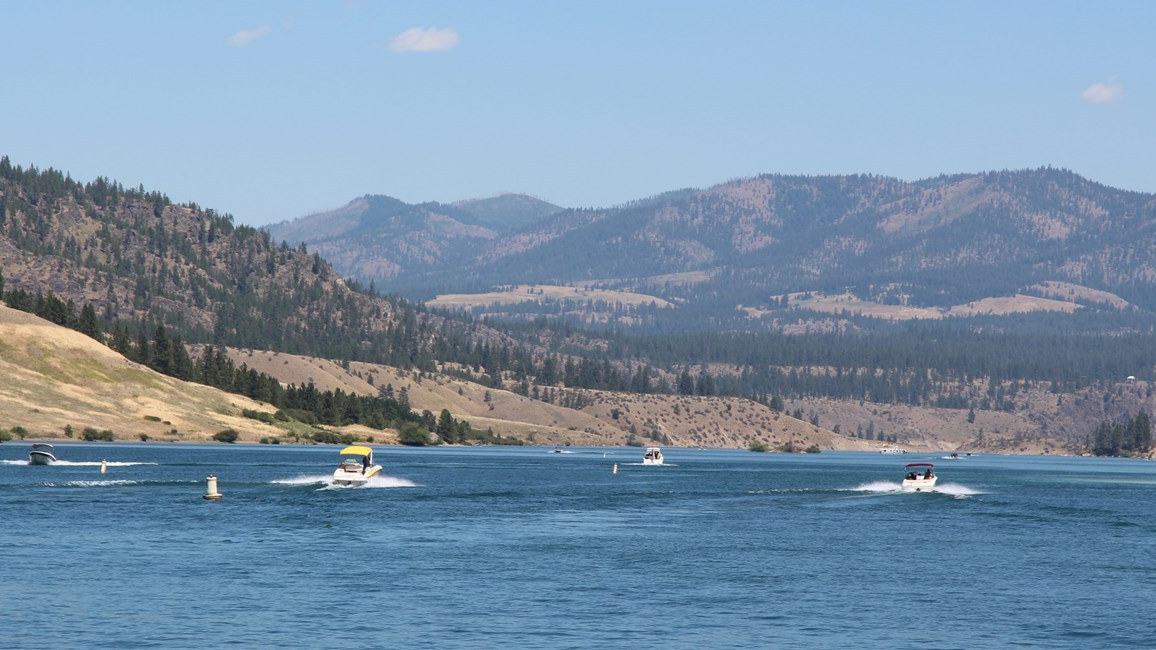
Lake Roosevelt National Recreation Area offers small-boat touring and fishing, but reservoir fluctuations can change launch access even within a day.
A broad reservoir built for varied boating
Lake Roosevelt National Recreation Area in Washington State offers a large inland setting for motorboats, canoes, kayaks and other small craft. Its shoreline and varied launches create opportunities for sightseeing, fishing and relaxed days on the water. The National Park Service identifies twenty-two public launch facilities, allowing visitors to choose an access point suited to their route and preferred boat.
The key to planning is recognising that the lake is an operating reservoir rather than a waterbody with a fixed shoreline. Changing levels can alter how a boat ramp works or whether a chosen approach is available. A skipper should therefore start with the current official lake information before deciding where to meet friends or bring a trailer.
Water levels define launch availability
Lake Roosevelt's surface elevation can vary substantially during the year, with the Park Service identifying a range between approximately 1,208 and 1,290 feet. The full-pool elevation is around 1,290 feet, but a normal day of boating does not guarantee that level. Seasonal fluctuations and changes occurring over relatively short periods can affect access even when the weather is pleasant.
The NPS publishes minimum launch elevations for particular ramps, making it important to match a planned facility to current conditions. A boat trailer may need a different launch if the lake has receded, and an exposed bank may not be suitable for improvised launching. Checking the latest reading can prevent a long drive with a boat that cannot reach the water safely.
Twenty-two ramps, but not identical facilities
The park's twenty-two public launches offer flexibility across a long shoreline, but they are not interchangeable for every craft. A short canoe may be manageable at one location while a trailered motorboat requires a suitable concrete ramp and sufficient depth. Parking, toilets, nearby fuel and the availability of a marina may also differ greatly.
An owner should identify the intended ramp, a practical alternate and the distance needed to travel by water. Launching close to the final destination may be preferable to covering many miles in an unfamiliar area. Visiting boaters should also check whether shoreline access borders tribal lands because separate permission or fees can apply when using certain adjacent areas.
Launch passes are required throughout the year
The National Park Service requires boat-launch passes at the recreation area's launch sites year-round. A weekly pass is valid for seven consecutive days, while an annual pass lasts through the end of the calendar year shown. Weekly passes may be purchased online before arrival, with annual options obtained according to the park's current instructions.
The pass should be treated as part of the boating budget alongside fuel and transport, rather than discovered at the ramp. Different fees may apply where access involves lands managed by tribes or other organisations. Boaters should confirm which agency operates the planned location and keep the appropriate documentation available.
Invasive-species checks belong in the routine
Before launching, the park instructs visitors to inspect the boat for aquatic invasive species and complete its self-certification form. After recovery, the vessel should be checked for plants and cleaned, drained and dried. These steps apply to ordinary pleasure boating as well as to people moving canoes and kayaks between waterways.
A trailered powerboat can retain water in compartments, live wells or equipment even when its deck appears clean. Allowing the craft to dry and checking difficult areas protects the next waterbody visited. Good practice is especially important for owners who travel regularly among fishing locations or store boats at home after short trips.
Equipment for a safe motorboat outing
Lake Roosevelt follows federal and Washington State boating rules, and the Park Service provides checklists addressing required equipment. There must be suitable Coast Guard-approved flotation equipment for every occupant, with additional requirements for young children and larger boats. Sound signalling and appropriate navigation lights are also part of safe operation.
A skipper should review the rules that apply to the boat's length, propulsion and registration, rather than assume every small craft needs identical equipment. A motorboat may require a fire extinguisher according to its construction, and safe use of the propeller is fundamental around swimmers and launch areas. Carrying equipment is useful only when it is maintained and the crew knows how to use it.
Cruising without imposing on others
Boating on a large reservoir offers tempting open space, but the skipper remains responsible for wakes, speed and encounters with other users. Kayaks, paddleboards and slower boats may appear unexpectedly around bays or points. An enjoyable family cruise is best planned around a comfortable speed and careful observation rather than the boat's maximum capability.
The scenery can be appreciated through short stops and slower travel along suitable sections of shore. Proper navigation information and attention to shallow areas are necessary because a falling reservoir may expose hazards that were well submerged on an earlier visit. A conservative route helps reduce the chance of a damaged propeller or an unscheduled return.
Making the day feel like a holiday
The official National Park Service photograph shows actual motorboats on Lake Roosevelt near Fort Spokane, providing a relevant picture of the setting instead of a generic yacht illustration. It helps show why this recreation area can suit a modest trailer boat as well as other small craft. A well-planned outing might combine sightseeing with fishing or a permitted shoreline stop.
The day's success depends on choices made before launching: verify the level, identify a usable ramp, complete the pass and invasive-species requirements, inspect the boat and plan the return. These steps can leave the crew free to enjoy the water without logistical surprises. Lake Roosevelt demonstrates that a small motorboat can deliver a memorable inland holiday when reservoir conditions are treated with respect.