
A practical small-boat travel guide to Lake Roosevelt’s Columbia River coves, canoe routes, twenty-two launches and overnight boat-in camping options.
Lake Roosevelt National Recreation Area offers a boating experience on a scale larger than many small reservoirs, yet its official guide includes routes that can be enjoyed by canoe or kayak without needing a powerful cruiser. The Columbia River reservoir stretches through a landscape of shorelines, coves and boat-in camping possibilities, with the National Park Service identifying twenty-two launches and a selection of day or overnight paddling trips. The practical details are central to the attraction. Water levels change seasonally, cold water and current create hazards, and a launch permit is required when using designated park ramps. Visitors seeking a quiet boating weekend should therefore start with today's reservoir levels and a suitable itinerary, not with the assumption that every cove will be accessible. Carefully planned, Lake Roosevelt can offer a rewarding combination of paddling, camp life and expansive Washington scenery.
A reservoir rather than a natural lake
Lake Roosevelt is a managed reservoir on the Columbia River. That fact distinguishes it from a lake whose waterline is relatively stable throughout the boating season. The National Park Service explicitly advises paddlers that seasonal fluctuations can affect launches and the amount of shoreline available. A beach that looks inviting in an older photograph may be submerged, exposed or separated from the water on the day of travel. The reservoir can also experience current that becomes more noticeable at lower levels. The best small-boat experience begins with the recognition that this is a dynamic operating landscape. Its size and variety create opportunities, but also make advance checks more important than at a sheltered pond where access changes little.
Twenty-two places to launch
The official NPS guide identifies twenty-two boat launches along Lake Roosevelt. For a paddler, the number suggests opportunities to plan a short point-to-point trip rather than attempting to travel the whole reservoir. Not every launch is necessarily usable at every water level, and the Park Service lists minimum elevations for some access facilities. Travellers should examine those current requirements and confirm the chosen take-out before arranging transport. When a journey involves two vehicles or a shuttle, both ends must be accessible on the same day. The presence of a launch on a map does not guarantee that a canoe can be recovered there in the afternoon. Clear logistics often matter as much as the paddling distance.
The appeal of a short day on the water
Lake Roosevelt supports a variety of day trips. The NPS mentions Hawk Creek, the Kettle River area, Spring Canyon and Fort Spokane as places that can serve shorter paddling experiences. Each has its own shoreline and access considerations, so an article cannot recommend one as universally safest or most scenic. A suitable trip might involve exploring a sheltered portion of the lake and returning while the weather remains favourable. It is often more enjoyable to take time for observation and photographs than to chase a distance target. The reservoir is large enough for different wind and current conditions in different reaches, making local information and a conservative plan essential for an enjoyable day.
Boat-in campsites make a different holiday
For visitors seeking more than a few hours afloat, the park describes boat-in camping and shoreline camping on NPS-managed portions of the lake. Campsites reached by water can give a trip a quieter rhythm, with evenings spent away from the usual drive-up campground setting. Camping is not simply a matter of landing wherever a shoreline looks empty, however. The Park Service states that shoreline camping is permitted at locations at least half a mile from developed areas on the NPS-managed portions of the reservoir. Different shoreline ownership and tribal lands may have separate access rules. It is important to identify authorised areas in advance and follow any current restrictions. A canoe makes a camp reachable, but it does not remove the need for permits, careful land use and a realistic plan.
A manageable overnight example
The NPS provides several illustrative paddling itineraries. One of the shorter is a roughly five-mile trip from Snag Cove to Evans Campground, with camping associated with Summer Island. Another suggested overnight trip covers around ten miles between Porcupine Bay and Fort Spokane. These are official planning examples, not guaranteed itineraries that are suitable for every group. Weather, shoreline access, traffic and available camping space can change. A visitor should decide how much distance is appropriate before loading the boat, with enough daylight for an unhurried landing. The value of a suggested route is that it offers a starting framework for research, rather than forcing a new paddler to invent every aspect of the trip.
Longer journeys need stronger preparation
The Park Service also sets out longer options that may extend over several nights and dozens of miles. Examples include a northern route between Bradbury Beach and Fort Spokane and a route through the Spokane Arm toward Spring Canyon. Such journeys belong to a different category of outing from a brief shore paddle. They require more food, water, shelter, navigational competence and planning for poor weather or unexpected delays. The NPS notes that some start points lack drinking water, so visitors should not assume all launches supply basic amenities. An experienced group may enjoy a longer expedition, but the distance alone should never be treated as evidence that a route is appropriate for a family or a first-time camper.
Permits and shoreline access rules
The NPS says a launch pass is required when using one of its designated ramps, and that the pass should be displayed in the vehicle. It distinguishes that arrangement from launching at some shoreline locations outside the developed ramps, where the same pass may not apply. Rules on adjacent tribal lands are separate, and the park advises visitors to contact the relevant tribal authorities to establish access rights and applicable fees. This distinction matters when planning a multi-day route that crosses different management areas. A public-looking beach may not be available for unrestricted landing or camping. The responsible approach is to know who manages the chosen access and shore areas before travelling.
Cold water and current deserve respect
The Park Service warns that hypothermia is a significant risk at Lake Roosevelt because the water can be cold and moving. The reservoir's size can also allow wind-generated waves to build, particularly over open reaches. A small canoe or kayak should be operated within the skills of its crew, with everyone wearing appropriate flotation equipment. The NPS recommends lifejackets for all paddlers and references Washington State boating requirements, including a signalling device and rules for children. Visitors should verify current requirements directly and carry suitable clothing for immersion risk, not just the forecast air temperature. No sunny photograph can establish the water's safety on a future visit.
The value of a float plan
The NPS recommends filing a float plan for longer journeys, including details of the vehicles, intended route, expected dates and a person who can be contacted if the party is delayed. This is a simple but important element of remote small-boat travel. A canoe party should also know how it will communicate if conditions change and should not rely on continuous phone reception. The time allowed for an itinerary must include possible delays due to wind, current or difficulties at a take-out. A carefully prepared float plan is not a substitute for good decision-making on the water, but it can reduce confusion if others need to understand where the group intended to travel.
Respecting a working and shared waterway
Lake Roosevelt supports more than paddlers. Motorboats, anglers, campers and other visitors may use the same water and facilities. A small boat sits low and can be difficult to see, so maintaining lookout and safe separation matters. Wake from other vessels may also be uncomfortable in a loaded canoe. Paddlers should avoid blocking ramps or moving into another craft's path simply to obtain a photograph. On shore, waste should be carried out and camp activity kept within permitted locations. The reservoir's attraction depends partly on its natural and cultural setting, and responsible visitors help preserve that atmosphere while respecting people who enjoy it differently.
Clean equipment and protected habitats
Moving paddlecraft between lakes or river systems can introduce aquatic invasive species. Boats, shoes and gear should be cleaned and dried according to current guidance before entering the reservoir. Campers should avoid damaging shoreline vegetation or disturbing wildlife. It can be tempting to pull a canoe far into an attractive cove and make a temporary camp, but landing is not automatically permitted wherever the boat can float. Following the park's boat-camping information and local rules is essential. The pleasure of a low-impact outing is inseparable from leaving the area in good condition for the next party. Small craft make gentle travel possible, but the people operating them determine whether the experience is genuinely considerate.
Photograph and the official source
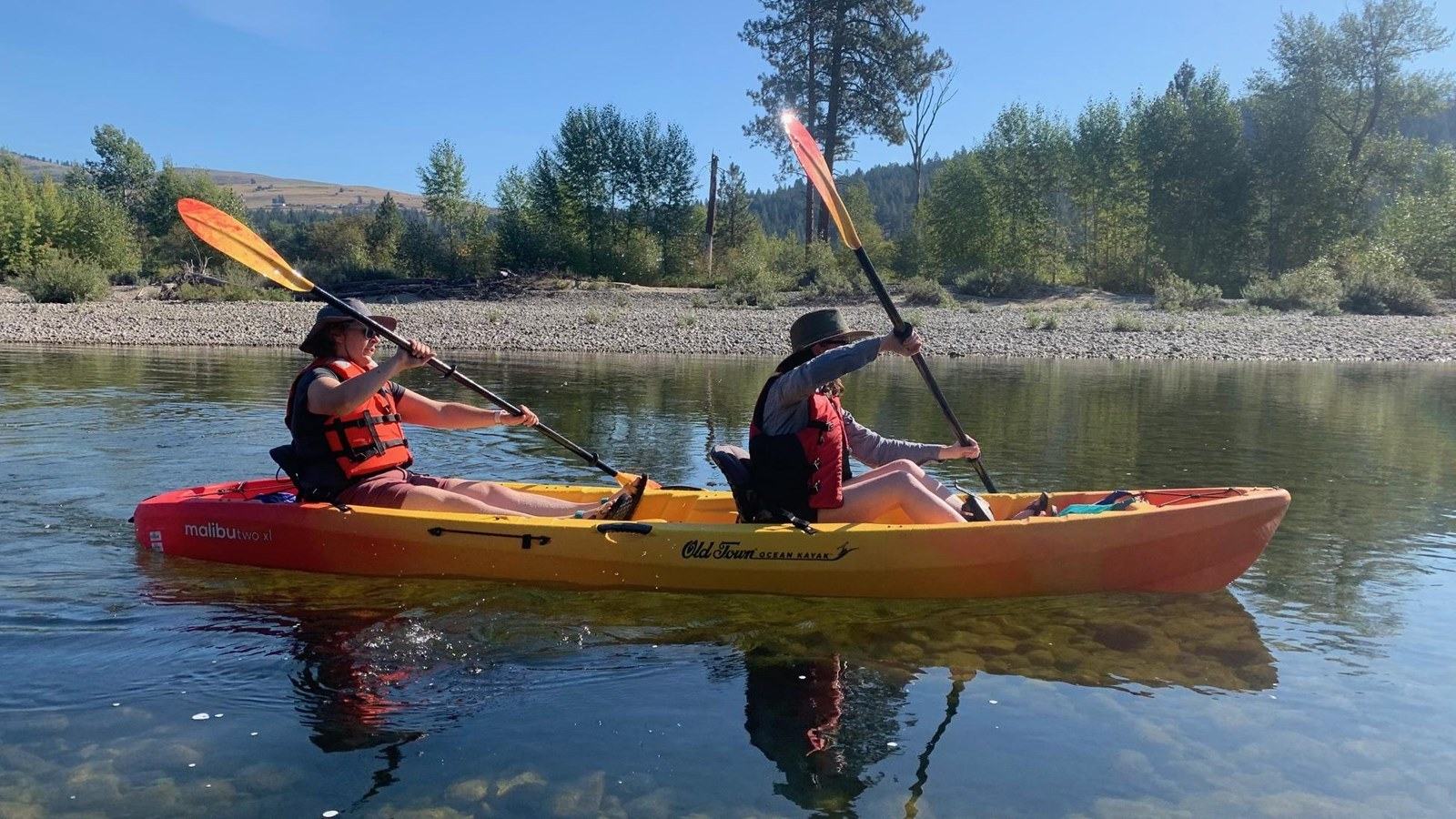
The accompanying lead photograph is a genuine National Park Service image of two kayakers paddling on Lake Roosevelt, credited by the park to B. Worbes. It illustrates the real waterway and its recreational use, rather than an unrelated lake or a constructed scene. The NPS's official canoeing and kayaking guide provides the verified information about the twenty-two launches, suggested day and overnight trips, boat-in camping, fluctuating water levels and boating safety. Readers should consult current reservoir elevations, park notices and access rules before attempting any particular journey. The photograph is an illustration of the destination, not a live report on water depth or wind conditions.
A reservoir that rewards careful small-boat travel
Lake Roosevelt offers an appealing range of experiences for visitors who prefer their boating holidays at paddling speed. An afternoon close to shore and a multi-night canoe-camping journey are very different undertakings, but both can reveal the scale and variety of the Columbia River reservoir. The right choice depends on experience, access, weather and the needs of the group. By checking water levels, choosing an appropriate route and respecting shoreline rules, paddlers can enjoy the scenery without turning the trip into an unnecessary risk. The destination is a reminder that a large landscape can be explored thoughtfully from a very small boat.
Sources and photograph attribution
Official destination and boating guidance: National Park Service — Lake Roosevelt National Recreation Area. Current access, rules, weather and reservations must be checked independently before travel.
Photo: National Park Service / B. Worbes, two paddlers in a kayak on Lake Roosevelt. Source: https://www.nps.gov/thingstodo/canoeing-kayaking-at-lake-roosevelt-nra.htm. Original rights remain with the credited creator or as specified by the source and licence.