
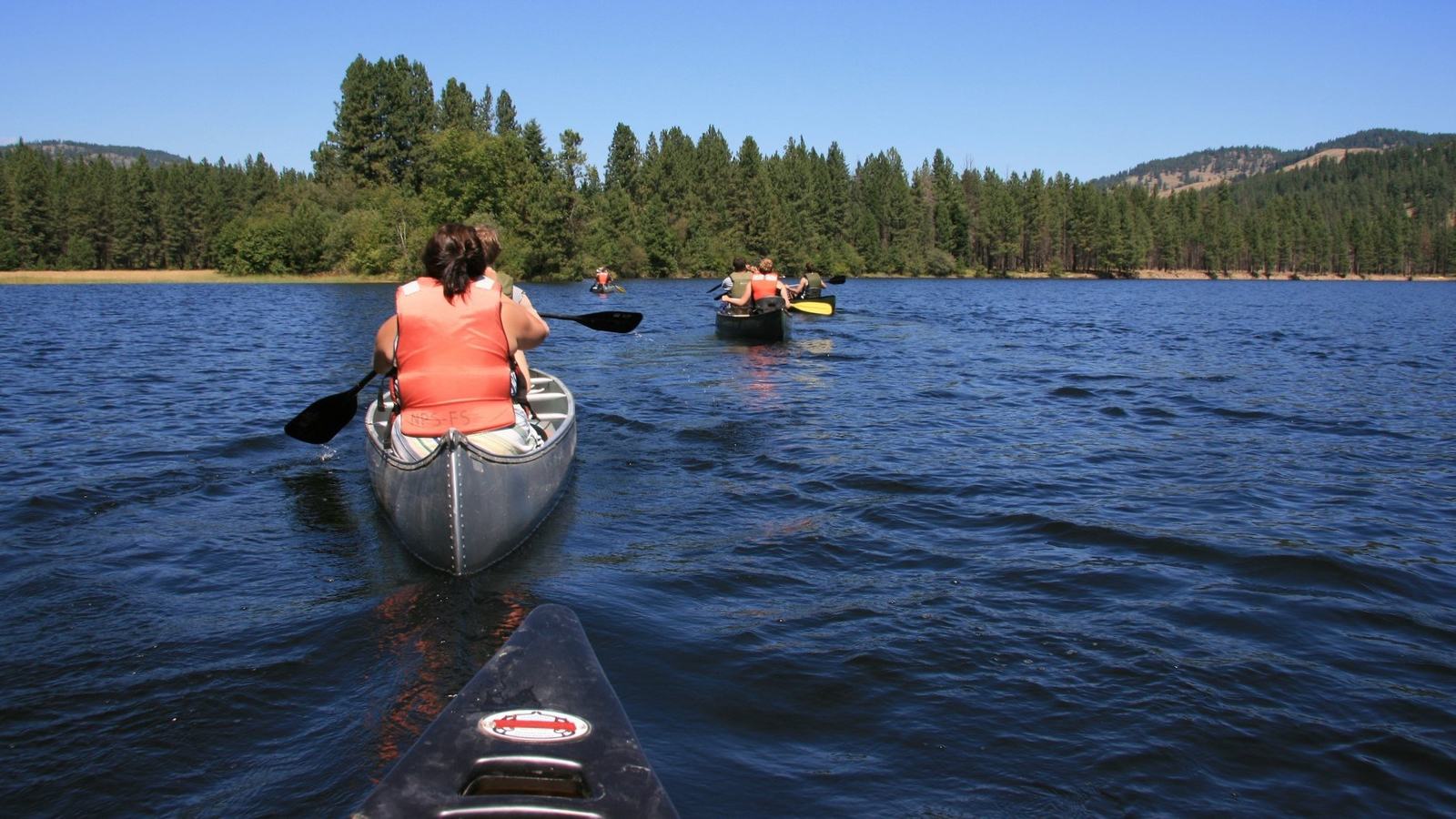
Lake Roosevelt's long, varied shoreline offers day paddles and overnight canoe journeys, while fluctuating reservoir levels make launch checks and a flexible plan essential.
A long shoreline with several ways to travel
Lake Roosevelt National Recreation Area in Washington offers a distinctive boating holiday because the landscape is large enough to support both modest afternoon paddles and longer journeys between camps. A canoeist can look toward wooded slopes and distant points of shore rather than an urban marina, and the National Park Service outlines a range of trip ideas for visitors travelling under their own power. The broad setting encourages exploration, but its scale makes route selection important.
It is also an active reservoir, not a lake with a fixed shoreline. Water levels change through the year and can affect whether a particular launch is usable. That is one of the key differences between planning a trip here and choosing a small recreational lake where a slipway remains submerged to the same depth all summer. A paddling plan should begin by checking current reservoir levels, not by relying on a photograph of a ramp.
Day paddles offer a gentler introduction
For those new to Lake Roosevelt, a half-day or full-day excursion can be a rewarding introduction. The National Park Service names areas such as Hawk Creek, Kettle River, Spring Canyon and Fort Spokane as possibilities for shorter paddling trips. These are starting points for research rather than a promise that any particular route will be suitable on the day. The wind, distance and nearest safe return should guide the choice.
A simple out-and-back plan often suits a first visit. It avoids the complication of arranging transport between two distant launches and makes it easier to shorten the day if conditions become uncomfortable. Carry a map that covers the intended area and agree the point at which the group will turn around. A beautiful inlet can invite one more detour, but the return leg still requires energy and daylight.
Overnight ideas require realistic mileage
The park publishes several suggested overnight canoe itineraries, including a short journey between Snag Cove and Evans Campground and longer routes connecting established access points. Some multi-night examples approach fifty miles, a commitment that should not be treated as a beginner's leisurely weekend. The right itinerary depends on group experience, daily weather margin, carrying capacity and how much time the party wants to spend ashore.
Overnight travel requires a careful review of boat-in camping rules and shoreline restrictions. Not every convenient beach is an authorised place to camp. The practical decisions include where drinking water will come from, how waste will be managed and whether the chosen camping area remains accessible at the current lake level. A small canoe can carry adequate supplies, but only if it is loaded thoughtfully and stays within its safe capacity.
Launch permits and water levels matter
The National Park Service says a boat launch pass is required when using designated boat launches, while shoreline launching away from those ramps is treated differently under its published guidance. Visitors should check the current requirements, fees and specific access restrictions before departure. A road ending at the water on an old map is not necessarily a public launch, and private or tribal shoreline may have additional access arrangements.
Water level changes create a second planning task. A ramp that worked well earlier in the year may be too shallow or inaccessible when a visitor arrives. Review the park's latest lake-level information and ramp conditions, then choose an alternative launch if necessary. For a group arranging a shuttle, confirm both ends of the journey before leaving the vehicles behind.
Open-water crossing changes the risk
A sheltered shoreline paddle may feel manageable, while a direct crossing to a distant point can expose the same canoe to wind and waves. Lake Roosevelt's long reaches can develop uncomfortable conditions, and the National Park Service highlights cold-water danger. A life jacket for every person, clothing suited to immersion and the ability to recover safely are fundamental. Small craft should be operated within their capabilities rather than to the limit of a planned route.
Wind direction should be considered on both outward and return legs. A crew that has travelled downwind for an hour may discover that the return requires much greater effort. Keep crossings conservative, avoid overloading boats and remain aware of motorboat traffic in busier sections. If the forecast suggests strong afternoon winds, a shorter morning trip or an onshore day can be the wiser choice.
Leave a useful float plan
The park recommends informing a trusted contact of longer paddling plans. A useful float plan includes the launch, intended route, expected campsite or turn-around, number of people, description of boats and the time at which someone should raise an alarm if the party has not returned. Sharing only the park name is of little value on a reservoir with many miles of shoreline and access points.
For a multi-day route, arrange vehicle parking and shuttle logistics in advance. Mobile coverage may be unreliable in remote areas, so essential decisions should be recorded before losing contact. Pack a reliable map, a light for unexpected delays, weather protection, drinking water and the equipment needed to manage minor incidents without immediate assistance.
Paddle slowly and protect the shoreline
The lake rewards a crew willing to leave time for photography, quiet observation and a careful lunch stop. Wildlife can be appreciated without approaching too closely, and shore vegetation should be left undisturbed. Where overnight camping is permitted, the site should be left clean for the next visitor. The attraction of a remote paddle is diminished quickly by litter or damaged banks.
The most successful Lake Roosevelt itinerary is not necessarily the longest. It is one that suits the party, accounts for reservoir fluctuation and leaves enough flexibility to respond to the weather. With thoughtful planning, a canoe or kayak offers a memorable way to experience this broad Washington waterway from a quieter perspective than that of a faster motorboat.
Check the official National Park Service Lake Roosevelt canoeing and kayaking guidance for updated access restrictions, conditions and regulations. Hero photograph: National Park Service/Chelsea Brauner, canoeists crossing Lake Roosevelt.