
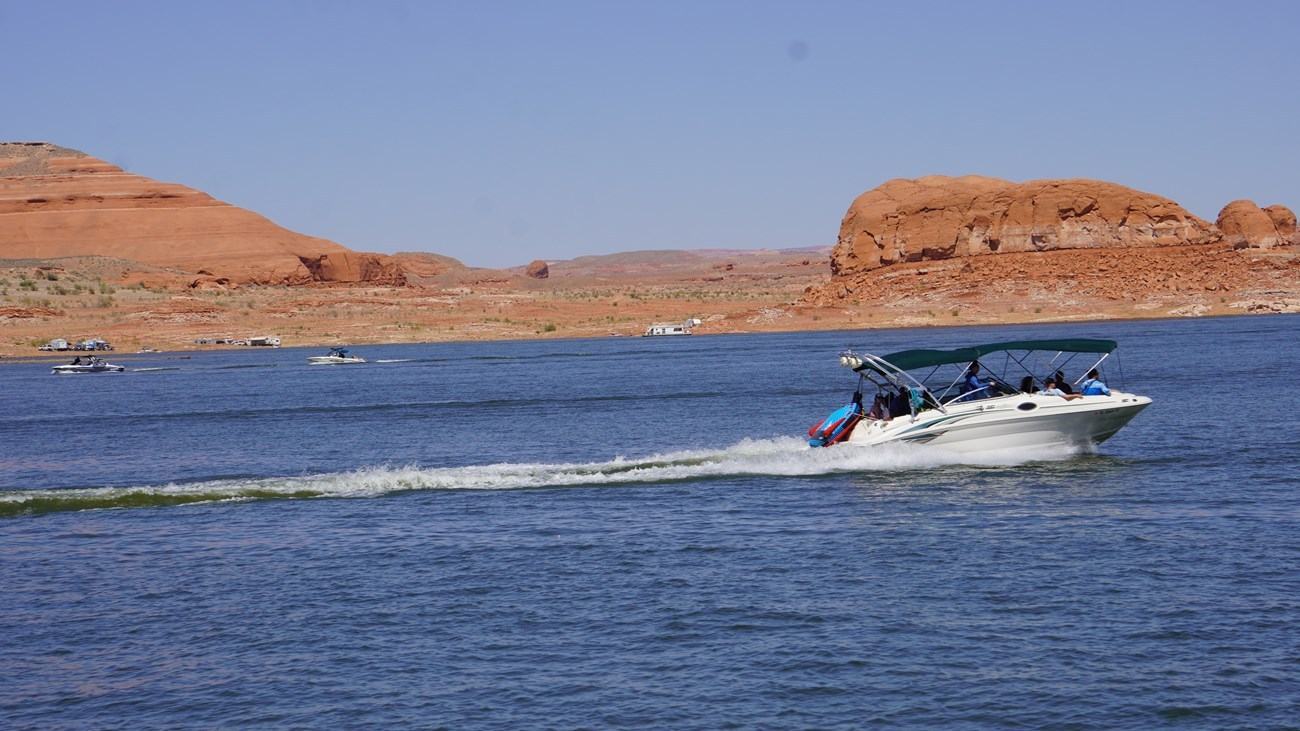
Lake Powell's canyon landscape makes an appealing houseboat setting, but falling or rising water levels, unmarked hazards and reflected wakes require close planning.
A holiday that follows the contours of the desert
Lake Powell invites an unusual kind of boating holiday. Instead of a conventional coast with seaside towns, much of the view consists of steep canyon walls, sheltered-looking inlets and open blue water beneath the desert light. A houseboat makes it possible to move slowly through this environment and spend evenings on the water. The landscape feels remote even when several recreational boats share the same channel, and the quality of the trip depends on knowing where there is deep water and where a shoreline landing is actually sensible.
Glen Canyon National Recreation Area's National Park Service guide describes both privately owned vessels and rentals. Visitors can choose dayboats, kayaks, cruisers or houseboats through authorised marina operators. The sensible starting point is not the size of the rental but the itinerary: how many people are travelling, where the party might safely stop, what vessel-handling experience exists and how much of each day should be spent under way.
Changing water levels reshape the route
The park makes changing lake levels a central warning. A ramp that operated during one visit may not have the same practical access later, and a cove that appeared generously deep in an old photograph may hold a submerged hazard. The NPS directs boaters to current launch-status information before travelling. Never substitute an old web article or a static marina advertisement for those updates.
The official guide identifies three marinas at Lake Powell, two with ramps for privately launched boats, while services and opening hours vary. A houseboat crew should verify fuel, provisions, pump-out access, vessel check-in and return procedures with the appropriate marina. The distance between facilities can be substantial, so the itinerary should retain generous fuel and daylight margins rather than assuming another service point will be around the next bend.
Narrow canyons change wake behaviour
A canyon wall reflects sound, but it also reflects a boat's wake. The park warns that waves can rebound between the rock faces, creating uncomfortable motion for passengers and small craft. A boat approaching a narrow stretch should slow early, avoid passing close to vulnerable vessels and consider the accumulated wakes rather than merely the wake from the nearest boat.
National Park Service guidance requires a lookout, a safe speed, early collision-avoidance action and respect for narrow-channel navigation. Lake Powell also contains marked wakeless zones, including Rainbow Bridge National Monument and Antelope, Labyrinth and Lost Eden canyons. Harbours, marinas and designated swimming areas have strict no-wake requirements. Reading the current park regulations matters because the geography is no excuse for surprising another boat with a large following wave.
Anchor a houseboat without damaging shore
The appeal of a houseboat often lies in finding a quiet stretch of shoreline and staying for a night or two. The park permits primitive shoreline camping in many places but not within developed marinas or Rainbow Bridge National Monument. The opportunity carries obligations: houseboats must be anchored correctly, and damaging the shoreline with improvised stakes is specifically prohibited by the NPS.
Ask the rental operator for an actual demonstration of safe anchoring, including what to do if the wind changes, water rises or the shoreline material is unsuitable. A boat left in a narrow cove may swing or drift toward rock as conditions develop. Appropriate anchoring equipment and a watchful approach protect passengers, the vessel and other visitors seeking the same quiet setting.
Comfort depends on less glamorous systems
Life aboard is improved by reliable sanitation, fresh water, shade and a practical plan for meals. The NPS says campers need an adequate toilet or approved alternative and points to floating restrooms and pump-out facilities around the lake. Discharging waste into the water or digging a cat hole is not acceptable. Plan capacity for the length of the trip and understand the operator's disposal instructions before casting off.
The park also warns of deadly carbon monoxide around engine and generator exhausts, particularly near swim platforms and beneath the stern. Nobody should swim under a platform or congregate around a running exhaust. A working detector, sensible ventilation and clear rules for children can be more important to a relaxed houseboat holiday than an additional luxury feature.
Navigation and wildlife require care
Lake levels can expose unmarked obstacles; the park discourages boating at night and recommends a good map, with red and green channel buoys used as navigation aids. Main-channel buoy numbers are approximate mileage markers from Glen Canyon Dam, not a replacement for a chart. Wind and afternoon thunderstorms should be considered when deciding how far to travel before finding shelter.
An invasive-species inspection also belongs in the departure plan. Quagga mussels have been documented in the system, and the NPS requires boaters to follow clean-drain-dry precautions and applicable state decontamination rules. Responsible cruising protects the lake and reduces the risk of damage to the next vessel or water body. Enjoy Lake Powell's remarkable scenery, but let current access information and safe boating govern the day's ambitions.
Check the official National Park Service Glen Canyon boating guide for current access and safety guidance. Hero photograph: National Park Service, boating on Lake Powell.