
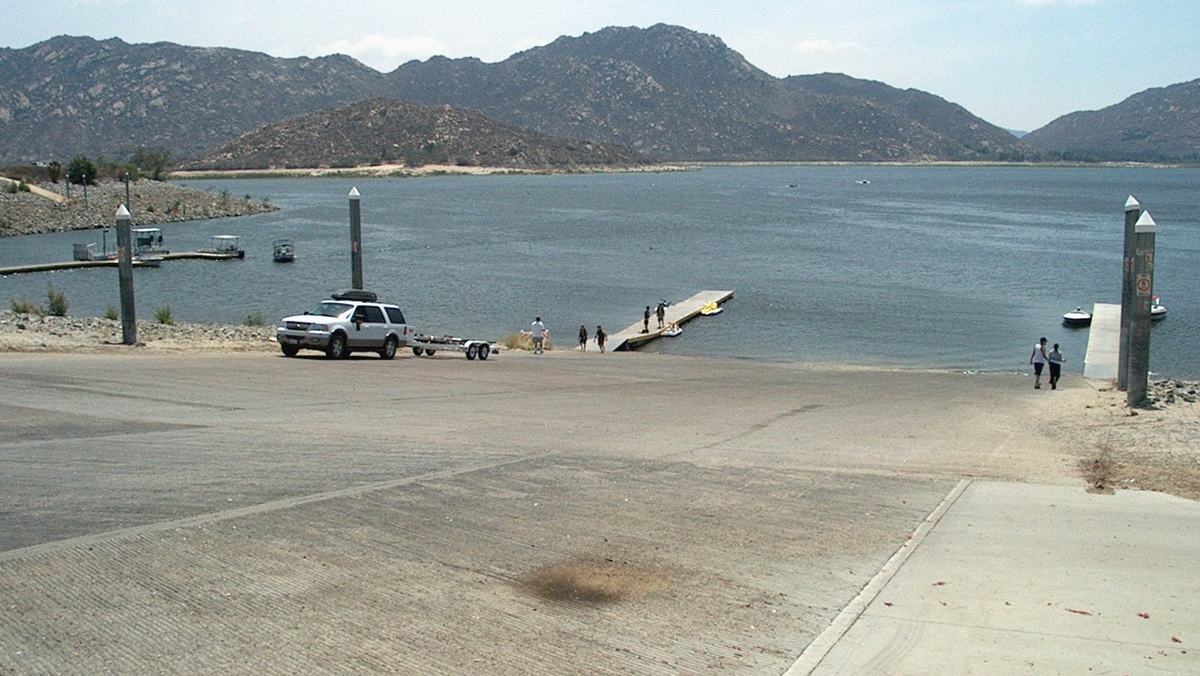
A Lake Perris family boating guide covering the state park's kayak and fishing boat concession, Sail Cove, speed limits, mussel inspections and small-craft safety.
A Southern California lake with a genuine boating choice
Lake Perris State Recreation Area combines a working leisure lake with the practical attractions of a day-use park in Southern California. Its appeal to families is the range of possible activities: kayaks, paddleboards, fishing boats and other watersports can form the centre of a visit rather than being a brief diversion from a road trip. The California State Parks website confirms that the lake has a marina concession, dedicated boating rules and defined slow-speed areas. That official information is more valuable than a generic description of attractive water because it helps visitors understand what kind of craft to bring and how to behave once afloat.
For owners of vessels under twelve metres, the lake is best approached as a regulated shared recreation space. A first visit should begin with a look at current park notices, rather than an assumption that all ramps are available or that a boat prepared for a different reservoir can launch immediately. Anyone arriving with a kayak, a small fishing boat or a family pontoon has to balance leisure plans with safety, inspection rules and the ordinary courtesy required wherever several forms of boating overlap.
What the official marina offers
California State Parks identifies Rec-Out SoCal as the concession operator at Lake Perris Marina. The park page describes a marina store, food amenities and rental options including fishing boats, kayaks and paddleboards through Adventure Sports at Lake Perris. This is a useful first-party indication that visitors without their own craft can investigate an on-water outing. However, the fact that an activity appears on the park website does not guarantee an individual boat is available at a particular hour or that the same rental arrangements operate throughout the year.
Contact the relevant concession before travelling to establish actual equipment, prices, booking terms and the level of experience expected. Rental visitors should confirm whether a safety briefing and buoyancy equipment are included, where departure is permitted and how the operator wants craft returned. A comfortable day often depends on choosing the correct boat rather than the most ambitious route. In particular, a family kayaking for the first time will benefit from guidance about basic paddle technique and the areas that are appropriate for novices.
Sail Cove and the appeal of a gentler launch
The park's official information identifies Sail Cove as an area associated with the use of hand-powered watercraft, subject to posted rules. This makes it an important place to investigate for visitors who wish to explore by kayak or paddleboard rather than joining a busy trailer-boat ramp. Carrying a small craft to the water can feel wonderfully uncomplicated, but it still requires planning. An owner should confirm where parking, unloading and access are allowed, and whether current watercraft inspection rules apply to the particular boat.
A launch area that is comfortable on a calm morning may feel quite different when the wind increases or more people arrive. Walk to the water first. Look at wave direction, the movement of other craft and the distance to a suitable place for returning. Beginners should start with a short sheltered circuit rather than immediately crossing open water. If the launch is crowded, wait in a safe place with equipment secured rather than pushing between other visitors or blocking a path used by people carrying boards.
Understanding the lake's speed rules
Lake Perris is not a free-for-all for powered recreation. Its posted guidance describes a maximum lake speed of 35 miles per hour, plus designated five-mile-per-hour zones. Some of those slower sections extend near the shore and toward the eastern part of the lake where shallow water and hidden hazards may be present. California State Parks also describes counterclockwise travel for general boating, with exceptions for vessels under sail, kayaks and canoes. These details matter even to a paddler because they help explain the direction and pattern of other traffic.
Do not use those numbers as permission to maintain a certain speed irrespective of actual conditions. A prudent skipper slows for congestion, visibility, weather, swimmers and other craft. A kayak should be conspicuous and should avoid lingering in the route of faster traffic. The helmsman of a motorboat, meanwhile, must reduce wash where appropriate and give other users room. The aim is not to win priority but to make movement predictable for everyone sharing the lake.
Inspection before launching
The park stresses inspection controls designed to prevent aquatic invasive mussels. Owners should arrive with boats cleaned, drained and dry and should review its current policy before setting off. The official notice warns that water or signs of contamination can lead to a failed inspection and a quarantine period. Because inspection and sealing arrangements have changed at California lakes, a traveller cannot assume that a visit to another reservoir establishes eligibility to launch at Lake Perris.
There is a practical difference between a motorboat with multiple spaces that retain water and a simple hand-carried kayak, but the correct treatment of a vessel is determined by the current rules at the park, not by the owner's expectations. Check any requirement affecting trailers, ballast systems, live wells and onboard equipment. Never try to evade an inspection by launching at an informal shoreline. Biosecurity may seem a separate matter from pleasure boating, yet protecting the water is essential to the continued future of the recreation area.
The challenge of wind on a reservoir
Wind is one of the most important variables in a small-craft itinerary. A light kayak responds quickly to changes in direction and can be surprisingly difficult to bring home against a headwind. A low-powered fishing boat can also become uncomfortable when short waves develop over an exposed section. Before leaving, check a forecast relevant to Lake Perris, watch the lake surface and speak to knowledgeable local staff if the conditions appear uncertain. Plan to return before the crew is tired rather than waiting for worsening weather to make the decision.
Keep a sensible reserve of time and energy. The outward trip may feel effortless if wind or current provides assistance, but the journey back can reveal the true workload. If someone in the party is inexperienced, select a sheltered area and agree on a short turning point. A family outing is better measured by smiles and confidence than by maximum distance travelled, and there is no reason to turn a straightforward paddle into an avoidable rescue situation.
Appropriate boats for different visitors
One of the pleasures of the marina's rental options is that different types of visitor can select equipment suited to the occasion. Kayaks allow quiet exploration and exercise; paddleboards reward balance and calm conditions; fishing boats can provide seats and space for equipment when operated safely. A family should not assume that the craft which looks easiest from shore is necessarily easiest for every participant. Discuss mobility, stability, wind exposure and how a tired person will return to the launch.
Experienced owners have their own preparation responsibilities. Check hull integrity, fuel or battery state, bailers or pumps where appropriate, paddle security and emergency communications. Ensure that any required operator documentation and safety equipment are present. On a shared lake, a boat's mechanical reliability is more than a personal convenience: a breakdown can place others at risk if it happens in a channel, exposed water or an active launch area. Organised preparation leaves more time for actual enjoyment.
Family comfort and water safety
Comfort begins with correctly fitted personal flotation devices and a realistic idea of how everyone behaves around water. Children should receive instructions before walking onto a pontoon or a slippery slope, and adults should lead by example. Carry fresh water and appropriate sun protection; glare reflected from the lake can make a pleasantly warm day more tiring than expected. Secure phones and keys in a dry container, but keep a reliable means of calling for help available rather than burying it inside luggage.
Bring clothing that remains practical if it gets wet. A kayak passenger can become cold after a splash even on a day that feels hot at the car park, especially when the wind rises. Make sure the least confident person understands the plan if a craft tips or an item falls overboard. The aim is not to frighten beginners with imagined emergencies but to establish simple routines that let them relax: remain with the group, follow the agreed route and return promptly when conditions demand it.
Giving swimmers and other users room
Lake Perris has designated swimming areas, and the official boating rules restrict vessels approaching posted swim zones. A person at the helm must keep a proper lookout and avoid creating an unsafe wake. Paddlers, too, should keep away from crowded bathing water and resist using a swimming beach as an unofficial launching or recovery point. Boundaries can be hard to judge from low on the water, so study signs and buoy lines carefully before changing course.
The lake is also used by anglers, walkers and people enjoying the shore. Fishing lines, anchored craft and sudden turns by inexperienced paddleboarders can all create minor conflicts if somebody is inattentive. Rather than rushing to squeeze past, slow down and allow room for the other person to make a predictable move. The most enjoyable boating days often include moments of patient cooperation. A little space around other users preserves both safety and the sense of ease visitors come to find.
Shoreline behaviour and park regulations
The California State Parks information places restrictions on pets in particular locations, including beaches and the water. It says that dogs may be on vessels but may not enter the water. Owners travelling with animals should verify current rules and consider whether a boat trip will be comfortable and safe for the dog, not merely legally permitted. An animal that panics or becomes overheated can quickly change a relaxed outing into a difficult one for the whole group.
Protecting the shoreline matters for visitors without pets as well. Use designated paths and parking areas, take litter home, and avoid creating new launch points across fragile ground. An attractive bank may be steep, unstable or protected. The regulations around the recreation area are not simply obstacles to be worked around; they protect habitat and help different kinds of user share the same limited space without damage.
A modest itinerary that works
For a first trip, arrive with enough time to settle the practical arrangements before the preferred launch period. Check the park's current opening and boating hours, obtain a rental or prepare your own craft, and examine the nearest shoreline. Spend the first part of the outing learning how the boat behaves. Select a short destination, allow for a quiet pause and turn back while the party still has enthusiasm to spare. That leaves time for an easy recovery and a relaxed meal or walk after the equipment is secured.
A second visit can be more ambitious, but only after the crew has become familiar with local traffic and conditions. There is no shortage of recreational activity around the lake, and trying to fit everything into one morning rarely improves the experience. A manageable outing also helps avoid a race against sunset. The park's official guidance requires boats without running lights to be off the water by sunset, which is a stronger reason to plan conservatively than any personal determination to reach a particular point.
Rental planning and holiday budgeting
The full cost of a Lake Perris visit involves more than a rental price. Allow for travel, park entry, equipment, food and the possibility that bad weather will make boating unsuitable. Rather than relying on an old list of charges, check the concession's current published offers and cancellation terms. Ask whether hired equipment includes paddles and flotation devices and whether there are age or ability restrictions. Visitors with a private boat should investigate launch charges and any required inspection process before departure.
A family can have an excellent day without selecting the largest or fastest available craft. A brief paddle in suitable conditions may offer more time to observe the scenery than a longer outing focused on covering distance. It can also be easier to combine with the park's land-based facilities. Good budgeting is therefore a matter of choosing an activity people will enjoy and planning enough flexibility to adapt it when actual weather or operating arrangements differ from expectations.
The essential checks before leaving home
The official California State Parks page is the starting authority for this guide's marina information, boating limits and park rules. It must be consulted again for current hours, closures, mussel precautions and rental arrangements. A recreational article cannot confirm live inventory or guarantee access on a future date. Bring the information needed to contact the park or the concession, and be ready to choose a land-based alternative if safety or launch conditions are unfavourable.
Lake Perris succeeds as a boating destination when visitors combine simple pleasures with responsible judgement. Kayak hire, lakeside food, fishing opportunities and sheltered water are attractive ingredients; predictable traffic, clean equipment and respect for other people make them sustainable. A satisfying visit ends without drama, with the boat returned or loaded properly and everyone already considering another day on the water.
Sources and photograph attribution
Official destination and boating guidance: California State Parks — Lake Perris Boating Facility and State Recreation Area. Current access, rules, weather and reservations must be checked independently before travel.
Photograph: Summit Hopper — “30 Lake Perris Boat Launch.jpg” (CC BY 2.0), via Wikimedia Commons. Resized to JPEG 1200×800 for editorial display. Source: https://commons.wikimedia.org/wiki/File:30_Lake_Perris_Boat_Launch.jpg. Licence: https://creativecommons.org/licenses/by/2.0. Original rights remain with the credited creator or as specified by the source and licence.
