
Lake Ozette rewards careful small-boat visitors with remote Olympic rainforest shores, provided wind, cold-water risks and backcountry rules guide the trip.
An unusually wild lake reached by small craft
Lake Ozette is a very different boating holiday from a marina resort. Set within Olympic National Park in Washington, it is a large freshwater lake wrapped in temperate rainforest, with remote shores and little of the commercial infrastructure that shapes busier destinations. A canoe or kayak gives visitors a quiet perspective on the forest, while a suitable small motorboat can also operate under the park's rules. The pleasure is in watching the shoreline unfold slowly, not racing towards an attraction at the far end.
The National Park Service calls Ozette the third-largest lake in Washington and offers a dedicated Lake Ozette by Water guide. That official guidance is essential reading because the setting can be more demanding than the placid photographs suggest. Weather, cold water, limited landing choices and backcountry permit rules shape the journey. Visitors should select a route that matches the least experienced person aboard rather than an impressive distance described in someone else's account.
Choose the launch with care
The Park Service identifies the Ozette Ranger Station and Swan Bay as launch sites on its Lake Ozette by Water page, while the park's wider boating guidance describes launch access in the ranger-station and campground area. Before leaving home, compare those descriptions with the latest conditions page and ask the park which access is appropriate for your boat and vehicle. A place that takes a hand-launched kayak is not automatically a practical ramp for a trailer and a larger motorboat.
At the launch, take time to organise the boat before occupying the access. Secure paddles, spare clothing, drinking water and navigation equipment, then fit life jackets before pushing off. The apparent simplicity of a small boat makes it easy to overlook preparation until everyone is afloat. A wet shore, a crowded ramp or a gust of wind can turn that oversight into trouble. Keep the first leg short enough to correct an equipment problem quickly.
The wind, not the distance, sets the itinerary
The National Park Service warns that high winds and waves of one to two feet are common on Lake Ozette. Such figures sound modest to someone accustomed to watching bigger boats at sea, but they are significant to a loaded canoe or a low-freeboard kayak. Wind-generated chop can arrive quickly, make progress exhausting and complicate a safe landing. A seemingly sheltered departure point offers no guarantee that the return crossing will remain equally calm.
Treat the lake as exposed water despite its inland location. Check a detailed forecast, watch the sky and surface during the trip and plan an early turnaround if conditions change. Avoid crossing wide stretches simply because they look more direct on a map. A shoreline route with lawful landing possibilities may be preferable, although the shore itself can contain obstacles and limited access. Build the itinerary around a comfortable return margin rather than the most remote point you hope to reach.
Cold water requires more than a life jacket
The Park Service specifically highlights cold-water drownings at Ozette and recommends thermal protection such as wetsuits or other appropriate clothing. A properly fitted life jacket is fundamental, but flotation alone does not stop a person becoming dangerously cold after an immersion. Dress for the water temperature rather than the air temperature on the beach. For a paddler, a cold-water clothing decision can be more important than the choice between two otherwise suitable kayaks.
Every member of the party should understand the plan for a capsize, separation or unexpected landing. Practise rescue skills in an appropriate supervised setting before travelling to a remote lake. Carry a means of summoning help that suits the area's communications limitations, and keep essential survival equipment dry and accessible. A family with children or first-time paddlers may be better served by a brief near-shore outing than a backcountry crossing, however inviting the distant forest appears.
Ericson's Bay and the temptation to stay overnight
The Park Service identifies Ericson's Bay as a primary backcountry destination, approximately four miles from the launch information in its guide. It also notes a small number of other established sites along the shore and islands. These are not unrestricted camping beaches. Overnight travellers must obtain the applicable wilderness permit, understand group-size requirements and use pre-existing bare ground rather than damaging vegetation to create a convenient campsite.
A first overnight trip should be planned around the boat's actual loaded performance in wind, daylight and the party's experience. Four miles on a still morning is not the same journey as four miles into an afternoon headwind, and arranging the overnight gear can make a small craft less stable. A day visitor should not assume that a backcountry campsite is available as a casual picnic landing. Read the current campsite and landing rules well before loading the boat.
Bear canisters, food and shoreline etiquette
Ozette's overnight requirements extend beyond camping permits. The park says that food, rubbish and scented items must be stored in approved bear canisters along the wilderness coast and the Lake Ozette shore and islands when overnight or unattended. This needs to be part of the packing calculation; a hard canister takes space and must be secured so it does not upset the craft's trim. Good storage protects wildlife as well as visitors.
Leave No Trace is particularly important on a shore where a single repeated landing can wear away vegetation. Use designated or durable places, respect any wildlife closures and avoid creating new shortcuts through the forest. Carry every piece of litter home, including small packaging, fishing line and food scraps. If the intended landing looks fragile or crowded, choose another lawful option or stay afloat. The quiet nature of the area is a reason to behave gently, not evidence that rules can be ignored.
Motorboats and wake restrictions
Ozette is not exclusively for paddlers, but motorboat operators need to know the specific park restrictions. Olympic National Park's boating page says motorized boats must not exceed five miles per hour or create a wake within 300 feet of the shore near the ranger station or campground beach. That is a local protection zone, not a licence to operate carelessly elsewhere. Reduce speed whenever other small craft, obstacles or wildlife make it prudent.
Engine choice should suit both the access and the character of the trip. A modest outboard allows a small boat to move without the exertion of paddling, but fuel handling, noise and wake remain the operator's responsibility. Check the current permit and registration rules separately before arriving with a powered craft. Never rely on a photograph of a boat on the lake to prove that a particular launch, speed or engine type is permitted today.
Reading the map and setting expectations
The Park Service publishes an Ozette area brochure and map, which is more useful than an attractive but unmarked screenshot from a travel website. Study the location of launch sites, islands, camping areas and the relationship between the lake and the trail system. Decide where the group will turn around, what weather change will end the outing and who ashore knows the plan. Have a backup activity in case the forecast makes boating unwise.
Navigation on a broad lake can be deceptively simple until low cloud, rainfall or a featureless shoreline makes familiar landmarks hard to recognise. Carry a reliable map and a suitable location method, and do not depend on mobile coverage alone. A waterproof notebook with launch details, timing and an emergency contact can help the group stick to its plan. Allow more time for loading, checking and landing than an ideal-weather paddling estimate suggests.
Seasonal appeal without false promises
The park describes July through October as generally the least windy period with warmer water for the Lake Ozette route, but that is a planning tendency, not a forecast. An autumn day can still be wet, blustery and cold, and local conditions should determine whether to launch. Spring and winter travel require especially conservative judgement. The best season for a particular family may simply be the time when they can wait for a stable weather window.
Campground and road conditions can also change. The park's current conditions page notes that the primitive Ozette campground may close in winter because of flooding, so a route plan must include the approach by land as well as the water. Carry realistic expectations about facilities and services. There is no advantage in arriving with a boat prepared for a full day's adventure if the safe access or forecast does not support it.
What a good Ozette day really looks like
A memorable outing might consist of only a short paddle, lunch in a permitted location and time to watch light change across the rainforest. That modest ambition leaves room to observe wildlife without approaching it and to return before conditions deteriorate. The most experienced person should set the tone by being comfortable with turning back, even when the water beyond appears irresistible. Remote lakes reward the ability to leave an appealing destination for another day.
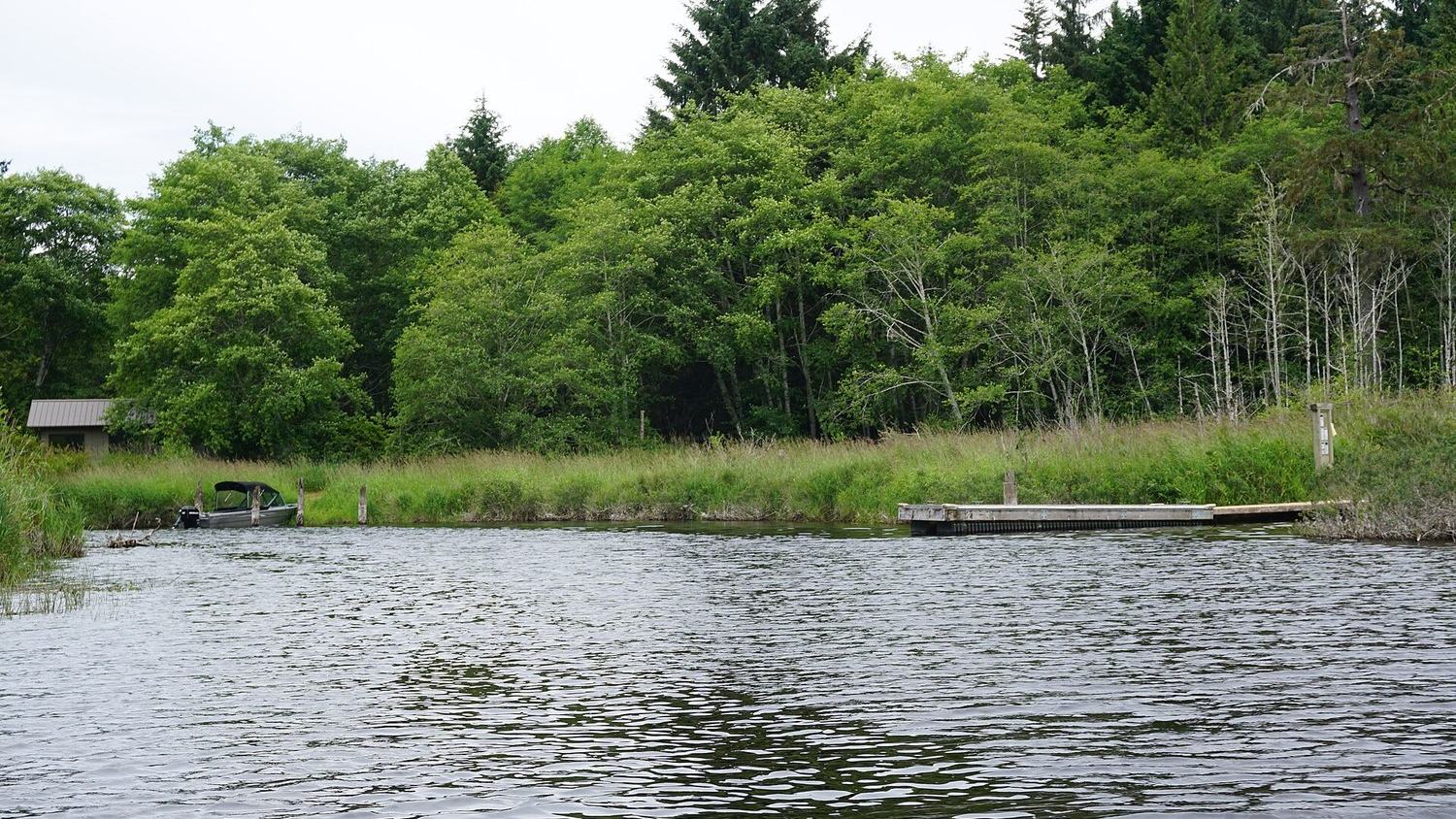
Plan from the National Park Service Lake Ozette by Water guide, the park's boating rules and latest conditions, not from a fixed itinerary alone. Image: an NPS photograph of a boat dock and shoreline at Lake Ozette, credited to Olympic National Park and published as public domain via Wikimedia Commons. The image depicts the destination, not today's conditions.
For visitors with the right experience and preparation, Ozette offers a rare small-boat perspective on a largely undeveloped landscape. Its appeal comes from exactly the qualities that demand respect: distance from help, cold water and weather that can change quickly. Keep the craft light, the plan conservative and the shoreline as you found it. Those choices give the lake its best chance of feeling extraordinary for the next traveller too. Image credit: Dock shore boat lake ozette d archuleta 2015 (22681551588).jpg by Olympic National Park, Public domain (via Wikimedia Commons).
