
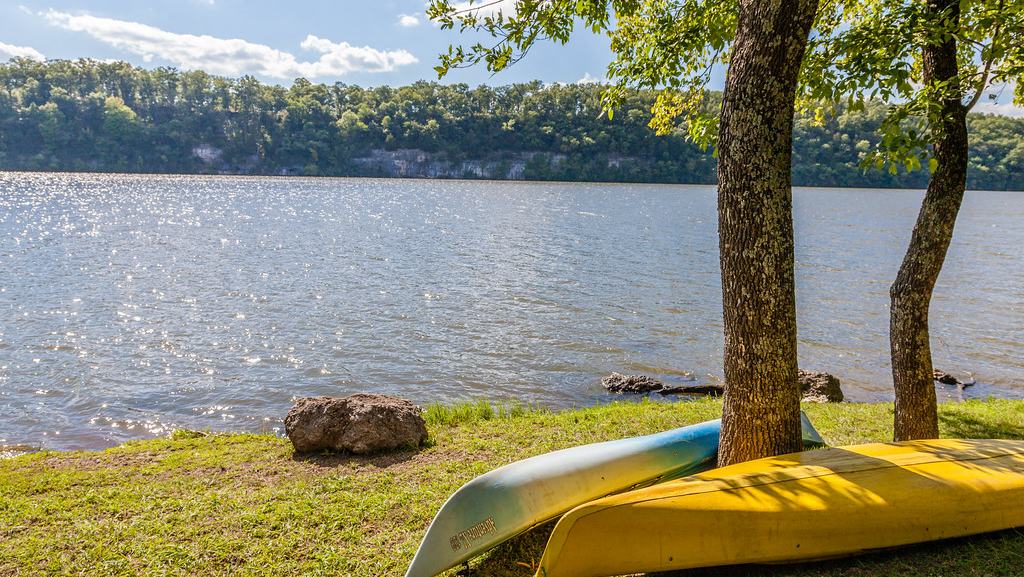
A practical small-boat guide to Missouri's Lake of the Ozarks, from state-park launch ramps and marinas to autumn coves, paddling options, lake-level cautions and safer short itineraries.
A different Lake of the Ozarks for the small-boat skipper
Lake of the Ozarks often enters the holiday conversation through busy waterfront strips, large cruisers and summer entertainment. A trailer boat or modest runabout opens a different version of central Missouri's long, branching reservoir: early departures, quieter park shorelines, carefully chosen cove stops and the freedom to make the day as short as the weather demands. The important choice is not how many miles to cover but where to launch, where to slow down and when to return.
Lake of the Ozarks State Park provides useful structure for this kind of trip because it combines public launch access, marinas, beaches and protected recreational land. A visiting skipper can build a simple itinerary around one park facility instead of assuming every stretch of the lake will suit a small hull. Treat the park's current notices, official launch information and the day's forecast as the foundation of the passage plan.
Choose your ramp before plotting a route
Missouri State Parks lists three public boat-launch locations within Lake of the Ozarks State Park. Grand Glaize Beach has four launch lanes, Public Beach No. 1 has two, and Pa He Tsi has four. That choice can shape the entire outing: selecting the launch nearest the water you intend to explore reduces unnecessary exposure to boat wakes, traffic and unexpected weather during a long transit.
The state's posted launch fees are five dollars per day for boats up to 30 feet and ten dollars for longer boats, while campers with valid permits may launch without paying that fee. These details make a useful budgeting baseline, but they should be confirmed on the day of travel rather than treated as permanent. Allow time for trailer preparation away from the ramp, and avoid tying up a launch lane while loading loose equipment or discussing the route.
The Pa He Tsi rule that can change an autumn plan
Pa He Tsi offers four lanes, but it is not an all-season substitute for the other park ramps. Missouri State Parks gives its regular operating period as March through October and warns that low lake levels can temporarily close the facility when the water elevation drops below 658.5 feet. An autumn outing therefore needs a specific operating-status check, even if the calendar suggests that October access should still be available.
Grand Glaize Beach and Public Beach No. 1 are listed as year-round ramps, which makes them more dependable candidates when planning outside the main summer season. Year-round listing is not a guarantee of safe or uninterrupted access, however; temporary maintenance, severe weather and water conditions can still intervene. Keep a backup ramp and a shore-based activity in mind before leaving the accommodation.
Grand Glaize: a marina-led starting point
Grand Glaize works particularly well for visitors who value a recognizable starting point and a marina close to their day on the water. The state park says its Grand Glaize marina has 38 covered slips and 12 open slips, with a general-supplies store supporting ordinary boating needs. Those are facilities to contact ahead of time, not a promise that an arriving guest will find a berth available.
From a trip-planning perspective, a marina base allows the skipper to turn one longer day into two shorter lake sessions. A late-afternoon reconnaissance of the launch, slips, fuel options and nearby shelter helps remove surprises before the first departure. Use the official marina contact information to confirm opening hours and services, particularly in late October when an operator's seasonal arrangements may differ from midsummer.
Public Beach No. 1: combine the boat with slower water time
The other useful park base is Public Beach No. 1, where the marina offers a different mix of activities. Missouri State Parks describes rentals of single- and double-person kayaks, canoes and paddleboards, together with six open dock slips available on a nightly basis. This makes the area appealing to mixed groups: keen boaters can take an early run while others prefer a short paddle or time ashore.
Small-boat holidays work best when every activity is optional rather than compulsory. If the reservoir becomes choppy or passing traffic is uncomfortable, a sheltered waterside morning may be more rewarding than pressing ahead with a planned cruise. Conversely, calm conditions might justify a deliberately short voyage followed by time at the marina, provided the return distance and daylight remain comfortable.
Read the lake as a collection of distinct water spaces
A long reservoir with arms, branches and coves should not be treated as one uniform boating environment. Wind direction, fetch, traffic concentrations, water depth and the proximity of exposed crossings can vary significantly within a single morning. Skippers in lower-powered craft should choose a limited operating area and mark both a primary turnaround point and a closer escape option.
Begin with an up-to-date navigation chart or mapping product that is appropriate for inland boating, then confirm local hazards and current water conditions with the relevant authorities. Large-boat wakes can remain substantial even when the sky is clear and the wind seems manageable. Slow well before narrow entrances, maintain a lookout for paddlers and anglers, and reserve additional time whenever visibility, traffic or fatigue changes.
The park's aquatic trail offers a quieter perspective
Not every visitor needs a high-speed run to understand the lake. Missouri State Parks publishes an interpretive Aquatic Trail of approximately 9.9 miles, with stops that connect the shoreline to its woodland and geological setting. For a paddling party, that description offers a more grounded objective than an improvised search for secluded water with no knowledge of access or return conditions.
Ten miles should not be confused with an easy distance for every kayak or canoe. It can be a significant undertaking when wind, boat wakes, heat or cold water affect progress, and participants need suitable equipment and an achievable turnaround plan. Consider choosing only part of the interpretive route, reading the park's official trail information first and matching the outing to the slowest paddler rather than the strongest.
Autumn colours without a summer schedule
Missouri's official tourism guidance highlights late October as an appealing period for changing foliage across parts of the state, although actual colour varies with weather and location. From a small boat, the benefit is not simply a bank of bright trees in a photograph. The lower autumn sun can transform the view toward a wooded cove, while a shorter, less hurried route leaves time to notice the shoreline rather than watch the throttle.
Seasonal travel still requires a different kind of preparation. Shorter daylight, cooler air and potentially cold water change the consequences of a breakdown or unplanned immersion, even on an otherwise pleasant afternoon. Wear suitable flotation, bring layers and a means of communication, and choose a return time that leaves a real daylight margin rather than one based on the last possible moment.
A responsible two-day itinerary
Day one can be an arrival and orientation day rather than an ambitious boating day. Check the official launch status and water-level notices, visit the selected ramp, inspect the trailer approach, speak to the marina if a slip is needed and prepare the charted route for the following morning. A short stroll or a relaxed meal may do more for tomorrow's enjoyment than a hurried evening launch.
On day two, launch early enough to avoid rushing but only after checking conditions again. Keep the first cruise within a manageable sector, enter one or two suitable coves at considerate speed and return before the afternoon becomes an obligation. If the weather turns or a ramp is unexpectedly unavailable, replace the boating session with a park outing or a marina visit; a flexible plan is a mark of good seamanship.
Safety, stewardship and the details worth checking
Lake of the Ozarks attracts many kinds of water users, and considerate operation improves the trip for all of them. Reduce wake near docks, launch ramps, paddlers, anglers and sheltered shorelines, observe posted restrictions and keep well clear of anyone swimming. Take rubbish ashore and avoid disturbing wildlife or cutting into sensitive shoreline areas in search of a convenient photograph.
Before towing to the park, check the current Missouri State Parks boating page, park hours, any temporary advisories and the marina information relevant to your launch. Confirm the boat's required safety equipment and state rules, check the forecast and carry a route that is comfortable for the craft you actually have. The reward is a Lake of the Ozarks holiday shaped by good decisions: modest distances, memorable water and plenty of time to enjoy it.