
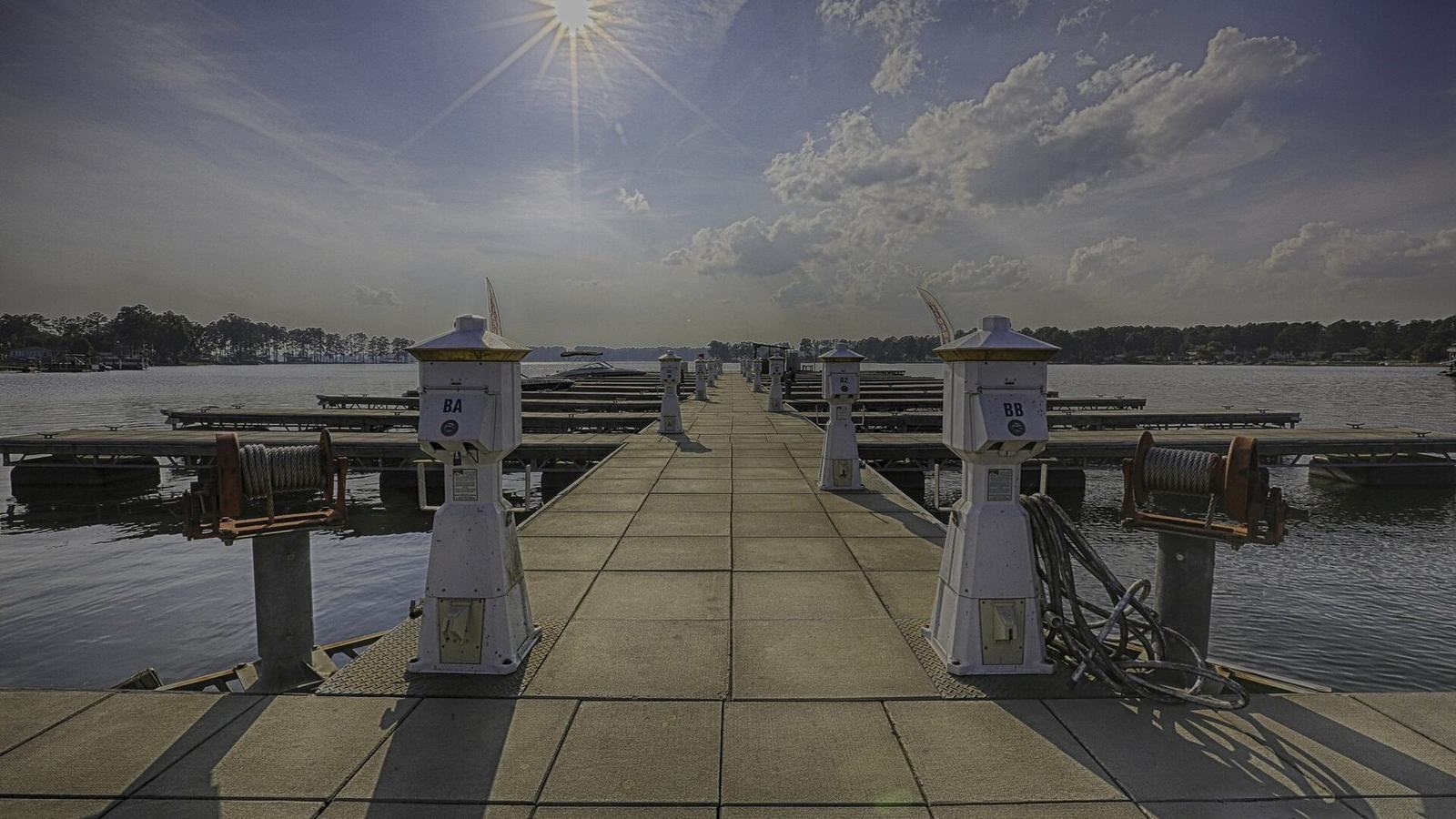
A practical family-friendly Lake Murray dayboat guide covering public launches, short routes, wake etiquette, fishing traffic, changing weather and safe returns.
A big-water day within a modest boat's reach
Lake Murray in South Carolina makes an inviting destination for people who prefer a trailer boat and a one-day plan to a complex cruising itinerary. The reservoir is large enough to feel expansive, yet an enjoyable outing does not require travelling to its farthest reaches. The state’s natural-resources authority identifies boating, fishing and other recreation as established uses, while South Carolina State Parks provides public boating access information for the wider area. A compact family runabout, fishing boat or deck boat can be well matched to a morning on the lake if the skipper takes conditions and facilities seriously. The central choice is simple: start from a verified launch and design the route around a comfortable return.
Find the right ramp, not just the nearest pin
The South Carolina Department of Natural Resources publishes information on Lake Murray access, and State Parks identifies boating facilities including at Dreher Island State Park. But a directory entry is not a guarantee that a ramp is open at the exact time you arrive, that trailers can be parked without restriction or that a particular vessel’s draft is suitable. Confirm current hours, fees, water levels, maintenance notices and parking arrangements with the actual operator before travelling. A family’s boating day can unravel because a popular ramp is congested or because a driver must search for legal trailer parking. A brief access check is often more valuable than another half-hour spent choosing a scenic route.
What makes a good small-boat route
A first visit is best treated as an introduction to a portion of the reservoir rather than an attempt to see it all. Select a relatively sheltered area with known navigation features and a sensible return distance. Study an up-to-date chart and local notices, including any restricted or marked zones, before plotting a course. Mark the launching point so it can be found again when shorelines begin to look similar. A small boat’s fuel consumption changes with passengers, wind and speed; a generous reserve should be built into the plan. Leave room for a safe, lawful stop or a gentle period spent drifting where permitted. The outing should remain enjoyable if it ends earlier than intended.
Prepare the craft while still ashore
Many common frustrations can be prevented in the parking area. Check the fuel quantity, drain plug, propeller, steering response, battery condition and cooling arrangements before entering the launch queue. Have suitable approved lifejackets ready for each person, including children whose size can change quickly. Stow bags and loose equipment where they will not obstruct the helm or become a hazard in a sharp turn. Check that the engine and safety equipment meet the applicable South Carolina and federal requirements for the vessel. Carry a means of contacting assistance and know the procedure for summoning help. A compact boat has fewer systems than a large yacht, but its simple systems need to be dependable.
The mechanics of a courteous launch
Trailer boating is a shared activity, particularly at a busy public slipway. Load coolers, fit safety gear, arrange lines and complete most checks in a staging area rather than on the ramp itself. Agree who will handle the vessel after it floats and who will park the vehicle. A new skipper should practise the sequence at a quiet time with someone experienced before attempting a crowded weekend launch. If a problem arises, move clear of the active lane when it is safe to do so. On return, retrieve the boat, clear the ramp and then secure the outboard, straps and loose equipment. The rest of the queue should not have to wait while a family repacks the whole day.
Morning can be the easier half of the day
Reservoir weather is not static. Sunlight and calm water at breakfast can give way to more wind, sharper chop or thunderstorms later. Check a reliable forecast immediately before departure and keep watching the sky and conditions from the helm. Boats with low freeboard, limited shelter or a heavy passenger load may become uncomfortable before a larger cruiser notices much change. Pay attention to the wind direction relative to the return trip, because a smooth following sea outward can translate into a wet and slower ride home. Build a firm turnaround time that allows arrival well before poor visibility or fading light. When lightning threatens, postpone or seek safe shelter according to official guidance.
Wake is the small-boat skipper's signature
A small motorboat can produce substantial wash, especially at speeds where the hull is trying unsuccessfully to climb onto the plane. Slow down early near docks, marinas, anchored fishing boats, paddle craft and any signed no-wake area. Legal speed limits must be followed, but courtesy may require driving more slowly than the maximum permitted. Do not cut across another boat’s bow simply to preserve your preferred cruising speed. Keep enough space that a child in a kayak or an angler standing to cast is not surprised by a steep wake. The goal is to enjoy the lake without exporting discomfort to everyone nearby. Smooth, predictable boat handling is more impressive than a hurried transit.
Fishing traffic deserves particular attention
Lake Murray has a strong recreational fishing identity, and an operator should anticipate boats whose crews are focused on lines, electronics and the water immediately around them. Give an anchored vessel generous clearance and avoid crossing obvious trolling paths at close range. If launching at dawn, expect fishing traffic to be active before casual day cruisers arrive. A passenger should be appointed to help watch for smaller craft, floating debris and boats emerging from bays, but the skipper retains responsibility for lookout and decisions. Those who fish from a family boat should secure hooks before relocating and handle fish and tackle with consideration for everyone aboard. Sharing the water well costs very little.
Shore stops need permission and planning
The presence of an attractive shoreline does not make it a public beach or landing. Reservoir banks include managed recreation areas, private property and places unsuitable for an approaching boat. Find official public facilities and check their specific access, beaching, docking or fee rules before planning a picnic stop. A known marina or park may be more practical than an improvised landing, particularly for passengers who need a stable platform. In a small boat, wash from passing traffic can complicate a casual approach to shore, so assess the conditions before attempting to disembark. If no suitable stop is confirmed, return to the launch area and enjoy lunch ashore. Flexibility is an advantage.
Children, sun and the pace of the day
A family’s enjoyment depends less on speed than on comfort and predictability. Explain where everyone should sit during acceleration, turns and docking; children should not be asked to hold a boat off a dock with their hands. Fit flotation properly, provide sun protection and carry more drinking water than seems necessary. Build in breaks that let passengers stretch and escape engine noise, and keep the outing short enough for younger crew members to remain enthusiastic. Have a plan for motion discomfort or someone becoming too warm. An afternoon of forcing the schedule despite an unhappy passenger is rarely worth it. Choosing a realistic pace is good seamanship and makes the boating memory more likely to be a happy one.
Know what the reservoir cannot promise
An online guide cannot guarantee today’s water level, a ramp’s usable depth, fuel availability or the absence of floating debris. Reservoir conditions change with weather and water management, so consult current operator notices as well as a forecast. Keep a proper lookout for unexpected objects, especially after heavy rain. Do not rely entirely on a phone’s road map to identify navigable water or local restrictions. Use suitable navigation information, remain within the vessel’s practical limits and review fuel remaining at agreed points. When uncertainty increases, shorten the journey instead of pushing to the farthest planned stop. It is better to return early than to discover a limitation while already distant from the launch.
A relaxed itinerary for a first visit
Arrive with time to confirm the ramp rules and prepare without rushing. Launch, spend the first minutes observing traffic and checking the engine, then make a short cruise through a suitably sheltered part of the lake. Choose one uncomplicated highlight: a quiet view, a lawful shoreline stop or a fishing session conducted safely away from other users. Pause to reassess wind, weather and fuel before going farther. Plan a gentle return before the busiest retrieval period, leaving enough daylight to deal with the trailer. The precise route should depend on current local information, not on a universal itinerary. This approach works for several types of boat under twelve metres and for crews of mixed experience.
Leave a good lake for the next visitor
One of the pleasures of a public reservoir is its accessibility, and that accessibility depends on shared responsibility. Take rubbish home, handle fuel carefully and avoid introducing aquatic organisms from a boat used elsewhere. Follow any current clean-boat guidance and local rules. Never anchor where you obstruct a marked route or damage sensitive habitat, and be considerate of people fishing from the shore. Leaving a dock or ramp tidy may be a small act, but it helps preserve the welcoming atmosphere that makes a return visit appealing. Lake Murray’s reputation as a boating destination is sustained through thousands of such everyday decisions by its users.
The value of an uncomplicated day
For a modest runabout or family fishing boat, Lake Murray offers a particularly attractive proposition: a full sense of being away on the water without the logistical demands of a multiday voyage. The essential preparation remains specific. Confirm a lawful, suitable launch, inspect the craft, carry the required equipment, set a conservative route and watch the changing weather. Then allow the day to be simple. There is no need to travel the reservoir end to end to appreciate it. A well-handled small boat, a little time to look around and a calm return to the ramp are more than enough.
Sources and photograph credit
Source references: South Carolina Department of Natural Resources Lake Murray; South Carolina State Parks boating; South Carolina State Parks lakes. Photograph: Lake Murray - panoramio (1).jpg, Will Thomas, Wikimedia Commons, licensed under CC BY-SA 3.0. This image illustrates the lake and does not depict a particular recommended vessel or tour service.