
A practical Norway boating guide to Infoteket's Lake Mjøsa single-kayak rental at Helgøya, including wind limits, temperature thresholds, hire terms and shore routes.
Lake Mjøsa in eastern Norway is best known for its scale, but a kayak holiday does not need to involve crossing the lake's broad open water. At Helgøya, Infoteket operates a seasonal visitor-information point and rents single-person kayaks for shorter outings along the shore. Its first-party booking information describes a summer season that normally begins around 1 June, weather-dependent safety limits and a clear requirement for inexperienced paddlers to remain near shore with another adult. This is the kind of detailed local guidance that helps turn an attractive photograph of a lake into a realistic holiday plan. The experience combines a modest small-boat outing with visits to the Nes and Helgøya countryside, where farms, villages and walking routes create options after the kayak is returned.
A large Norwegian lake does not need a large itinerary
Mjøsa is Norway's largest lake by surface area, and its broad geography can make a small kayak feel particularly exposed in wind. Yet there are settled bays, shorelines and islands where the landscape can be appreciated from water level. The pleasure of a local outing is not in covering as much of the lake as possible. Instead, paddlers can notice the changing relationship between the fields, wooded slopes and the water while remaining close to an approved starting point. An operator who knows the shoreline can suggest an appropriate direction, avoiding unnecessary crossings and leaving a manageable route back to shore.
Infoteket is a specific place to hire a kayak
The first-party Infoteket website places its kayak rentals on Helgøya, in the middle part of Lake Mjøsa. It offers single-person kayaks rather than implying that a broad fleet of family canoes and double kayaks is always available. The company describes the boats as stable, but this is an operator assessment that does not eliminate the need for paddling skills and careful route choices. Visitors should confirm boat sizes, flotation equipment and current dates before travelling. A named seasonal visitor centre provides a more reliable starting point than assuming that every lakeside village has watercraft waiting at its quay.
The season is determined partly by water temperature
Infoteket says its kayaking season usually starts around 1 June and ends in late September. The exact dates depend on weather and water temperature, and the operator requires the water to be above approximately 10–12°C for its normal rentals. It also closes hire when the wind exceeds seven metres per second. These are meaningful operational thresholds rather than general tourism descriptions. On 23 November 2026, the business's stated autumn-to-spring closure means ordinary kayak rental should not be represented as available now. Travellers planning the next summer season should ask for an updated start date instead of relying on the calendar alone.
Cold-water risk shapes the company rules
The operator explicitly warns that from around October until early June the lake can be too cold for its normal rental arrangements, with a serious risk of hypothermia after a capsize. That notice is important because a sunny shoreline can create a false impression of comfort. A personal flotation device supports a swimmer but does not prevent the rapid effects of cold water. Visitors should wear equipment recommended by the provider and understand how to respond if the kayak overturns. Nobody should argue that a calm-looking lake or a background in sea kayaking automatically makes an unapproved cold-water departure sensible.
The price structure offers different durations
Infoteket's website lists a single kayak for an hour, three hours or a full day, with indicative rates of NOK 350, NOK 500 and NOK 650 respectively. Elsewhere on the same page, a separate twenty-four-hour offer is described with a different price and a next-day return arrangement, so travellers should not assume all figures apply interchangeably. A current quote and booking confirmation will resolve any inconsistency. For someone new to paddling, an hour may be the most suitable choice. A longer rental is useful only when the participant has the ability, route and weather conditions necessary to enjoy it safely.
A wet card is not compulsory for this rental
The operator says that a Norwegian paddling proficiency card, commonly called an NKF Våttkort, is not required to hire from Infoteket. However, renters without the card must paddle together with at least one other adult and remain close to shore. The company also requires participants to be able to swim and to be sober. These provisions are important because they demonstrate that an absence of formal certification does not mean unrestricted independence. A visitor should confirm how the company interprets its rules for their particular group, especially when some members have paddling experience and others do not.
Single kayaks create an individual experience
A single kayak gives its paddler direct control over speed and steering, but it also means that two people travelling together occupy separate craft. Staying together is therefore a practical responsibility rather than merely a social preference. Agree on a route and a turnaround point before leaving. A stronger paddler should not disappear ahead while a beginner struggles into the wind. The design and stability of a hire kayak can also differ from those used in coastal tours elsewhere. Request a demonstration of the footrests, paddle technique and recovery procedures before launching, particularly if the equipment is unfamiliar.
Standard safety equipment is included
Infoteket states that a lifejacket and paddle are included with each rental. Wetsuits, dry bags and other accessories may be hired for an additional charge. Visitors should ask which thermal protection is appropriate for the season and where personal belongings can be stored without upsetting the boat's balance. A waterproof phone case can help, but a communication plan is still necessary. Correctly fitted personal flotation equipment should be worn as directed, not simply placed behind the seat. The operator's instructions take priority over a visitor's assumptions about what would be comfortable on a calm lake.
Weather changes the actual distance
A paddler may make good progress with a tailwind and then discover that returning to the starting point is far more strenuous. Infoteket's seven-metre-per-second wind limit underlines the need for conservative judgement even on a settled shoreline. A group should check the local forecast before leaving and ask whether a particular direction provides greater shelter. If gusts increase or waves become uncomfortable, return without waiting until the scheduled end of the rental. A lake that is peaceful in the morning may not offer the same conditions later. Flexibility is an important part of planning a good outing.
Helgøya has attractions beyond the kayak
The Nes and Helgøya district includes farmland, cultural landscapes and visitor attractions that can make a lakeside holiday interesting even when boating is unavailable. A family might plan a kayak session for suitable weather and reserve another part of the day for a walk, local food or a visit to a farm-based attraction. The advantage is not having to make an ambitious paddling journey the centre of every activity. Local opening times and walking routes still need checking, especially outside summer. An alternative plan makes it easier to respect the provider's decision if wind or low water temperature prevents hire.
Reaching the island takes some planning
Infoteket's directions say that visitors arriving by car can use a parking area near its facilities. Those relying on public transport may need a taxi from the railway station at Brumunddal. That makes the journey from accommodation a factor in choosing a rental time. A visitor should confirm the exact meeting place, available parking and any seasonal road or access information before departure. It is especially helpful for people who need to carry dry clothing or who are travelling in a group. Spending a few minutes on access arrangements can prevent an otherwise pleasant morning from being lost to confusion.
Group paddling is preferable to an isolated outing
The operator's rule requiring another adult for renters without formal qualification has a practical purpose. Companions can notice fatigue, help identify a suitable route and summon assistance when something goes wrong. That does not mean a group should attempt a difficult passage merely because several people are present. Each paddler must be able to manage the selected craft and stay within the operator's permitted zone. Establish a simple communication method, such as agreed voice or paddle signals, and remain close enough to respond. A small cohesive group generally has a more enjoyable experience than one stretched across a long section of shore.
Wildlife should be observed rather than approached
A quiet kayak offers opportunities to notice waterbirds, vegetation and the way the shoreline changes through the season. Respecting wildlife means allowing birds to rest or feed without changing their behaviour. Do not approach nests or enter dense reeds simply to get a photograph. Fishing and other local activity may also be taking place; maintain an appropriate distance from nets, lines and working craft. The low noise of a kayak is an advantage only when it is combined with restraint. Responsible paddlers leave no litter, avoid unnecessary landings and use established access points wherever possible.
Other vessels have a right to the lake
Mjøsa also supports passenger and recreational vessels, some moving much faster than a kayak. A paddler should remain visible and predictable rather than assuming that a distant motorboat has already seen a low craft against a dark shoreline. Do not cross near the bow of a moving vessel or drift into an approach to a quay. Bright clothing and reflective elements can improve visibility, but maintaining a lookout is still necessary. Before hiring, ask whether there are any local navigation channels or restricted areas to avoid. The best shoreline trip offers scenery without creating conflicts for people travelling for other purposes.
The area's culture makes the water more interesting
Mjøsa has long been associated with settlements, agriculture and transport in inland Norway. On Helgøya, the landscape of farms and wooded banks provides a distinctive backdrop to a small-boat outing. Travellers may appreciate the same terrain from several positions during a holiday: from a kayak, from a rural path and from a road overlooking the lake. Each perspective reveals something different. A brief paddle can therefore be more meaningful when combined with time to explore the surrounding district. There is no need to invent an elaborate expedition to experience the character of this place.
An authentic image of the island
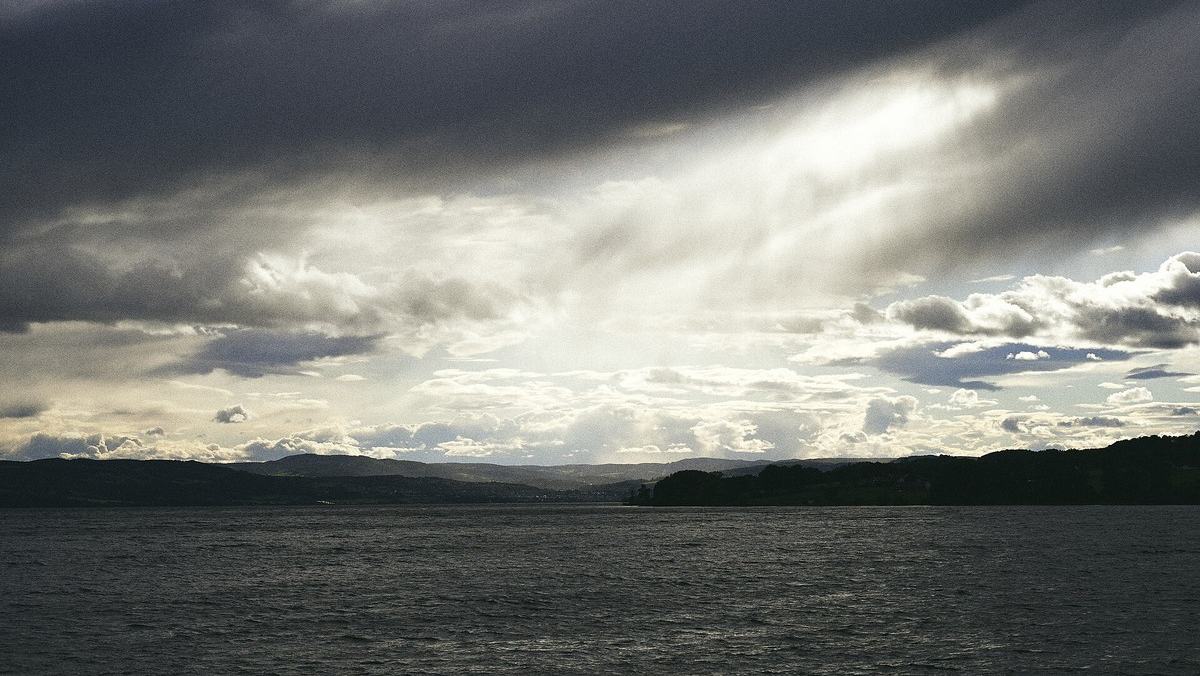
The lead photograph, “Helgøya i Mjøsa 04-07-19,” was created by Øyvind Holmstad and published on Wikimedia Commons under Creative Commons Attribution-ShareAlike 4.0. It documents the genuine Helgøya area of Lake Mjøsa, not another Norwegian waterway. The image does not prove which rental kayaks were available on the publication date or what the water temperature was on 23 November 2026. The original photographer, source and licence are credited. All operational statements about opening dates, solo-kayak hire, equipment and wind restrictions are based on Infoteket's first-party rental information.
A sensible Mjøsa summer itinerary
Contact Infoteket to confirm current opening dates, availability and the appropriate rental duration. If the group is inexperienced, follow its requirement to paddle with another adult and stay close to shore, and ensure everyone can meet the swimming and equipment rules. Ask about water temperature, the local wind forecast and a suitable route before boarding. Leave time for exploring Helgøya and Nes on land, particularly if conditions change. Lake Mjøsa offers a rewarding form of small-boat travel precisely when its scale is respected: a brief, safe paddle can provide a memorable encounter with one of Norway's characteristic inland landscapes.
Sources and photograph attribution
Official destination and boating guidance: Infoteket — Kayak Rental at Helgøya on Lake Mjøsa. Current access, rules, weather and reservations must be checked independently before travel.
Photograph: Øyvind Holmstad — “Helgøya i Mjøsa 04-07-19.jpg” (CC BY-SA 4.0), via Wikimedia Commons. Resized to JPEG 1200×800 for editorial display. Source: https://commons.wikimedia.org/wiki/File:Helg%C3%B8ya_i_Mj%C3%B8sa_04-07-19.jpg. Licence: https://creativecommons.org/licenses/by-sa/4.0. Original rights remain with the credited creator or as specified by the source and licence.
