
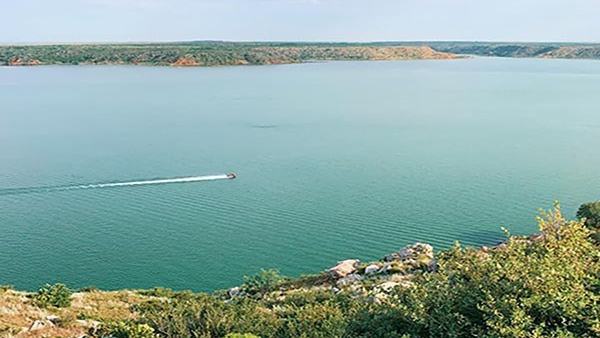
Lake Meredith National Recreation Area offers pontoon boating, kayaking and waterfront recreation in the Texas Panhandle, with access affected by changing lake levels.
A reservoir in an unexpected landscape
Lake Meredith National Recreation Area brings boating to the broad, often dry landscape of the Texas Panhandle. Its reservoir offers a striking visual contrast with the surrounding terrain, and people visit with fishing boats, family pontoons, kayaks and paddleboards. The National Park Service describes boating as one of the area's most popular activities, with opportunities for both adventure and slower recreation.
The lake is particularly attractive to visitors who enjoy ordinary small craft rather than needing a large cruiser. A family may arrange a short pontoon outing, while a paddler can focus on a sheltered stretch when the weather allows. The broad water, however, is not always gentle: wind and changing lake levels shape the conditions throughout the year.
The appeal of a modest pontoon trip
Pontoon boats can provide an uncomplicated way to bring several family members together on the water when the specific vessel is rated for the group. Level seating, a broad deck and room for a picnic can make them convenient for a relaxed outing. Lake Meredith's setting encourages a trip in which passengers have time to enjoy the views instead of spending the entire day travelling.
A pontoon remains a motorboat subject to loading, navigation and safety rules. The skipper should stay within the vessel's capacity, maintain a proper lookout and plan how to return if wind builds. Where children are aboard, appropriately fitted flotation equipment and supervision are necessary regardless of how stable the boat appears at the dock.
Rental arrangements near Sanford Yake
For visitors who do not own a boat, the Park Service identifies Wright-On Bait, Tackle and Watercraft Rental at the Sanford Yake boat ramp. The business has offered pontoons, kayaks and paddleboards, creating options for families or couples travelling without a trailer. Current inventory, hire conditions and operating hours should be confirmed directly before making plans.
Renting a boat also requires understanding who may operate it and whether a briefing, qualification or deposit is needed. A guest should inspect the supplied safety equipment and clarify the permitted cruising area before departure. A short orientation can be valuable when a person is accustomed to a different style of helm or unfamiliar with the lake's shallow sections.
Changing water levels affect where to launch
The National Park Service warns that Lake Meredith's levels fluctuate, altering the shoreline and the usability of access points. A ramp that works comfortably at one level may be more difficult at another, and a seemingly familiar cove may contain newly exposed features. A holidaymaker should review the park's current lake status rather than assume an older photograph accurately represents present conditions.
Trailer operators should check ramp steepness, parking and the boat's draft, while kayakers need a safe route between the vehicle and the water. An improvised launch across an unsuitable bank can damage the craft or sensitive terrain. A little research before leaving accommodation often saves far more time than trying several inaccessible locations.
The Panhandle's weather is part of the trip
The region experiences hot summers with occasional storms and colder, windier winters. Even on a clear summer morning, conditions can change enough to make an exposed crossing uncomfortable in a small boat. Keeping an eye on the forecast and reserving time for an early return is especially important when the day's main plan involves family members without much boating experience.
Sun protection and sufficient drinking water are basic essentials in warm weather. A skipper should also keep a suitable emergency communication method and tell someone ashore where the boat intends to travel. The most rewarding cruise may be a short one undertaken during a stable weather window rather than a journey to the far end of the reservoir.
Texas boater education requirements
Texas sets requirements for certain operators based on age, boat type and engine power. The NPS notes that people born on or after September 1, 1993, who operate a vessel with an engine above fifteen horsepower, a personal watercraft or certain sailing boats may need a boater education card. A visitor should confirm the exact current rule with Texas Parks and Wildlife before hiring or operating a craft.
The qualification requirement is separate from a rental company's own conditions. Even someone legally allowed to operate a boat needs to understand the controls, lake markers and emergency equipment. A passenger who has never been aboard may benefit from a simple briefing about where to sit, how to move and what to do when approaching a dock.
Zebra mussels demand special care
The Park Service reports zebra mussels in Lake Meredith and strongly emphasises preventing their spread. Aquatic invasive species can cling to a trailer, hull or equipment, while water retained in a motor or livewell may transport organisms elsewhere. Owners should clean mud and plants from equipment, drain every compartment and follow the required drying period before moving to another waterbody.
This is an issue for both powerboats and paddlecraft, including rented equipment transported between locations. The NPS advises thorough cleaning and drying, with Texas guidance suggesting a longer drying interval when moving between lakes. Environmental precautions are a small but important part of maintaining the destinations that make local boating attractive.
A lake holiday without unnecessary complication
The official park photograph shows Lake Meredith itself, with a small craft visible against the broad water and surrounding shore. It provides an accurate impression of the landscape rather than a generated hero image. For a traveller seeking a simple day outside the city, this can be a compelling place to combine a short cruise with a picnic or time fishing.
Lake Meredith is best approached with a flexible plan based on actual weather and water access. Renting a pontoon may be suitable for one family while a short guided or independent paddle appeals to another. The common goal is enjoying the reservoir responsibly and returning with the sense of having spent an unhurried day in an unusual Texas landscape.