
A Chilean lake kayaking guide featuring Rilamar's permitted Puerto Varas pier, single and tandem kayaks, prices, Directemar nearshore operating rules and volcanic views.
Lake Llanquihue in southern Chile combines two kinds of scenery that rarely appear together on an ordinary family kayaking holiday: a broad freshwater lake and the nearly symmetrical form of Osorno Volcano. In Puerto Varas, local operator Rilamar runs a permitted lakeside pier and advertises single, tandem and fishing kayaks for hire from a base only two blocks from the town centre. Its own published rules are notably specific: kayak outings remain inside the bay and within 200 metres of shore, with every departure assessed against wind and weather conditions. This provides a practical alternative to vague recommendations to “paddle across the lake.” For travellers visiting Chile's Lake District, a short, appropriately supervised outing can offer a memorable view of the volcanoes without committing to an exposed open-water route.
A lake defined by volcanoes and villages
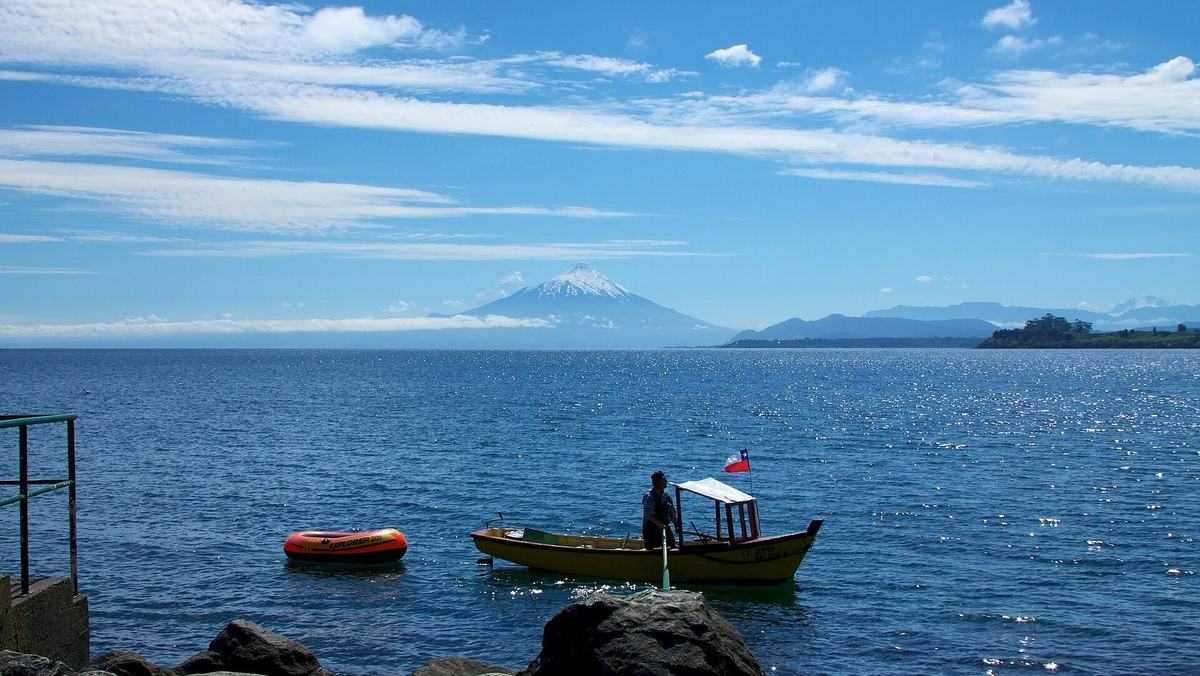
Chile's national tourism organisation describes Llanquihue as the country's second-largest lake, with views toward Osorno, Calbuco and Puntiagudo volcanoes. Its shores include Puerto Varas and Frutillar, where buildings, gardens and promenades reflect the region's culture. From a kayak, the volcanoes can appear to rise from the water, particularly on a clear day. That impression is a scenic reward, not a reason to paddle toward the middle of such a large lake. The best small-craft experience may involve a modest circuit of a sheltered bay close to the departure pier, allowing time to enjoy the setting rather than chase a faraway landmark.
Rilamar provides a concrete point of departure
Rilamar identifies its office and pier as lying directly on the Puerto Varas waterfront, about two blocks from the town centre. It says that its own passenger craft and rental kayaks depart from this facility. The operator also publishes details of a maritime concession authorised for sightseeing trips, fishing and kayaks. Travellers should still confirm current operating status and their chosen booking, but this information is more useful than simply assuming that anyone can launch from a random promenade. A defined pier helps visitors understand where equipment is collected, where the safety briefing takes place and how to return without interfering with other users.
Three kayak categories suit different interests
The company's first-party page lists single kayaks, tandem kayaks and fishing kayaks. The difference matters. A single kayak gives one person direct control, while a tandem requires coordination between two occupants. A fishing kayak may have additional fittings that change how luggage and equipment are handled. Travellers should ask which boat is suited to their experience and whether the weather makes the intended activity appropriate. A recreational kayak chosen for photography does not automatically meet the requirements of fishing, and a tandem is not an unlimited family boat. Loading limits, flotation equipment and handling instructions are essential regardless of category.
Pricing is published in Chilean pesos
Rilamar's website gives indicative hourly rental prices of CLP 10,000 for a single kayak, CLP 15,000 for a tandem and CLP 22,000 for a fishing kayak. These provide a basis for planning but should be checked before booking, because an online price may change and additional services may not be included. Travellers paying from abroad should account for the exchange rate and the operator's accepted payment methods rather than expecting a fixed amount in their home currency. A written confirmation is particularly helpful if several people want different craft. The cost of a short rental should be viewed alongside the value of safe equipment and a known launch point.
The 200-metre rule is central to the experience
The operator states that under Chile's maritime authority, Directemar, its kayak outings must remain inside the bay and no more than 200 metres from shore. That is a key operational restriction, not an optional suggestion for cautious visitors. It means the ordinary rental experience is a nearshore exploration of Puerto Varas rather than a crossing toward a distant volcano or village. A visitor who wants a long guided expedition should research a different authorised service with appropriate equipment and permissions. Respecting the rule allows paddlers to enjoy the scenery without turning an accessible rental into an unsuitable offshore adventure.
Weather determines whether the boat can leave
Rilamar says each outing is confirmed according to the day's weather and wind. This is sensible on a large lake where a headwind can make a short return difficult. The water may be smooth at the pier while more exposed sections produce waves, and a strengthening breeze can affect an inexperienced paddler quickly. Visitors should ask how staff assess conditions and what happens if a reserved outing is postponed. A flexible schedule allows the family to spend time on Puerto Varas's waterfront or elsewhere in town when paddling is not advisable. No photograph, however clear, can substitute for a local weather decision on the day.
The pier is shared with other authorised activities
Rilamar also operates sightseeing and fishing services using named passenger craft, and its pier is not simply an unrestricted beach for public launch. Kayakers should follow the instructions given for moving away from and returning to the dock. Large and small vessels may have different manoeuvring needs, especially close to a landing. A paddler should never sit stationary in the approach of a powered boat while taking photographs. Keeping the nearshore route predictable reduces conflicts with other operators and improves safety. This shared use is one reason to take the operator's briefing seriously even for a brief hire.
Single kayaks encourage independent handling
A person in a single kayak should be comfortable with basic strokes, turning and stopping before travelling beyond the immediate launch area. Someone unfamiliar with the craft should request instruction or a demonstration and discuss whether a tandem or a more structured session would be better. Balance can feel different from one kayak model to another, and the way the seat or footrests are adjusted affects comfort. A brief trial close to shore allows the paddler to notice problems before they become serious. The goal should be a relaxed excursion within the authorised bay, not covering the greatest possible distance.
Tandem kayaking calls for teamwork
A tandem kayak can be a sociable option for partners, friends or a suitable adult-and-child combination, subject to the craft's loading and age rules. The occupants need to coordinate paddling so they do not work against one another. The more experienced person may take responsibility for steering while both keep a lookout. Parents should ask whether a particular child's size and confidence are appropriate, rather than assuming that sharing a kayak removes every risk. An unevenly loaded or poorly coordinated tandem may be tiring and difficult to turn. A short introductory circuit can make the experience far more pleasant.
Fishing from a kayak is a specialist activity
The availability of fishing kayaks does not mean every visitor may fish anywhere in the lake without the relevant permits or rules. Rilamar's website refers to fishing-focused equipment, while local fishing requirements should be checked independently with the operator and responsible authorities. A kayak set up for casting must still stay within permitted areas and avoid entangling lines with other vessels or swimmers. Equipment should be secured and the boat's balance considered when reaching for tackle. Travellers primarily interested in sightseeing may be better served by an ordinary single or tandem kayak instead of carrying fishing accessories they do not need.
The Chilean Maritime Authority governs safety
Rilamar says its rentals are supplied with the safety equipment required by Directemar, including a life jacket. Visitors should confirm that the equipment fits and understand when and how it must be worn. A regulatory framework helps establish minimum standards, but it does not replace the paddler's responsibility to make safe decisions. Ask whether any other equipment is supplied, such as a waterproof container or communication device. A person who is not confident in the water should discuss this honestly before departure. Suitable equipment, correct loading and respect for the approved route all contribute to a more reliable outing.
Puerto Varas adds a cultural setting
The town's waterfront, historic buildings and restaurants make a short kayak rental easy to combine with a larger holiday. Visitors who do not wish to paddle can still enjoy the promenade and its views across the water. A family might choose an early outing when conditions are suitable, return for lunch and reserve the afternoon for the town. Chile's tourism organisation also points to Frutillar and the broader Llanquihue lakeside circuit as destinations worth exploring by road. There is no need to use the kayak as transportation between these communities. The value lies in seeing one part of the lake at an intimate pace.
The volcanoes are beautiful but not always visible
Osorno and the region's other peaks may be hidden by cloud for much of a day, particularly when weather systems cross the lake. A visitor who books solely to obtain a perfectly clear photograph may be disappointed. The atmosphere can still be attractive when low cloud changes the light and the shoreline becomes the focus. Photographers should protect equipment from splashes and avoid stopping in the path of other craft. A better image can often be taken after returning to shore, where the volcano and town can be framed together. An enjoyable paddling experience should not depend on one distant view being unobstructed.
Water temperature deserves careful thought
A large southern Chilean lake can feel cold, especially outside the warmest summer period. Even in sunshine, an unexpected immersion may pose risks that require appropriate clothing and recovery procedures. Ask the operator what flotation and thermal equipment are recommended for the chosen season. Do not assume that being within 200 metres of land makes self-rescue simple: some banks may be difficult to reach, privately managed or unsuitable for landing. A conservative route and prompt response to changing weather are essential. The safest decision may be to postpone an outing rather than rely on physical proximity to the promenade.
Local nature can be enjoyed without disturbance
A kayak can move relatively quietly, but wildlife should be allowed space. Avoid chasing birds, entering vegetation or landing on banks where access is uncertain. Carry packaging and any food waste back to the pier rather than leaving it behind. Visitors should also remain aware of fishing activity and other waterfront users. The value of a nearshore route includes the opportunity to observe the lake without treating the area as a private playground. Responsible travel respects both the natural landscape and the people who live and work beside it.
Booking times are not an invitation to stay out late
The operator publishes a rental window beginning at about 10:30 a.m. and describes a last-rental time in the early evening. Visitors should confirm the current hours and the actual required return time; a last departure does not mean the kayak may remain on the lake indefinitely. Daylight, wind and weather should all influence the length of the booking. A brief outing is likely to be more comfortable for beginners than a long session that runs into changing conditions. If staff recommend returning early, the whole group should comply. A sensible schedule leaves time for changing clothes and enjoying Puerto Varas afterwards.
A photograph of the actual Chilean lake
The lead image, “Chile - Puerto Varas 16 - Volcán Osorno and Llanquihue Lake,” was created by McKay Savage and distributed through Wikimedia Commons under Creative Commons Attribution 2.0. It documents the genuine lake and its volcanic setting. It is not presented as a photograph of Rilamar's current kayak fleet or proof of weather on 23 November 2026. The photographer, source and licence are credited, while the pier location, hire categories, price indications and 200-metre operating restriction come from Rilamar's first-party booking information.
Making a good Llanquihue kayak itinerary
Begin by contacting Rilamar for the current rental hours, craft availability, safety briefing and weather policy. Choose a single, tandem or fishing kayak only after discussing the group's needs and experience. Stay within the authorised bay and close to shore, and do not interpret a view of Osorno Volcano as permission to paddle toward it. Allow time to explore Puerto Varas on foot, and keep an alternative day available if the wind prevents departure. Lake Llanquihue offers a memorable small-boat experience because the dramatic scenery can be enjoyed from a modest, carefully planned nearshore route.
Sources and photograph attribution
Official destination and boating guidance: Rilamar — Puerto Varas Pier and Kayak Rental on Lake Llanquihue. Current access, rules, weather and reservations must be checked independently before travel.
Photograph: McKay Savage from London, UK — “Chile - Puerto Varas 16 - Volcán Osorno and Llanquihue Lake (6834389420).jpg” (CC BY 2.0), via Wikimedia Commons. Resized to JPEG 1200×800 for editorial display. Source: https://commons.wikimedia.org/wiki/File:Chile_-_Puerto_Varas_16_-_Volc%C3%A1n_Osorno_and_Llanquihue_Lake_(6834389420).jpg. Licence: https://creativecommons.org/licenses/by/2.0. Original rights remain with the credited creator or as specified by the source and licence.
