
An official-source Lake Kivu kayaking guide to Rubavu and Karongi, guided trips, paddleboarding, lakeside communities, shoreline etiquette and safe local routes.
A different view of Rwanda from a small craft
Lake Kivu lies along Rwanda's western border and offers a calm-looking contrast to the country's mountainous inland landscapes. Rwanda's official tourism organisation, Visit Rwanda, promotes kayaking along the lake's coastline as a way to experience the hills and the quiet of the water. The destination information identifies Rubavu, formerly known as Gisenyi, and Karongi, often associated with the former name Kibuye, among the important lakeside towns. A guided paddle can give travellers time to appreciate shoreline communities in a way that is quite different from travelling by road.
The lake should not be treated as a sheltered pond. It is large, conditions can change and the shoreline includes places with different uses and access arrangements. A visitor should confirm the particular departure point, choose a reputable provider and follow appropriate local advice about weather and route. A modest guided excursion is often a more sensible introduction than trying to cross open water independently.
Rubavu as a northern base
Visit Rwanda describes Rubavu as a major town at the northern edge of Lake Kivu, close enough to the Volcanoes National Park region to appeal to travellers combining activities. Its waterfront is a practical setting for enjoying lake views and arranging excursions through businesses operating locally. The town's position is important because a person booking a kayak in Karongi or another lake community should not assume it will depart from Rubavu.
Before paying for an outing, obtain a precise meeting location and ask whether transport is included. A hotel described as lakefront may not have a permitted launch directly outside its grounds. A guided activity should come with clear instructions about where to arrive, what equipment is supplied and how the return is organised. Those arrangements make the outing easier than relying on a vague map pin labelled Lake Kivu.
Karongi and the lakeside islands
Karongi is another prominent destination along the Rwandan lakeshore. Visit Rwanda highlights its views and the opportunities to explore the lake from different perspectives, including boat trips. The islands and small inlets around the region can make a journey feel exploratory, but they should not be assumed to be open for unrestricted landing. A guide can explain appropriate routes and any community or environmental considerations.
A group interested in islands should ask what the advertised tour actually includes. A kayaking excursion may follow the shore rather than stop on an island, while a powered cruise could have a different itinerary. The choice depends on conditions, permissions and the ability of passengers. It is much better to agree on the purpose of the trip beforehand than to pressure an operator to improvise an extra landing.
What Visit Rwanda says about kayaking
The official tourism site specifically recommends exploring Lake Kivu's coastline by kayak. It identifies Kingfisher Journeys as a company offering water-based activities, including kayak and stand-up paddleboard experiences. These are valuable first-party facts because they connect the destination to an actual type of activity and a named provider rather than a general claim that boating might be possible.
An operator's current programme should always be confirmed directly. Ask whether the trip is guided, its approximate duration and distance, minimum age requirements and the equipment supplied. For beginners, instruction in basic kayak handling can be more useful than a longer route. The presence of a business in official tourism information does not guarantee every activity runs on every date or in every part of the lake.
Guided rather than unplanned independent travel
Lake Kivu is substantial in size, and a first-time visitor may be unfamiliar with its weather, shore conditions and navigation. A reputable local guide can choose a suitable route and explain the pace of the outing, which can reduce the pressure on less experienced paddlers. A short supervised journey close to shore can reveal an impressive landscape without requiring a difficult crossing or specialised expedition equipment.
Visitors should still make realistic judgments about their own ability. Tell the guide about any concern with swimming, paddling or balance before departure. Listen to the safety briefing and do not leave the group to approach a distant viewpoint. Even a professionally organised trip depends on passengers cooperating with instructions and turning back if conditions become unsuitable.
Stand-up paddleboarding as an alternative
Visit Rwanda's kayaking information also refers to stand-up paddleboarding on Lake Kivu. This can be a pleasant activity in calm water, but it is not necessarily easier than kayaking. A board offers a higher, more exposed stance that can make wind important, while a seated kayak often provides a different sense of stability. Beginners should select equipment with guidance from an experienced operator.
A short SUP session near an approved departure can be sufficient for an enjoyable afternoon. Practice balance and turning before moving farther away. Do not attempt a long passage simply because a shoreline landmark is visible from the beach. The best first experience ends with the paddler comfortable and confident rather than exhausted from trying to return against a breeze.
A lake with more than one type of cruise
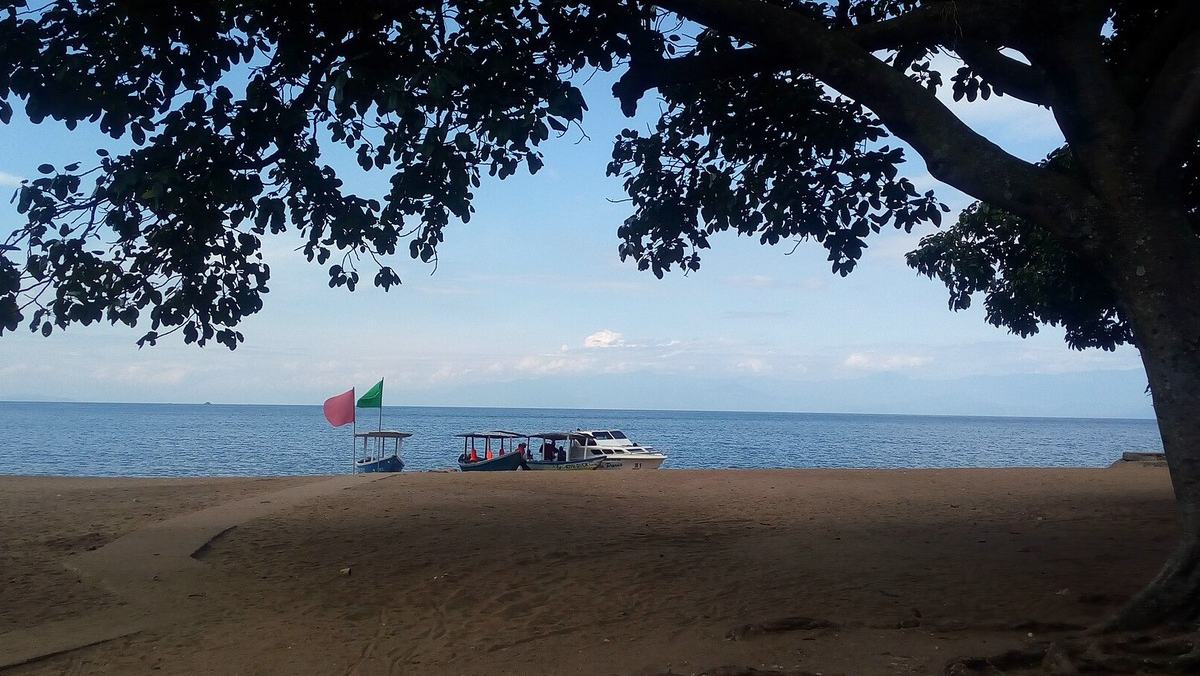
Visit Rwanda's destination guides describe scenic boat excursions and experiences around Lake Kivu, including the chance to combine water travel with visits to local communities. These may involve passenger motorboats rather than paddling. A traveller seeking a gentle seated trip should confirm whether the chosen operator offers that type of vessel, rather than booking a kayak tour and expecting the boat to do all the work.
Different modes offer different benefits. A powered boat can cover more distance and accommodate passengers who may not wish to paddle, while a kayak allows a slower, quieter experience near the shore. Both require competent operation, appropriate safety equipment and attention to weather. The crew's comfort and interests should determine the choice.
The Congo Nile Trail connection
Rwanda's Congo Nile Trail runs through the western landscape, with stages near communities along Lake Kivu. Visit Rwanda promotes a combination of hiking, cycling and lake experiences. For a visitor, this creates a flexible itinerary: a day of paddling can be balanced with time walking or cycling through the hills. A small-boat outing need not be part of an exhausting multi-day expedition to contribute meaningfully to the holiday.
The trail does not mean every point on the path offers access for kayaks, nor that there are approved boat rentals at each village. Check the operator's meeting point and whether any transfer is needed. Visitors who plan to combine activities should allow time to rest and recover from one before beginning another, especially in a hilly region where distances can feel more demanding than expected.
A quiet perspective on shoreline communities
Lake Kivu's shoreline includes settlements and areas where people are fishing, travelling or carrying out ordinary work. A kayak can bring visitors closer to those activities, but it should not be used to intrude. Keep an appropriate distance from fishing gear and avoid blocking landing areas used by residents. A visitor should not assume that a quiet beach is public simply because it can be reached by boat.
Photography of people deserves particular care. Ask permission before taking close portraits and allow a local guide to explain respectful practice. A landscape picture showing hills, water and settlements can communicate the character of a destination without turning local residents into unconsenting attractions. Respect improves both the journey and the relationship with the communities encountered.
How changing weather affects the paddle
The lake may look calm from a hotel terrace, but wind can rise during the day and make paddling more demanding. A following breeze can conceal the effort needed to return, particularly for a beginner on a SUP. Check the local forecast and the operator's assessment before launching. If the guide decides that conditions are inappropriate, accept a modified route or cancellation.
Avoid treating the planned tour distance as a target that must be reached whatever happens. The best trip includes an alternative route and a comfortable turnaround point. Paddlers should stay together and tell the guide promptly if they become cold, tired or uncertain. A brief, safe excursion often provides more enjoyment than a long outing completed under pressure.
Flotation and suitable clothing
Every passenger on a kayak or small boat should have appropriate flotation equipment correctly fitted. The operator should explain how to use the craft and what to do if somebody falls in. Swimming ability does not remove the hazards associated with a large lake, and travellers should never assume that marketed recreational activities are free of risk. A proper briefing is a reassuring sign of a responsible service.
Wear clothing suitable for sun, wind and the possibility of getting wet. Carry drinking water and secure essential belongings in an appropriate waterproof bag. Keep communication equipment accessible. Families should choose a route suited to the youngest or least experienced participant and should not expect a child to provide sustained paddling effort on a long journey.
Water quality and geological context
Lake Kivu is unusual in part because its deep waters contain dissolved gases, including methane and carbon dioxide, which are monitored and managed as part of scientific and energy activity in the region. This geological fact does not justify dramatic claims about danger during every ordinary kayak excursion, but it is a reason to rely on authoritative local guidance rather than sensational travel stories. Visitors should respect any restrictions issued by relevant authorities.
As with any large freshwater lake, current water quality, local advisories and suitability for swimming need to be checked independently. A lake's popularity as a tourism destination is not a universal guarantee about conditions at every beach. A boat trip should focus on the approved route and avoid unplanned immersion or swimming stops where they have not been assessed.
Wildlife and environmental respect
A small craft can provide excellent opportunities to observe birds and changes in the shoreline environment. Move slowly and keep a suitable distance from wildlife, especially where animals may be nesting or resting. Do not feed birds or approach sensitive vegetation simply to obtain a closer photograph. If a guide asks the group to keep clear of a particular area, the instruction may relate to conservation as well as navigation.
Carry waste back and secure packaging before departure. Visitors should not leave litter on an island or shoreline after a picnic. The surrounding environment is a central part of Lake Kivu's appeal, and responsible tourism depends upon protecting it as well as enjoying it.
Coffee, culture and water on one trip
Visit Rwanda also promotes coffee-related experiences along Lake Kivu, including the Kinunu area, where tours may be combined with lake travel. This creates an interesting opportunity for a holiday with more than one focus. A morning kayak or boat trip can be part of a day that also explores local agriculture and community enterprise, provided the operator has arranged suitable access and timing.
Travellers should not assume that a particular kayak hire automatically includes a coffee plantation or organised community visit. Confirm the itinerary and who is responsible for transport and guiding. A trip that combines water with a local experience can be especially rewarding when there is enough time to understand each activity without rushing.
Choosing the correct season and provider
The official Visit Rwanda kayaking page and Lake Kivu destination guide are first-party sources for the kinds of outings available and the identities of lakeside towns. They are not real-time booking systems for a named departure. Before travelling, ask the operator about the actual schedule, meeting location, distance, passenger requirements and weather policy. If a trip depends upon a particular activity, verify that it will be operating on the chosen date.
Be clear whether the desired experience is a short kayak lesson, a guided coastal paddle, a stand-up paddleboard session or a powered sightseeing cruise. These choices require different skills and produce different kinds of enjoyment. The best booking is one based on realistic expectations rather than broad marketing language.
The lake beyond the road
Lake Kivu rewards travellers who take time to experience its shoreline slowly. A kayak can reveal changes in the hills, reflections and settlement patterns that are easy to overlook from a vehicle. Rubavu and Karongi provide distinct bases, while a guided excursion can help visitors understand the local water environment without making an unnecessarily demanding journey.
With an established operator, proper safety equipment and respect for communities and conditions, a modest paddle can become a memorable complement to other travel in western Rwanda. The value lies not in how far the boat goes, but in how attentively the people aboard experience the lake.
Sources and photograph attribution
Official destination and boating guidance: Visit Rwanda — Official Kayaking Experiences. Current access, rules, weather and reservations must be checked independently before travel.
Photograph: MuitaHappy — “Lake Kivu beach featuring touring boats.jpg” (CC BY-SA 4.0), via Wikimedia Commons. Resized to JPEG 1200×800 for editorial display. Source: https://commons.wikimedia.org/wiki/File:Lake_Kivu_beach_featuring_touring_boats.jpg. Licence: https://creativecommons.org/licenses/by-sa/4.0. Original rights remain with the credited creator or as specified by the source and licence.
