
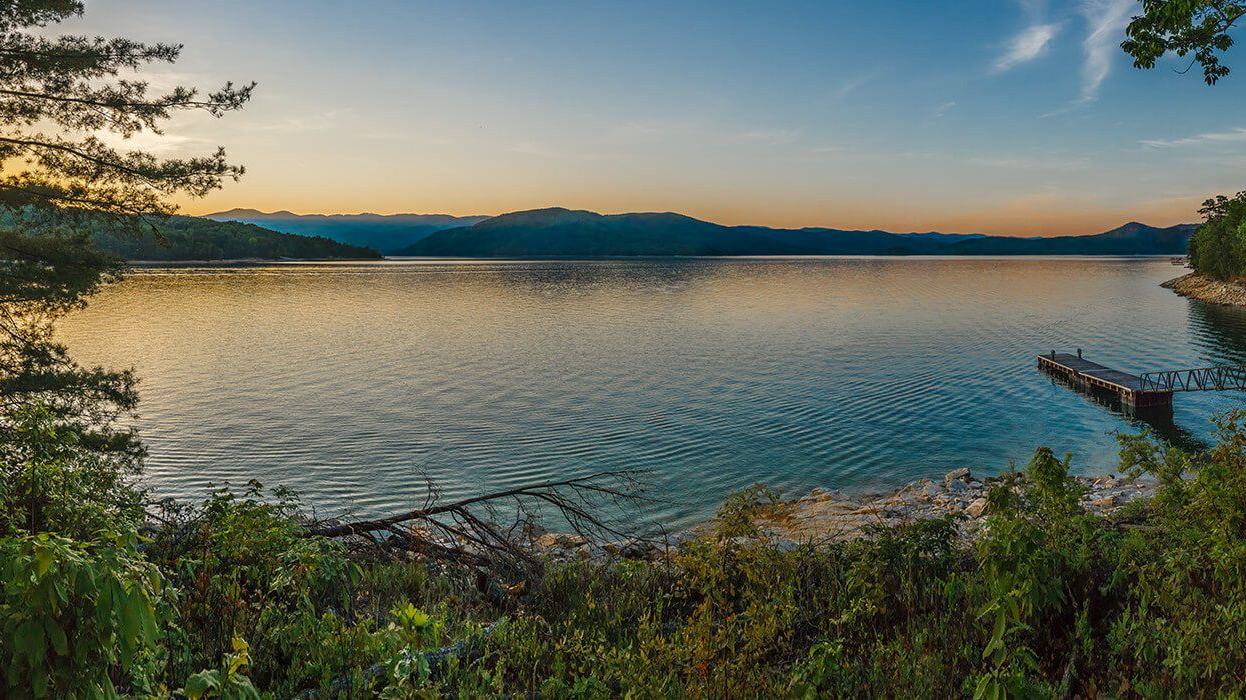
Discover Lake Jocassee's undeveloped Blue Ridge scenery, waterfall coves and practical boat access through Devils Fork State Park, using official state sources.
A mountain lake that rewards a slower boating day
Lake Jocassee feels unusually remote for a destination reached from a South Carolina state park. The water sits below the Blue Ridge escarpment, where thickly forested slopes and waterfalls create a dramatic setting for a small motorboat, pontoon or carefully handled runabout. The attraction is not a busy waterfront of restaurants and fuel docks. It is the chance to enter a mostly undeveloped mountain landscape by water and spend the day finding its quieter corners at a relaxed pace.
South Carolina State Parks describes Devils Fork State Park as the lake's public access point, with views into the surrounding Jocassee Gorges. The park's information also makes clear that the waterfalls are a major attraction for visitors arriving by boat. Those features make the lake an appealing weekend escape, but they also change the planning. A boater cannot assume that supplies, sheltered moorings or easy road access exist all along the shoreline, and an afternoon trip should start with a clear return plan.
The lake is known for clear water and substantial depth, yet its appearance can mislead an unfamiliar skipper. Rocky banks, submerged timber, sudden weather changes and changing reservoir levels still matter. Scenic cruising calls for a modest speed, a reliable depth display and particular caution close to the shore and waterfall approaches. The best memories often come from holding position safely to take in a view, rather than driving the boat as far as possible.
Launching through Devils Fork State Park
Devils Fork State Park is the normal starting point for recreational boaters visiting Lake Jocassee. The park provides launching facilities, visitor information and spaces for people making a day trip or staying overnight. Its official activity pages explain that daily park admission applies to boat launching and that access arrangements depend on the park's operating conditions. Anyone towing a trailer should check opening hours, parking procedures and ramp updates before setting out, especially on a busy weekend.
The park website warns that visitor numbers can create queues and parking restrictions on peak days. For a relaxed outing, arriving early is much more useful than trying to hurry through crowded ramps. Before launching, the crew should fit life jackets, stow loose gear, confirm the drain plug and test engine starting and steering away from the water. A short preparation sequence in the designated rigging area helps other visitors and reduces stress at the ramp.
Water levels at Jocassee are not constant, and the state park specifically recommends that boats be trailered when left unattended. Its rules also limit the time a vessel can remain at a dock, so those spaces should not be treated as private berths for an afternoon picnic. The trailer operator should assess the actual ramp conditions at launch and recovery instead of relying on an old photograph or a previous visit. A safe return arrangement is especially important when the lake is high on the day's agenda for families.
Waterfall cruising and the dramatic shoreline
One of the strongest reasons to bring a motorboat to Jocassee is the possibility of reaching waterfalls tucked along the lake's steep shoreline. The state park says some of these waterfalls are accessible only by water, and its visitor guidance recommends lake tours to see the surrounding scenery. A private boat offers welcome flexibility, but precise routes should come from an up-to-date lake map and current local advice. Navigation through an unfamiliar arm of the lake is no place to rely on a social-media pin.
Approach waterfall coves carefully and leave space for other boats, paddlers and swimmers. Falling water may conceal rocks and changes of depth, and the shore can be slippery or unstable. There is little reason to force a boat close to the falls for a photograph when a safe view from farther offshore shows the entire landscape more clearly. Passengers who want to swim should wait for a suitable location away from traffic and hazards, with the engine secured and a responsible lookout aboard.
The Blue Ridge backdrop lends itself to an unhurried sequence of short cruises and long pauses. In calm conditions, reflective water can make the mountains appear almost twice as tall, while a passing cloud changes the colours of the forest. A good boating day may include only a handful of scenic stops. By leaving generous time between them, the skipper keeps fuel consumption predictable, avoids last-minute decisions and allows everyone aboard to enjoy a place that feels genuinely different from a developed reservoir.
Fishing, swimming and family-friendly days afloat
Jocassee has a reputation as a clear-water fishing lake as well as a scenic cruising destination. South Carolina's Department of Natural Resources lists trout and bass among the species present, while the park highlights opportunities for visitors interested in fishing tours. Anyone planning to fish must check the current state licence requirements, seasonal rules and species limits directly with the Department of Natural Resources. Regulations depend on the fish and time of year, and a familiar rule from another lake may not apply here.
For families, the most comfortable boat is often the one with dependable shade, enough storage and a simple way to climb back aboard after a swim. A stable pontoon can work well for a relaxed outing, while a smaller runabout gives more flexibility for passengers who want to explore shoreline scenery. Neither boat is automatically suited to all conditions. The operator should match the day's route to passenger experience, wind exposure, freeboard and the boat's actual load rather than its advertising photograph.
Cold, clear water can be inviting on a warm day, but mountain-fed water may feel very different from the air temperature. Children and less confident swimmers should use properly fitted flotation equipment, and the crew should agree on a simple swim-watch arrangement. Keep swimmers away from propellers, moving boats and areas with unknown currents or submerged hazards. A safe afternoon may end earlier than planned if clouds build over the mountains or the water becomes uncomfortable.
A boat-in overnight escape without the complications
Visitors seeking a longer stay can combine boating with the accommodation options at Devils Fork. The park lists conventional campsites, villas and a boat-access campground among its facilities, but the precise reservation arrangements and rules need checking before travel. A boat-in site is not a substitute for safe navigation: the vessel still needs an approved landing, a way to secure it without damaging vegetation and a reliable plan for the return journey. Booking a site without reviewing those details can turn a simple weekend into an unnecessary logistical problem.
Day visitors can enjoy the same sense of escape without camping overnight. Pack drinking water, appropriate clothing, a small first-aid kit and food that does not require open fires at the shoreline. Where waste facilities are scarce, a carry-in, carry-out habit protects the environment and reduces the chance of disturbing wildlife. The lake's visual appeal depends heavily on its undeveloped banks, so leaving no litter is part of the experience rather than an extra task at the end.
Planning also means identifying where communication may be patchy and giving someone ashore a sensible return time. A charged telephone is useful but should not be the sole communications plan for a remote cove. Operators should carry the safety equipment required for their vessel, keep enough fuel for unexpected detours and pay attention to the weather throughout the afternoon. These habits are less glamorous than a waterfall photograph, but they make it possible for everyone to enjoy the day with confidence.
How to make the most of a Lake Jocassee boating visit
The ideal Jocassee itinerary begins before the boat touches the water: confirm the park's current admission and launch arrangements, check the lake level and weather, inspect the trailer and choose a route with more than one safe stopping option. Once afloat, spend time getting comfortable with the water before heading into the more secluded arms. A gentle opening leg gives the skipper time to assess the boat's performance and lets passengers settle into the quieter pace the landscape deserves.
Owners visiting for the first time may find an authorised local tour an excellent orientation before navigating independently. The state park itself recommends tours to experience the scenery and waterfalls, and staff can help visitors understand the available activities. The best local advice can save a surprising amount of time when figuring out which shoreline is accessible, which ramps are practical and where weather can funnel through the valleys. It also helps avoid trespassing or landing in environmentally sensitive places.
Lake Jocassee offers a particularly satisfying form of leisure boating because its reward is the landscape rather than the marina. A few hours of clear water, forested coves and mountain views can feel like a much longer escape from everyday life. Respecting the park's access rules, local fishing regulations and changing water conditions keeps that promise intact. Leave the lake with time to recover the boat calmly, and the day will be remembered for the waterfalls and the silence, not for a hurried launch or a stressful return.