
A Snowy Mountains guide to Lake Jindabyne kayak hire, designated Snowy Hydro foreshore access, compulsory alpine-water flotation and practical family paddling safety.
A high-country lake with rules worth understanding
Lake Jindabyne in Australia's Snowy Mountains offers an appealing way to spend a summer day by small boat. The surrounding alpine landscape, close proximity to the town and a choice of kayak-hire businesses make it a practical holiday destination. But the lake is part of the Snowy Mountains Scheme, and its boating rules deserve special attention. Snowy Hydro provides information about designated foreshore access, while the New South Wales Government classifies Lake Jindabyne as alpine water, where lifejacket requirements and cold-water risks must be taken seriously.
A visitor should therefore plan around more than the weather seen from a café window. The correct launch, a suitable craft, a properly fitted lifejacket and a clear turnaround point all matter. The summer experience can be gentle and scenic, but it remains a genuine boating activity on a large reservoir where conditions may change quickly.
The lake as part of the Snowy Mountains Scheme
Lake Jindabyne is among the storages associated with Snowy Hydro's major water and electricity infrastructure. The operator has developed designated points around several reservoirs, including Jindabyne, to facilitate public access to the foreshore. Its official visiting guidelines explain that access is managed alongside the responsibilities of other authorities. This means a shoreline that appears attractive on a map is not automatically a permitted place to drive, park or launch.
Visitors bringing their own kayaks should consult the current Snowy Hydro information before choosing a departure point. A publicly accessible foreshore is not necessarily suitable for every vehicle or type of boat, and reservoir levels may affect how the bank can be used. The safest arrangement starts with a recognised access area and recent advice on conditions.
Where responsibility lies
Snowy Hydro manages the infrastructure and provides guidance on access around its storages, but it is not the only authority relevant to a recreational boat trip. Its official guidelines point to Transport for NSW Maritime for boating safety and the enforcement of relevant navigation rules. NSW fisheries authorities regulate fishing. A traveller should consult the appropriate organisation for each question rather than treat one general website as a complete explanation of all legal requirements.
The distinction becomes important when somebody rents a kayak, brings a privately owned motorboat or intends to fish. A rental business can explain its equipment and booking terms, but the government determines lifejacket requirements and other regulations. Similarly, a shoreline sign may contain restrictions not mentioned in a tourism article. Pay attention to the current rules at the actual location.
Kayak hire without bringing a boat
Destination NSW identifies Boss Outdoor Sports as a Jindabyne operator offering kayak hire for people wanting to explore the lake. The business also publishes information about single and tandem kayaks, allowing visitors to consider an outing without transporting a hull across the country. Another locally established operator, Sacred Ride, describes canoe and kayak hire as well as a watersports location near the lake. Each provider has its own inventory, launch arrangements and operating conditions.
Before booking, ask whether the desired type of kayak is available on the intended date, what safety equipment is included and whether instruction or a short familiarisation session is offered. A single kayak may be appropriate for someone confident in basic manoeuvres; a tandem can provide company but requires coordination. Avoid assuming the operator will permit a long crossing simply because a boat is available for hire.
Choosing a suitable launch
Snowy Hydro's designated foreshore access information is an appropriate starting point for owners who bring equipment. Local operators have their own instructions for collecting or launching rental boats, and those should be followed rather than treating the entire shore as a free departure area. A visitor should check whether a recognised boat ramp is open, what parking is permitted and whether any construction or temporary works affect access.
A kayak can be launched by hand in less space than a trailer boat, but it still needs a safe route between vehicle and water. Unstable ground, a steep bank or a crowded swimming area can make a seemingly easy entry difficult. Assess the actual site before unloading. If the access is unsuitable, choose another permitted location rather than improvising a track across sensitive ground.
Alpine waters and compulsory flotation
The NSW Government explicitly includes Lake Jindabyne among its alpine waters and advises people to wear lifejackets. Its published boating safety guidance requires lifejackets to be worn on alpine waters in the circumstances covered by the regulations, and canoe and kayak users should confirm the approved level suitable for their craft and activity. A hire operator should be able to supply appropriate equipment and explain its correct use.
The legal requirements are a minimum, not a reason to ignore common sense. An ill-fitting flotation device can be ineffective when it is needed. Check every buckle and strap and make sure children have correctly sized equipment. No party should rely on a passenger's swimming ability as a substitute for proper flotation in cold alpine water.
Why the water can be dangerous even in summer
Lake Jindabyne's setting is attractive partly because of its high-country climate, yet the water may remain cold enough to make an unexpected immersion serious. The NSW Government warns that alpine boating involves risks from cold water and sudden changes in weather. A warm afternoon on land can give visitors an inaccurate impression of what a capsize would feel like. Dress for the possibility of getting wet, not just for the air temperature.
A sensible paddling party uses suitable clothing and keeps a spare dry layer ready for the return. Carry drinking water, sun protection and a communication device protected from splashes. Those who do not know how to recover after a capsize should seek instruction or select a supervised outing instead of venturing far from the shore.
Learning to handle the craft near the departure point
A short period of practice can make a holiday kayak much more comfortable. Begin with a few strokes in an appropriate sheltered area, learn how the boat turns and make sure the paddler can stop without difficulty. If using a tandem, agree who will provide steering and how the crew will coordinate direction changes. Avoid moving into open water until everybody feels confident about basic control.
A family outing should be built around the least experienced person. The presence of two adults does not guarantee that a child will remain comfortable throughout a long paddle. Make a simple agreement about the turnaround and allow anyone to request an early return. A successful first outing is one that leaves the group wanting to paddle again rather than feeling exhausted.
Choosing an achievable route
The size of the lake can make distant shoreline features look deceptively close. For a first visit, use a modest out-and-back route within a permitted area rather than attempting to cross broad open water. Choose a clearly recognisable landmark, estimate how much time the group can comfortably paddle and turn while energy remains. A route drawn on a phone should not override the weather seen on the water.
If the group plans to stop ashore, establish permission beforehand and avoid private or protected sections. Do not count on an improvised landing as the solution if someone becomes tired. Keep the planned route simple enough that the departure point remains an obvious and accessible destination throughout the outing.
Wind across a mountain reservoir
Wind can develop quickly in alpine areas and may make the return much harder than the outward trip. A kayak moving with a following breeze can cover distance easily, but the paddler may struggle once it is time to head home. Check the local forecast and examine the water at the actual launch. Ripples, short waves and the behaviour of other craft can all provide clues about whether conditions are suitable.
A rental booking should not become an obligation to paddle in strong wind. Ask the provider whether the activity is advisable and follow local warnings. If the weather worsens while afloat, turn back early. Powered craft and sailboats also need to allow for sudden conditions and maintain a proper lookout. The best day is not necessarily the one that covers the most water.
Fishing alongside paddling
Lake Jindabyne attracts anglers as well as kayakers. Some visitors may be tempted to combine a paddle with a fishing outing, but regulations and equipment need separate consideration. Fisheries NSW controls relevant licences and catch limits, while NSW boating rules cover the vessel and its operation. Check the latest rules before bringing a rod or deciding where to fish.
A small kayak carrying tackle needs careful weight distribution and secure storage. Hooks and loose line can create hazards for passengers or wildlife. Avoid stopping in an area used by faster boats or near an active ramp. People fishing from the shore should also use legal access and avoid unstable banks created by changing reservoir levels.
Shoreline environmental care
The Snowy Mountains setting is a strong reason to choose a quiet small craft. A kayak can reveal views of trees, hills and the town from an unusual angle, but the crew should not use that access to disturb wildlife or damage sensitive vegetation. Keep clear of birds resting along the shore and do not land where public access has not been established. Carry rubbish back and keep every loose item secured.
People who move private craft between waterways should follow applicable cleaning, draining and drying advice to reduce the spread of unwanted organisms. An inflatable kayak or paddleboard is not exempt from environmental responsibility. Respecting the shoreline is part of protecting the experience for future visitors, whether they arrive to fish, swim, paddle or simply walk beside the lake.
Taking photographs safely
Lake Jindabyne offers dramatic high-country scenery, and a kayak can create attractive low-angle photographs. But a camera should not become the most important item on board. Secure it against loss and avoid leaning beyond the hull to frame a picture. A companion who wants to photograph the view should tell the paddler before shifting position. Even a brief loss of balance can be unpleasant in cold water.
Choose an appropriate open area for a pause and remain aware of other craft. Do not drift into a launch approach or obstruct swimmers while focusing on a distant mountain. A few careful photographs will usually be more memorable than a risky attempt to recreate an image found online.
Combining boating with the Snowy Mountains holiday
A short kayaking outing can fit naturally into a longer stay in Jindabyne. The area offers walking, cycling, sightseeing and other seasonal activities, making it possible to choose the best weather window for boating without allowing the entire holiday to depend on one rental. A family might spend the first morning checking the lake and speaking to an operator, then paddle when the forecast is suitable.
An alternative programme should always be available. Strong winds, cold conditions, a temporary closure or fully booked rental equipment may make the planned outing impossible. Visiting the waterfront or enjoying other activities can still be worthwhile. The freedom to change plans is part of good small-craft seamanship.
Checking the season and current access
Snowy Hydro's official visiting guidance confirms that designated public access exists around its storages and that other agencies regulate boating and fishing. Destination NSW and the named rental operators provide further first-party or tourism information about kayak hire. These sources are valuable starting points, but none guarantees that a particular launch or rental is available on the date of travel.
Before leaving, verify access, parking, weather, water conditions, lifejacket requirements and any temporary works at the intended foreshore. A visitor planning a longer outing should also have an appropriate communication and emergency plan. If the information is unclear, ask the responsible authority rather than improvising an unfamiliar launch.
Enjoying Jindabyne responsibly
Lake Jindabyne offers a compelling form of summer boating: a short paddle with mountains around the horizon and an attractive town close to the shore. The experience need not be physically demanding or complicated when the crew chooses suitable equipment and a conservative route.
Its distinctive alpine-water rules are not an obstacle to enjoyment; they are part of making the activity safe. With proper flotation, a legal launch, respect for weather and an achievable plan, a kayak can provide an excellent way to experience the Snowy Mountains landscape from the water.
Sources and photograph attribution
Official destination and boating guidance: Snowy Hydro — Guidelines for Visiting the Scheme. Current access, rules, weather and reservations must be checked independently before travel.
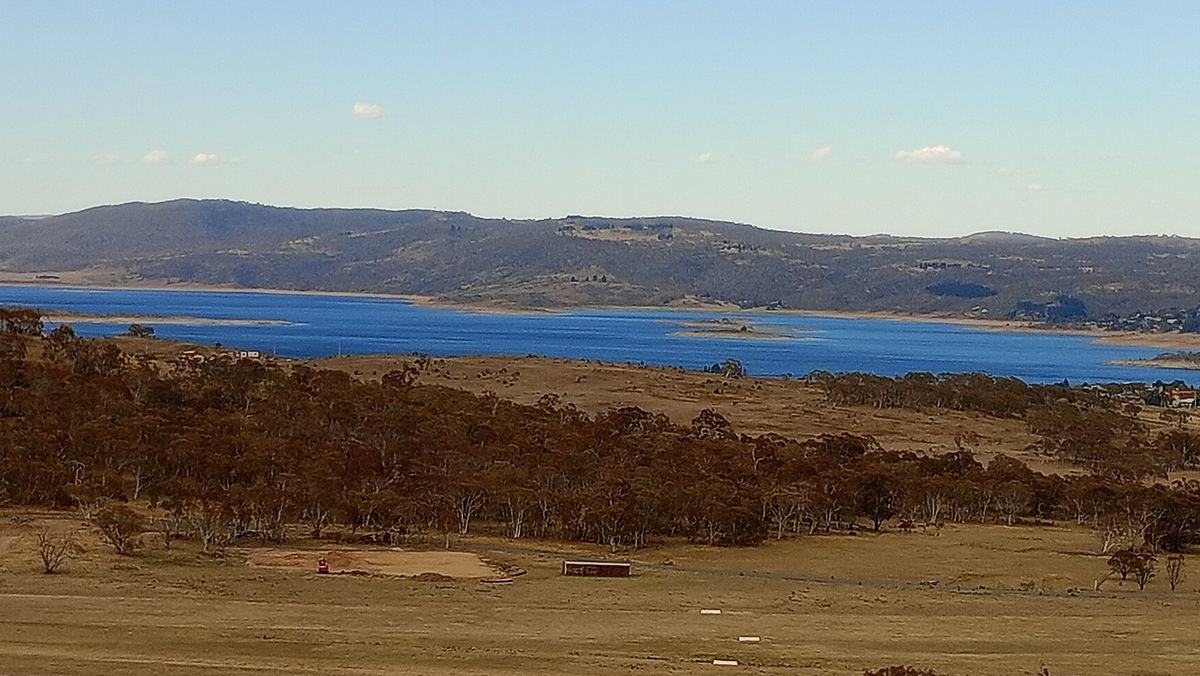
Photograph: MrActiniuM — “Lake Jindabyne from a hill.jpg” (CC BY-SA 4.0), via Wikimedia Commons. Resized to JPEG 1200×800 for editorial display. Source: https://commons.wikimedia.org/wiki/File:Lake_Jindabyne_from_a_hill.jpg. Licence: https://creativecommons.org/licenses/by-sa/4.0. Original rights remain with the credited creator or as specified by the source and licence.
