
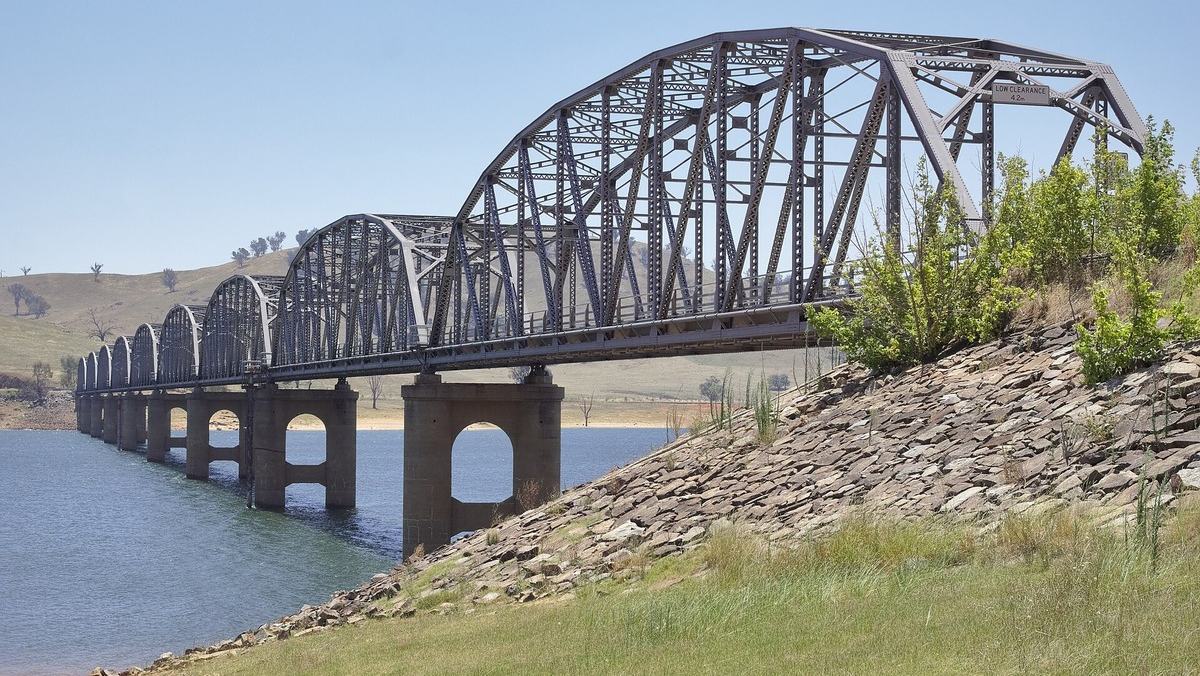
A Lake Hume holiday guide covering Albury-Wodonga small-craft recreation, Bethanga Bridge, variable dam levels, launching considerations and NSW–Victoria rules.
A broad reservoir with two-state character
Lake Hume near Albury-Wodonga is a popular Australian setting for boating, kayaking, fishing and spending time by the water. The lake lies across the New South Wales and Victoria border, giving visitors an unusually important reason to read local information carefully. AlburyCity's official recreation guide highlights canoeing, kayaking, fishing and other watersports, while WaterNSW describes multiple boat ramps and access points around the reservoir. The appeal is immediately understandable: open water, surrounding hills and the opportunity to make a day on a modest craft the centre of a regional holiday.
For a visiting skipper, however, Lake Hume cannot be approached as a static holiday postcard. Its water level changes, which can affect launching, shoreline access and the usability of an intended route. The official sources are best read alongside current warnings and reservoir information. A boat that was easily launched on a previous visit may require a different plan today, especially if a ramp or a shallow arm is affected by changing levels.
The dam behind the holiday destination
Hume Dam is a major water storage facility on the Murray River system, and the reservoir is more than a recreational lake. Its operation as water infrastructure explains why water levels can vary and why the shoreline may not retain a fixed shape through the year. AlburyCity notes the historical significance of the dam, completed in 1936, while WaterNSW explains the structure and the lake's role in the region. Visitors can enjoy the scenery without becoming engineering specialists, but awareness of the managed setting improves decisions on the water.
Navigation near dam infrastructure and marked restricted areas requires particular care. Do not approach structures simply for a closer photograph or assume that an apparently open stretch is available to leisure craft. Follow signs, buoyage and official instructions. A sensible cruise keeps well clear of operational areas and focuses on recreation zones where the crew can navigate without interfering with the reservoir's primary purpose.
Bethanga Bridge as a practical landmark
Bethanga Bridge is a useful geographic reference when planning boating on Lake Hume. It is also relevant to state boundaries and some rules governing the lake, which differ from those at an ordinary reservoir wholly inside one jurisdiction. An aerial or shore photograph of the bridge makes the landscape seem straightforward, yet a skipper must still confirm the safe route, water level and applicable navigation requirements before travelling beneath or near it.
The bridge should be regarded as a landmark rather than an invitation to make it a mandatory destination from any launch. Depending on the chosen departure point and weather, reaching it may involve a considerable open-water passage. A small kayak party might be better served by a sheltered section nearer the vehicle, while an experienced motorboat crew may plan a broader itinerary. The right route is defined by the crew and conditions, not by the number of recognisable features it includes.
Launches that depend on the reservoir level
WaterNSW describes Lake Hume as having numerous access points and boat ramps, but availability should never be assumed from a permanent list or map alone. A ramp can become difficult or unusable when the water retreats, and a shoreline exposed by falling levels can include mud, rocks or unstable footing. The Victorian Fisheries Authority also warns that boat-ramp access changes with reservoir levels. These are practical details that can determine whether a journey is enjoyable or frustrating.
Before towing a boat, check the latest storage level, the intended ramp and any local closure or maintenance notice. Speak to the responsible authority or relevant facility operator if access conditions remain unclear. Owners should not improvise a launch on a beach or slope merely because an official ramp is inconvenient. Damaged vehicles, stranded trailers and unstable ground can turn a leisure trip into a costly problem.
Canoeing and kayaking near the shore
A kayak offers a quiet way to enjoy Lake Hume, provided the planned route stays within the party's ability. The lake's considerable extent can make distances deceptive; a destination that appears just beyond a headland may require a long crossing exposed to wind. A conservative route follows an appropriate section of the shore with an obvious place to turn back. Agree on the distance in advance and keep the plan flexible if the water becomes choppy.
Canoe users face similar decisions. An open canoe may carry family equipment comfortably in calm conditions but is less forgiving of unexpected waves, poor load distribution or passengers shifting suddenly. Choose a craft suitable for the experience of the group, fit flotation equipment and avoid starting an extended journey when the weather is unsettled. A short outing with time to appreciate the landscape can deliver all the pleasure of the lake without the strain of a long return.
Small powered boats and wake awareness
Powerboats allow more of Lake Hume to be explored in a day, but speed should always be matched to visibility, traffic and water conditions. A shallow or rocky section can be dangerous when the reservoir is low, and high speed reduces the time available to react. Observe current restrictions, keep a lookout and avoid areas with submerged hazards. A chart or navigation display is helpful, but it is not a substitute for recent local advice about levels and access.
The person at the helm should also pay attention to other users. Kayaks and paddleboards may be difficult to spot against the reflected light, and a large wake can unsettle them long after a faster vessel passes. Give small craft room and reduce wash when appropriate. Anglers may be stationary in a sheltered cove, but that does not make them invisible or exempt from navigational consideration. A pleasant day relies on shared courtesy.
The two-state fishing question
Fishing is an important part of Lake Hume's recreational character, and the New South Wales-Victoria boundary makes checking licence conditions particularly important. Official sources describe licensing arrangements that need to be understood in the context of the visitor's location and current regulations. The Victorian Fisheries Authority discusses reciprocal arrangements for some licence holders, while tourism material may summarise the requirement differently. A prospective angler should confirm the latest position with the relevant fisheries regulator rather than rely on a simplified statement in a travel guide.
The same principle applies to boating permits, safety equipment and operator obligations. Rules can depend on the type of craft and jurisdiction. Carry the proper documentation and ask the responsible authority when uncertain. A family arriving from another state should not assume that a familiar rule automatically applies in every part of the reservoir. Checking before departure prevents confusion during an otherwise relaxed holiday.
Wind can be the decisive factor
Open reservoir water can develop uncomfortable waves quickly when a breeze strengthens. This can turn a kayak return into hard work or make a lightly loaded motorboat pound in short chop. A morning forecast should be checked again when the group reaches the water, because conditions may be different from those experienced inland or in town. Watch the surface, the movement of other boats and the possibility of changing visibility before deciding how far to go.
A sensible skipper turns back early rather than trying to reach a fixed objective despite deteriorating conditions. For paddlers, this may mean staying near a launch, using a sheltered shoreline or choosing not to go afloat. Powerboat crews should conserve fuel and allow time for a slower return if the water becomes rough. Flexibility is not a compromise in small-boat recreation; it is the foundation of a successful outing.
Making room for other activities
AlburyCity promotes Lake Hume as a setting for various watersports and recreation, not only for one kind of craft. Visitors may encounter people using paddleboards, sailing boats, fishing equipment or powered recreational vessels. Each activity has different handling requirements and may be concentrated in different areas. Before launching, learn which zones are intended for a particular activity and whether restrictions apply. A quiet paddling route should not be plotted through a heavily used high-speed area if a safer alternative exists.
The shore can also provide an enjoyable outing when weather makes boating unsuitable. Views of the dam, local picnic areas and the surrounding hills may be enough to make the trip worthwhile. Having land-based options removes the pressure to proceed on the water merely because gear has been transported. Families often enjoy a relaxed morning by the lake more than a hurried voyage designed around an arbitrary distance.
Equipment for a family day on the lake
A well-fitted personal flotation device for each participant is a basic requirement of sensible boating. Add drinking water, sun protection, appropriate footwear, a first-aid kit and a reliable communication method. A map of the launch and planned route helps a group remain oriented, especially where the shoreline looks similar for long stretches. Secure all loose items and ensure that children understand where they may sit and how to behave during a launch or recovery.
For a private motorboat, inspect fuel, electrics, bilge arrangements, lines and any required safety gear. Check trailer tyres and lights before leaving home. A kayak owner should examine fittings, buoyancy and paddle condition. These straightforward preparations prevent common problems and allow the crew to concentrate on enjoying the day. Carry a plan for what to do if the craft cannot return under its own power, rather than assuming assistance will be immediately available everywhere.
Environment and shore access
A changing waterline may reveal an apparently inviting place to land, but that does not establish permission or safety. Banks can be unstable or environmentally sensitive. Use recognised access areas and keep clear of restricted infrastructure and private property. Respect wildlife, avoid disturbing nesting or resting animals and take rubbish back to shore. Boat crews should also clean and dry equipment when moving between different waters to reduce the risk of carrying invasive species.
It is easy to regard a large reservoir as an empty space, but the shore supports a range of ecological and human uses. Noise, wash and repeated informal landing can affect the experience of others. A quiet kayak outing can be particularly rewarding when the paddler chooses to observe rather than approach. The aim is to leave the area ready for the next visitor to discover it with the same sense of enjoyment.
A relaxed Albury-Wodonga boating weekend
A practical short break starts with confirming accommodation, weather and the most appropriate launch. On the first day, walk to the chosen access and examine the water before taking a craft out. If conditions are good, make a short trip that establishes how the boat handles on the reservoir. Save a longer route for the following day only if the crew has sufficient experience and the forecast supports it. This avoids turning arrival day into an exhausting rush.
The two-state location offers opportunities for varied land-based exploration as well, but the boating portion should remain independent of a tight schedule. A late start, a ramp closure or a strong wind need not ruin the holiday. Choose a picnic or sightseeing alternative and return when conditions improve. The strongest leisure itineraries are designed to cope with the lake as it actually is, rather than with an idealised image from a brochure.
Low-water restrictions deserve special attention
The Victorian Fisheries Authority publishes specific advice for Lake Hume when storage falls to very low levels, including a four-knot restriction in identified waters when the lake is below ten per cent capacity. This should not be read as a statement that the lake is currently at that level. It illustrates why current storage information and official warnings are essential to planning. Water levels affect both the legality and safety of certain routes, and restrictions can change in response to conditions.
Boat operators should verify the latest notices with the appropriate authorities and obey posted signs at launch facilities. A navigation app may show a broad blue lake even when a particular bay is now shallow or obstructed. Real-time observations, local guidance and prudent speed are all necessary. No part of a recreational itinerary should depend upon passing through an area whose safety is uncertain.
Confirming the rules before setting off
AlburyCity and WaterNSW provide first-party context for Lake Hume's recreational use, geography and access. The Victorian Fisheries Authority provides additional guidance about levels and fishing arrangements. None of these pages constitutes a booking confirmation or a guarantee that a particular ramp will work on the day of arrival. Check current warnings, storage conditions, weather and the actual facilities associated with the intended launch.
Lake Hume offers the simple pleasures of water, a boat and a wide landscape, but it rewards careful preparation. Choose a route appropriate to the vessel, pay attention to changing levels and respect the jurisdictional rules. A cautious paddle or an unhurried dayboat trip can then reveal the reservoir's distinctive character without placing unnecessary demands on the crew or the environment.
Sources and photograph attribution
Official destination and boating guidance: AlburyCity — Lake Hume Recreation. Current access, rules, weather and reservations must be checked independently before travel.
Photograph: Thennicke — “Bethanga Bridge (Lake Hume) 2015.jpg” (CC BY-SA 4.0), via Wikimedia Commons. Resized to JPEG 1200×800 for editorial display. Source: https://commons.wikimedia.org/wiki/File:Bethanga_Bridge_(Lake_Hume)_2015.jpg. Licence: https://creativecommons.org/licenses/by-sa/4.0. Original rights remain with the credited creator or as specified by the source and licence.
