
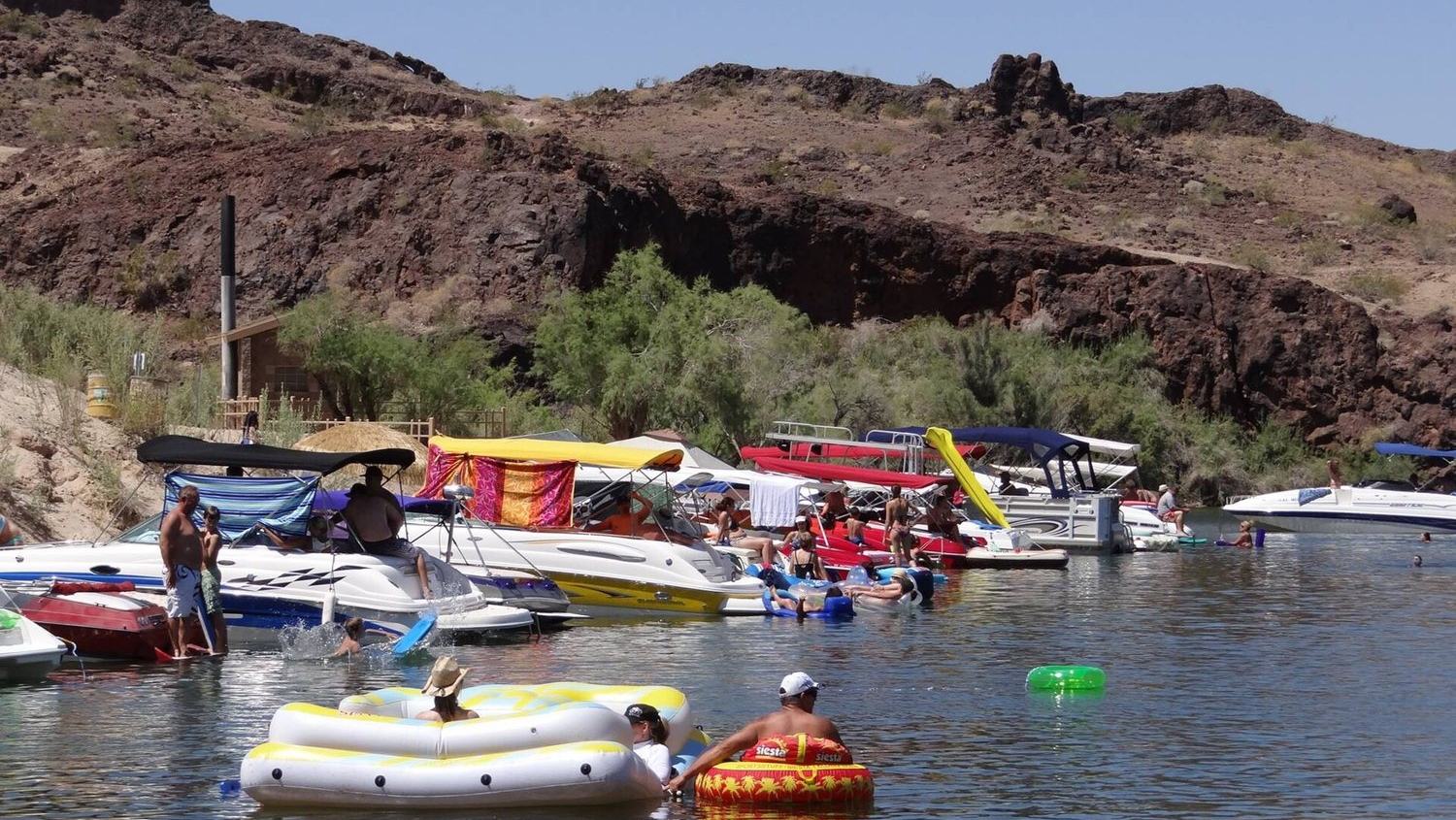
Lake Havasu offers small-boat scenery beside Arizona's desert hills, but launches, London Bridge traffic, heat and larger boat wakes demand planning.
Desert boating with an unexpected colour palette
Lake Havasu is a distinctive Arizona destination where blue water meets rugged desert hills and a busy recreational boating community. A visitor in a modest motorboat can enjoy a scenic outing without treating the lake as a venue for maximum speed. The attraction is the contrast between the arid landscape, waterways near Lake Havasu City and quieter stretches where small craft can travel at an easy pace. The waters can be crowded during holidays and special events, so a good route begins with considering the time and crew rather than simply picking a landmark.
A useful family itinerary may focus on the area around an approved launch and one nearby sheltered destination. Heat, sun, wake and changing wind deserve just as much attention as fuel or the condition of the outboard. A familiar lake photographed in calm weather can be very different when several large powered boats move through a narrow section. Small-boat owners should take their own vessel's capabilities seriously and be prepared to turn back without visiting every point on the map.
Launch choices change the whole day
Lake Havasu City's official visitor guide describes a network of public, state-park and privately operated launch ramps and marinas. The options differ in fees, parking, access conditions and location. An owner towing a compact trailer boat should choose a ramp that fits the craft, vehicle and anticipated route rather than assuming any ramp visible in an online photograph will be available. Some sites have restrictions or additional costs for trailer parking, while private facilities may reserve access for customers or guests.
Check current opening hours and any temporary closures before driving to the shore. Have drain plugs, lines, lifejackets and safety equipment ready while still in a designated preparation area. This allows the trailer to be backed down without a long delay or distraction. When recovering, leave enough time to secure the boat and deal with dry desert dust as well as wet equipment. Launch logistics may determine whether a brief outing feels relaxed or becomes a frustrating sequence of queues.
The London Bridge area attracts attention
The relocated London Bridge is one of Lake Havasu City's most recognisable landmarks, and the channel nearby is a familiar focus for waterfront activity. It can be enjoyable to see the bridge from a small craft, but a scenic passage does not justify aggressive speed or dangerous overtaking in a crowded area. Pedestrians, waterfront visitors and other boats make a concentrated environment where the skipper needs a good lookout and predictable handling. Read the posted restrictions and pay attention to actual conditions.
Plan to observe the landmark at a sensible time rather than when heavy holiday traffic makes the channel uncomfortable. A passenger hoping to take photographs should remain seated and avoid distracting the skipper. A small boat can appreciate the same view without blocking other users or travelling close to the shore. If shore access is part of the plan, identify a permitted berth or landing first. A busy commercial waterfront should not be treated as an informal place to tie up wherever convenient.
Heat changes the safety checklist
Desert sunshine is a special part of the lake's appeal, but it also makes sun exposure and dehydration practical boating risks. A group that feels comfortable while moving may become overheated after stopping in a sheltered cove without shade. Carry adequate drinking water and protective clothing and ensure everyone has somewhere to get out of direct sun when possible. Children and older passengers may become tired faster than the skipper expects. Plan regular breaks and avoid treating a late departure as a reason to stay out into the hottest period.
Very warm air does not remove the danger of falling into deep water or passing close to another boat. Everyone still needs suitable personal flotation, and swimmers should only enter at lawful, safe locations after the engine has been stopped appropriately. Shade structures must be secured for motion and wind. A lightweight bimini that is comfortable at anchor can be damaged or dangerous if left deployed outside its operating limits. Heat management is part of responsible small-boat preparation.
Choose a quiet cove without taking shortcuts
Lake Havasu offers many scenic places, but a cove suitable for a larger cruiser may not automatically provide safe anchoring for a particular small boat. Consider depth, bottom type, wind direction, other vessels and whether the shore is protected or privately managed. A shallow beaching approach can hide rocks or soft sediment that make recovery difficult. Use current chart and local information to assess the place before entering, and do not assume the colour of the water proves sufficient depth.
An anchor should match the boat's size and the holding ground, with enough line to remain secure if the breeze shifts. Keep the engine and propeller away from swimmers and verify that the chosen location permits the intended activity. A quiet stop becomes less enjoyable if a boat swings into another vessel or if the crew has no way to depart safely after the wind rises. It is better to enjoy a view from deeper water than to force a boat into a narrow margin.
Wake can be the biggest surprise
Lake Havasu is associated with both high-performance powerboats and small family recreational craft. These may share open sections in which a little runabout is affected by the wake of a much larger vessel. A skipper should watch approaching traffic and adjust course and speed before a wake arrives rather than attempting a sudden manoeuvre when the bow begins to rise. Secure loose items and ask passengers to remain seated. The lake can become busy quickly around marinas and popular waterfront stops.
A smaller boat's safe operating speed depends on sea state, loading and visibility. Even where a high speed may be legal, it may not be sensible among crowded traffic. Do not attempt to follow faster boats across rough wake without considering the power, hull type and experience available. Keep a comfortable distance from others and avoid creating unnecessary wake in a narrow cove. Good seamanship protects neighbouring boaters as well as the people aboard your own craft.
Equipment needs to match the outing
Check the outboard, fuel level, steering, lights, battery and ventilation before launching. Carry suitable flotation devices and other safety equipment required under Arizona and applicable federal rules for the size and type of boat. A working engine does not replace the need for a way to call for help or to identify the vessel's position if the trip goes wrong. A waterproof phone and charging arrangements can be useful, but a reliable marine radio may be appropriate for more remote travel.
A small crew should know where the fire extinguisher, first-aid supplies and spare lines are kept, if required and carried. Explain how to stop the engine and how to board safely from a pontoon or the water. Children should be seated securely, particularly when the boat meets larger wakes. A short and well-planned route needs less equipment than a demanding overnight passage but still requires a credible response to common breakdowns. The aim is independence without unnecessary risk.
Environmental rules travel with the trailer
Owners moving between reservoirs need to consider aquatic invasive species. Boats can transfer organisms in bilges, livewells, trailer bunks and equipment even when they appear clean. Follow the relevant Arizona and destination-state instructions on cleaning, draining and drying before transporting the boat. The duty is especially important for anglers carrying live bait or water between locations. Some areas require inspections or additional steps, and local requirements can change as management agencies respond to new risks.
Do not discard rubbish, fishing line, oil or bait into the lake. Leave a cove as clean as it was found and respect areas managed for wildlife or habitat protection. Slow down in sensitive places and avoid disturbing other visitors with unnecessary engine noise. A lake surrounded by desert may look resilient, but its narrow margins and limited shore access can be vulnerable to repeated damage. Responsible behaviour improves the experience for those who arrive later.
A practical family-sized itinerary
For a first visit, choose one official launch and identify a scenic nearby part of the lake, with a clear turning point and comfortable return. A passage past the city waterfront may be appealing, while a sheltered stop can give children time away from the engine noise. Keep the timetable flexible and consider the heat and busiest traffic period. If the wind increases, shortening the trip is sensible; a beautiful view is not worth a difficult recovery or an exhausting crossing.
Allow extra time for waiting at a launch, manoeuvring through any crowded channel and securing the boat on the trailer. A skipper who is unfamiliar with the lake should consult current charts and local marina advice before travelling beyond well-known routes. Confirm where fuel can be obtained rather than assuming a waterside business is open. The best itinerary leaves enough reserve for a safe return even when a planned stop takes longer than expected.
The best Lake Havasu day is a measured one
Lake Havasu combines striking scenery, active waterfront tourism and a practical network of launch facilities, making it attractive to owners of small powered boats. The official visitor information is an excellent starting point for choosing a ramp, but individual facilities must confirm their current rules and availability. Boat suitability, weather, heat and traffic deserve the same careful assessment as the map. A quiet family trip can be every bit as rewarding as a high-powered run across open water.
Before departure, select the right launch, review current boating regulations and the forecast, and ensure everyone understands the plan. Treat crowded channels and shallow coves with particular caution. Carry water, protect passengers from the sun and maintain proper flotation and communications. An uncomplicated outing with plenty of time ashore can provide a memorable taste of Arizona's boating culture. The value lies in being able to enjoy the desert landscape and return safely, not in travelling as far or as fast as possible.
Sources: Lake Havasu official visitor launch directory and Visit Arizona's park guide. Photograph: boaters at Lake Havasu, BLM Arizona, United States government public domain, via Wikimedia Commons; photo resized for publication.
