
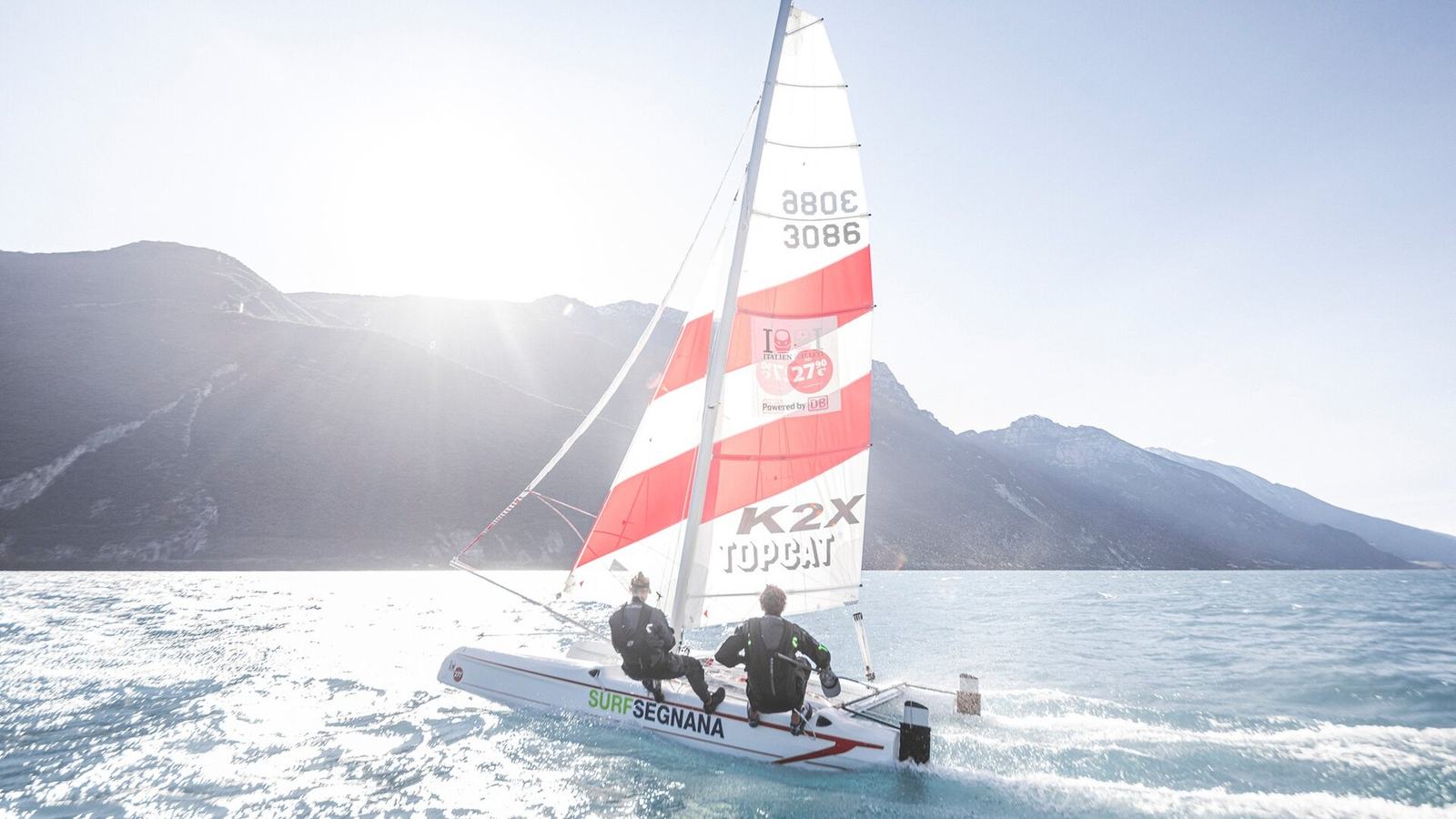
A practical guide to sailing the northern end of Lake Garda, including the Ora and Pelèr winds, the Riva–Torbole sailing scene and important motorboat rules.
Lake Garda's northern waters are famous for sailing, with mountain scenery and the alternating Ora and Pelèr winds shaping time afloat. For visiting families and small-boat sailors, local instruction and navigation rules matter just as much as the views.
Why Garda feels like a sailing destination
Lake Garda combines mountain scenery, waterfront towns and a remarkably active sailing culture. In the north, steep slopes frame the water around Riva del Garda and Torbole, giving even a short outing the drama of a mountain journey. The official Garda Trentino tourism service describes sailing here as a meeting of wind, water and rock, with dinghies and catamarans sharing the attraction with organised regattas. This is not a setting where the day's enjoyment has to depend on covering a long distance.
A small sailing boat can be the perfect way to appreciate the landscape, provided its crew respects the strength and timing of local breezes. The lake looks gentle in calm morning photographs, but conditions vary across the day. New visitors are well advised to start with an experienced sailing school or qualified instructor, learn how the winds work locally and plan a first session on a day suited to their ability. Confidence on another lake is useful, but not a replacement for local knowledge.
Learn the Ora and the Pelèr
Two named winds help define northern Garda's sailing rhythm. Local tourism guidance describes the Pelèr as a wind blowing from the north towards the south in the morning, while the Ora commonly develops from the south towards the north later in the day. These patterns explain why the lake draws sailing enthusiasts, but they are general tendencies rather than a guaranteed timetable. The actual forecast, thunderstorms and changing pressure systems can produce conditions outside the usual pattern.
For a family booking a lesson, that daily rhythm makes the choice of session more important than the most convenient hour on a holiday calendar. Ask the sailing centre what wind strength is appropriate for beginners and whether instruction is adapted to children. Experienced crews should still plan sail area and return routes for the conditions expected later in the session. A beautifully controlled morning sail is a more rewarding memory than an exhausting struggle to get back.
Riva del Garda and Torbole on shore
Riva del Garda and Torbole sul Garda form an excellent base for a sailing holiday. The setting brings training centres, sailing clubs and waterside facilities close to accommodation, restaurants and walking routes. The Garda Trentino destination organisation lists sailing specialists and courses, making it possible to compare beginner instruction, equipment and supervised experiences. Visitors bringing their own boat should contact the relevant club or facility about launching, local requirements, storage and available moorings.
There is plenty to enjoy when the sails are furled. Riva offers a distinctive townscape beside the northern lake, while Torbole has a strong wind-sports identity and views towards the surrounding cliffs. Families can alternate sailing sessions with a waterside walk or a relaxed café stop. Building one rest afternoon into the programme is sensible, particularly if children are learning and the breeze has been lively. The best active holidays leave everyone keen to go out again.
Understand the motorboat restriction
A point that deserves particular attention is the regulation of engines in Garda Trentino. The official regional tourism guidance says motor navigation is forbidden in its area, with an exception for assistance during regattas. That means a visitor should not assume that a privately owned speedboat or motor cruiser can be used in the northern lake merely because boating is possible elsewhere on Garda. Check the current rules with the responsible authorities and marina before launching or booking a vessel.
For sailing visitors, the restriction reinforces the need to understand local operating procedures and propulsion rules, including how permitted support or safety arrangements work in the specific circumstances. Do not guess whether an auxiliary engine creates an exemption. A local sailing school or authorised operator can explain how lessons and charter sessions are conducted. Responsible leisure boating begins with knowing where and how your particular craft may operate, not interpreting a scenic brochure as permission.
Choose the right type of session
The northern shore has opportunities for different kinds of sailors, from first lessons in a dinghy to supervised outings on larger sailboats. Beginners benefit from a boat that gives immediate feedback without overwhelming them, while a group hoping for sightseeing may prefer an instructed or skippered session. Compare the experience promised, the qualifications of the operator, equipment provision, weather cancellation policy and any age restrictions before committing money.
Even a short time afloat benefits from a practical checklist. Wear a properly fitted buoyancy aid or lifejacket appropriate to the activity, protect against sun exposure and keep a dry change of clothes available for after the session. The boat's crew should understand capsize procedures where relevant and know how the sailing centre communicates an early return. If an approaching storm or unexpected gust front changes the risk, come ashore rather than insist on using the full booking.
Keep the lake beautiful for the next crew
Garda Trentino's tourism authority also encourages sailors to reduce their impact on the freshwater environment. It asks visitors to bring waste ashore, clean hulls to avoid spreading invasive species and use environmentally considerate cleaning products. Those habits are especially relevant for boat owners who move their craft between different lakes or coastal waters. A vessel that looks clean may still carry biological material, so careful preparation matters.
A sailing holiday on Garda works best when local conditions shape the programme. Choose a reputable school or club, learn the wind pattern while treating the actual forecast as decisive, and pay close attention to the engine restrictions before bringing your own craft. Then leave enough time to enjoy Riva, Torbole and the mountain scenery from land as well as water. The result is an active holiday built around the pleasures of sailing rather than the pressure of a schedule.
Source
Garda Trentino – Sailing