
A practical Snowy Mountains boating guide to Lake Eucumbene, Old Adaminaby and Anglers Reach access, changing Snowy Hydro water levels, alpine rules and fishing.
The Snowy Mountains reservoir behind the view
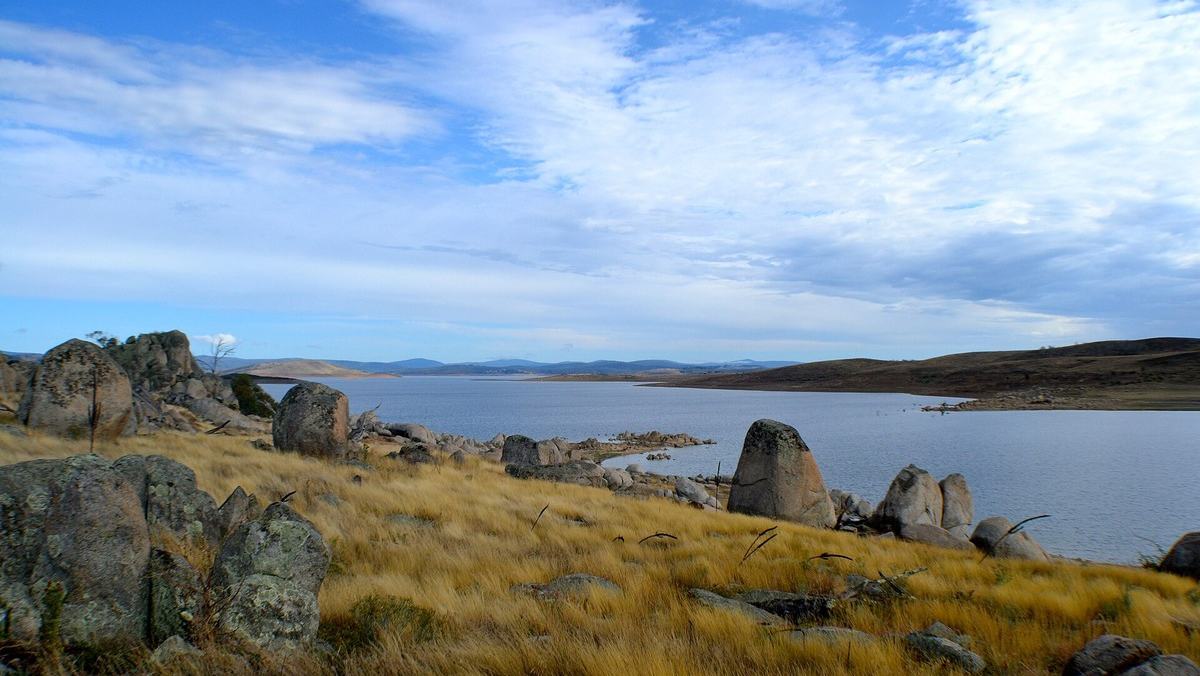
Lake Eucumbene in New South Wales offers one of Australia's most distinctive inland boating landscapes. Set high in the Snowy Mountains, it combines open reservoir water, scattered shore settlements, fishing grounds and views of an alpine environment. The NSW Government's official destination description places it about 40 kilometres from Cooma at its closest point and identifies its elevation as approximately 1,200 metres. For a trailer-boat owner or family seeking a short outing, those details matter: this is not a suburban lake with uniformly sheltered water or an unchanging shoreline.
Lake Eucumbene is part of the Snowy Mountains Scheme managed by Snowy Hydro. Its water level changes as storage and water movements respond to operational demands and inflows. A route, beach or launch that worked at a previous level may be different on a subsequent visit. The best preparation therefore begins with current storage information and confirmed access, not with a map or a photograph from a past summer.
Old Adaminaby as a familiar launching reference
Old Adaminaby is one of the names most closely associated with boating and fishing on the reservoir. The Lake Eucumbene regional visitor guide identifies an upgraded launch in this area among the common ways of putting a recreational boat on the water. That does not guarantee the ramp can be used at every storage level. Before towing, confirm the latest condition of the ramp, the approach road, water depth and any notices issued by the managing authority.
Arriving with a trailer calls for orderly preparation. Check tie-downs, fuel, required safety equipment and communication arrangements before moving into a narrow launching lane. Once the craft is afloat, clear the ramp area promptly and finish small adjustments in a location where the boat will not obstruct others. An improvised launch across an exposed foreshore can damage the environment and trap a vehicle, so established facilities should always take priority.
Anglers Reach and its boating character
Anglers Reach provides another recognised point of reference for visitors to the reservoir. The regional destination website includes its boat-launching facilities in descriptions of the area's appeal to fishing and boating visitors. A family choosing accommodation or a launch should decide which section of the reservoir they actually want to explore, rather than treating every road that approaches the water as equivalent.
A launch near the intended route can save time, fuel and an unnecessary open-water passage. For somebody planning a short morning fishing trip, remaining near a familiar shore may be more useful than attempting to reach a distant bay. At the same time, an operator or owner should establish whether a particular marina, ramp or access track is currently functioning. Reservoir levels can change the practical relationship between an address on land and the actual waterline.
Why the current storage level matters
Snowy Hydro publishes weekly gross storage levels for Lake Eucumbene, Lake Jindabyne and Tantangara on its official live-data pages. These figures give visitors a useful overview of changing conditions, although they are not a guarantee of safe depth at a specific ramp or cove. The operator also explains that water moves around the scheme as part of its electricity generation and storage responsibilities. The visible lake is consequently part of a managed system, not simply a holiday backdrop.
Check the latest figure and the most recent access notices shortly before departing. If the chosen ramp is marginal or the shoreline has retreated, ask local authorities or a qualified service provider what access remains possible. A digital chart can help with general orientation, but old bathymetric information may not show all hazards exposed by falling water. Careful local knowledge and conservative navigation are more reliable than assuming familiar conditions have persisted.
Understanding alpine-water safety rules
NSW Government boating guidance treats Lake Eucumbene as alpine water. That classification carries specific requirements for lifejacket use and reflects the risks of cold conditions. Before setting out, confirm the current law for the kind of craft involved and ensure every person has a suitable, properly fitted flotation device. Young passengers need equipment sized for them rather than a loose adult lifejacket, and the person in charge should understand its proper use.
Water temperature is not determined by how sunny the afternoon feels at a picnic site. An unexpected immersion can create an immediate hazard even in the warmer months. Wear clothing suited to the risk, secure spare layers and establish how the crew would deal with an accident. An attractive lake should be enjoyed without assuming that swimming ability alone makes a small boat safe.
Planning a modest first route
For a crew unfamiliar with Lake Eucumbene, a short out-and-back near an appropriate launch is a stronger choice than crossing a broad section of reservoir. Decide on a visible turnaround point, calculate a realistic return time and leave a reserve for weather changes. A boat travelling outward with the wind can face a much harder return. A modest itinerary also allows time to observe shallow areas and learn how the craft handles under the day's conditions.
Do not treat a distant inlet shown in a photograph as an automatic destination. A small motorboat, canoe and kayak have different speeds, range limits and responses to waves. The weakest member of a group should help determine what is reasonable. A family can have a satisfying morning afloat without covering a particular number of kilometres or reaching a named spot.
Fishing without overlooking the boat
Freshwater fishing is an important part of the Lake Eucumbene experience. The NSW Government includes fishing among the area's activities, and local visitor information describes the reservoir as a destination for trout enthusiasts. An angler still needs to confirm current licences, seasons, bag limits and any specific regulations with NSW fisheries authorities. Tourist descriptions and historic fishing reports are not substitutes for the latest rules.
A small fishing boat needs careful weight distribution. Rods, tackle boxes, anchors and wet-weather clothing should be stowed so that passengers can move safely. Avoid standing suddenly near the edge or leaning beyond the hull to retrieve equipment. Fishing can absorb the crew's attention, but someone must continue to monitor other traffic, the shoreline and changing wind. A successful day should end with the boat back at the ramp as safely as it began.
Choosing between a powered boat and a kayak
A powered dayboat can provide range and shelter for an experienced crew, but it adds responsibility for fuel, propulsion, navigation and recovery. A kayak offers a closer relationship with the landscape and can be carried to some recognised hand-launch sites, though it is more affected by wind and water temperature. Neither is inherently safer. The appropriate choice depends on conditions, route, equipment and the competence of the people aboard.
People arriving without a vessel should contact a genuine local operator to establish whether hire, guided fishing or other boating services are currently available. An accommodation listing that mentions boating may not maintain a rental fleet. Ask precise questions about departure point, included equipment, weather cancellation and emergency procedures before paying. A useful booking is one that resolves uncertainty rather than simply confirms a date.
Wind across a broad mountain reservoir
The Snowy Mountains setting can produce demanding conditions for lightweight craft. A calm view from a sheltered road does not prove that open water is comfortable. Observe the lake at the intended launch and check a current local forecast, paying attention to wind direction and the possibility of storms. Even moderate waves may make a small open fishing boat uncomfortable or create a tiring return for paddlers.
If the weather deteriorates, turn back before conditions become difficult. It is poor practice to continue to a destination simply because the trip has already been planned or the trailer has travelled a long distance. A family should be able to choose a land-based alternative without feeling it has failed to complete the day. Conservative decisions preserve both confidence and the opportunity to return another time.
The reservoir's submerged history
Lake Eucumbene's association with Old Adaminaby adds a historical dimension to the landscape. Construction of the Snowy Mountains Scheme transformed parts of the valley, and the relocation of the original settlement is remembered in the surrounding community. Visitors can appreciate that history without trying to locate or approach submerged structures from a boat. Such locations may be unsafe, protected or poorly understood, particularly as water levels change.
A worthwhile itinerary can combine a short boating excursion with local historic interpretation and time ashore. Learning why the reservoir exists offers a different perspective on its changing shore and the engineering work that shaped the region. It also explains why the demands of the water-storage system may take precedence over recreational expectations.
Respecting private shore and designated access
A broad, exposed bank may look like the perfect place to pause for lunch, but not every part of the shoreline is public, accessible or safe. Use recognised landing areas and observe local notices. Receding water can leave mud, uneven ground and debris that create hazards for people trying to step ashore. Do not drag a boat across sensitive vegetation or establish an informal vehicle track to make launching more convenient.
A considerate crew takes all rubbish back, controls loose line and fishing equipment, and avoids disturbing wildlife. When moving a boat between freshwater bodies, clean, drain and dry equipment as required by relevant biosecurity rules. The smallest craft can carry unwanted organisms, so environmental responsibility is not confined to large motorboats or commercial vessels.
What belongs on board
A realistic small-boat checklist includes the legally required flotation equipment, drinking water, suitable clothing, communication equipment, a reliable way to navigate and the safety gear appropriate to the vessel. Powered boats also need attention to fuel, engine condition, battery and trailer readiness. A shore contact should know the intended route and expected return time, particularly if the crew plans to explore a quieter section.
Equipment is most useful when passengers know how to operate it. A flotation device that cannot be adjusted to fit or a phone sealed away where no one can reach it may offer false reassurance. Familiarise the crew with the vessel before departure and decide who will take charge if the operator becomes unable to continue.
A two-day Snowy Mountains visit
A relaxed weekend could begin with a visit to Old Adaminaby or Anglers Reach, checking the chosen ramp and watching the water before launching. If the forecast is favourable, arrange a short outing appropriate to the boat and passengers. Use the rest of the day to appreciate the area ashore rather than pushing into a demanding second route. The following morning can be reserved for another paddle or fishing session only if conditions remain suitable.
Building a flexible schedule is especially helpful where water level and weather can influence access. A successful lake holiday is not defined by spending every daylight hour afloat. Time for equipment preparation, a walking excursion or learning about the Snowy Mountains Scheme can make the trip more rewarding.
How to confirm the details before travelling
The NSW Government's Lake Eucumbene visitor description is the primary source for the destination's location and recreational role. Snowy Hydro's live-data pages provide storage information, while regional visitor guidance identifies Old Adaminaby and Anglers Reach as familiar launching locations. None of those sources guarantees that a particular ramp will function on the day of arrival, or that a particular boat or fishing service can be booked.
Check each operational question with the responsible authority or provider and review the latest NSW boating safety requirements. Distinguish a permanent published facility from its current availability. This habit is particularly valuable on a large managed reservoir where yesterday's shoreline may not be today's.
The reward of careful planning
Lake Eucumbene offers the pleasures that attract people to small-boat recreation: open views, quiet corners, fishing opportunities and the changing colours of an alpine landscape. The essential decisions happen before the vessel leaves shore. A correctly chosen ramp, realistic route and understanding of water levels turn an uncertain trip into an enjoyable one.
A modest kayak or fishing boat does not need to travel far to make the journey worthwhile. With respect for cold water, changing conditions and the reservoir's working role, a crew can enjoy the Snowy Mountains from a perspective that is both memorable and responsibly managed.
Sources and photograph attribution
Official destination and boating guidance: NSW Government — Lake Eucumbene. Current access, rules, weather and reservations must be checked independently before travel.
Photograph: Alex Gower — “Eucumbene Lake, Adaminaby.jpg” (CC BY 2.0), via Wikimedia Commons. Resized to JPEG 1200×800 for editorial display. Source: https://commons.wikimedia.org/wiki/File:Eucumbene_Lake,_Adaminaby.jpg. Licence: https://creativecommons.org/licenses/by/2.0. Original rights remain with the credited creator or as specified by the source and licence.
