
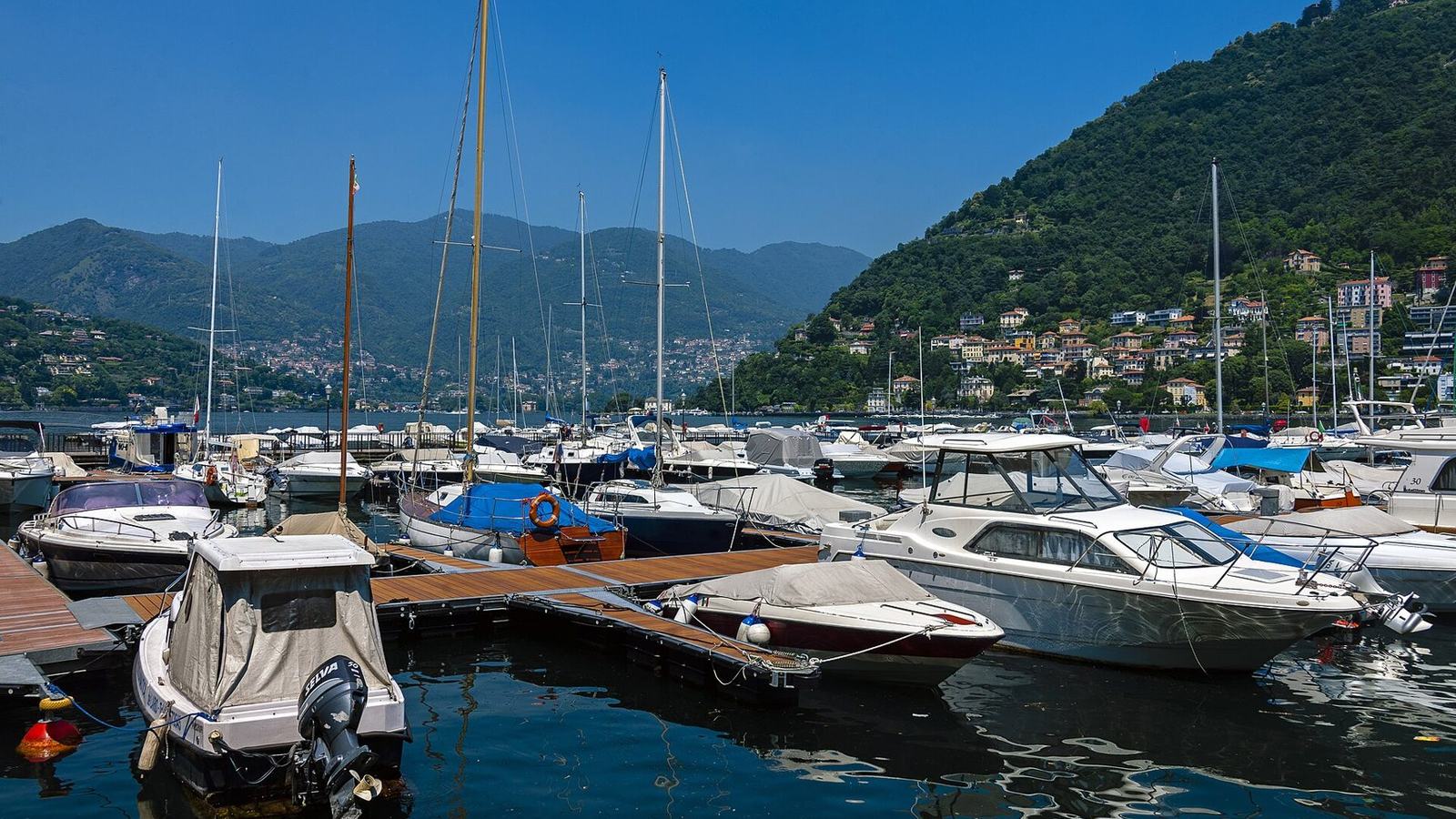
Enjoy Lake Como at small-boat speed, with Bellagio, Varenna and Menaggio viewpoints, ferry awareness, changing local regulations and cautious weather planning.
A celebrated lake seen from a modest cockpit
Lake Como is often photographed from a grand villa terrace or the deck of an elegant classic launch. Yet a small rental boat, open dayboat or modest cabin cruiser can provide a more intimate way to understand the landscape. Mountains appear to rise directly from the water, villages turn towards the shoreline and a short journey can reveal a different view of familiar landmarks. The pleasure is in the perspective, not in travelling at high speed. Como is also a busy transport lake with ferries, commercial excursions, private boats and local regulations that vary by area. Regione Lombardia describes a year-round public navigation service on Como, Maggiore and Garda, while Navigazione Laghi publishes the operating information for those vessels. Any private-boat plan must respect that working transport system, today's notices and the boat's actual capabilities.
Choose the right scale of day
The shape of Lake Como tempts visitors to try too much. Its branches create distances that look modest on a souvenir map but feel substantial in a small boat when wind, traffic and landing logistics are added. Decide first whether the outing is a brief scenic hire near an approved base or a longer passage in a properly equipped vessel with an experienced skipper. The former can be a delightful holiday experience without crossing half the lake. The latter requires charts, navigation lights and other equipment appropriate to the voyage, plus familiarity with local rules. Check the craft's passenger capacity, fuel or battery reserve, weather limits and permitted operating area. If hiring, follow the operator's briefing exactly and do not assume the boat can be taken wherever a commercial ferry travels. A comfortable, unhurried circuit is more memorable than a rushed arrival at a distant town.
Bellagio as the meeting of views
Bellagio occupies a remarkable position near the central lake, where the scenery opens in several directions. For a small-boat visitor it can be a visual destination even without disembarking. The waterfront is active, and ferry movements and restricted landing places must be treated seriously. Do not steer towards a picturesque jetty on the assumption that a pleasure craft may occupy it. Confirm authorised visitor berthing directly with the harbour or marina before planning a shore stop; if none is available, enjoy Bellagio from a safe passing position and choose another permitted landing. The crew should have cameras ready before approaching busy water so nobody is tempted to stop suddenly in a fairway. The goal is to appreciate the village and surrounding mountains while remaining predictable to working vessels. A good photograph is never worth causing another skipper to change course unexpectedly.
Menaggio and Varenna: a central-lake triangle
Menaggio and Varenna sit among Lake Como's best-known central-lake places, linked with Bellagio by public navigation services. Their names can serve as orientation points for a scenic small-boat day, but they are not a ready-made private-boat route. Ferries use dedicated approaches and their timetables change, so consult the official Navigazione Laghi information for awareness while following the appropriate rules for private vessels. If the crew wishes to visit a town, confirm where private boats may tie up and whether permission or a booking is necessary. If disembarkation is uncertain, make the journey a viewing trip and return to the agreed home berth. The beauty of a central-lake outing lies in the changing relationships between mountain, village and open water; no one needs to occupy a ferry berth to experience that landscape.
Working ferries have priority in your thinking
Lake Como's passenger and vehicle ferries are part of everyday transport, not attractions arranged for recreational boaters. A private skipper should expect traffic near terminals and avoid obstructing approaches or crossing close ahead of a manoeuvring vessel. Larger craft may create wakes that feel insignificant from shore but can be uncomfortable in a light rental boat. Face the wave at a safe angle according to the vessel's handling, reduce speed and ensure passengers are seated securely. The public service can be suspended or changed in adverse weather, as Navigazione Laghi itself warns, which is a useful reminder that even experienced commercial operations take lake conditions seriously. Do not draw conclusions about private-boating safety from the presence of a departing ferry. The correct decision is the one suitable for your particular boat, crew and forecast, not the timetable of a much larger vessel.
Wind can transform a sunny scene
Lakes surrounded by steep terrain can produce wind effects that are not obvious from the harbour. A sheltered village waterfront can be calm while more open water becomes choppy, and the direction or strength of the breeze can change as the day progresses. Check a current weather forecast and local observations immediately before departure. Small open craft are especially sensitive to short steep waves and to passengers moving suddenly when a wake arrives. If the wind makes the crossing doubtful, reduce the route or postpone. Carry warm protection even on a sunny day, since spray and air movement can cool a seated passenger rapidly. An inexperienced crew should not make a long exposed transit in the late afternoon simply because the morning was pleasant. Enjoying a shorter passage with time left for an Italian lunch is a perfectly successful alternative.
Regulations are local and must be current
Private boating on Lake Como is governed by Italian and regional rules, with the possibility of further municipal or temporary restrictions. The Como Prefecture has discussed additional measures to improve navigation safety in the first basin near Como, including speed management, highlighting why an old blog's single number is not a reliable legal summary. Before departure, obtain the current rules from the competent authorities or a reputable local operator: speed limits, shore distances, no-wake zones, prohibited areas and vessel requirements may depend on where and how you are operating. Do not treat this guide as a legal instruction or as a substitute for an updated nautical chart. What is safe and lawful by one jetty may be different by another. For a visitor, the most practical approach is to ask the hire operator or harbour authority to show the current restrictions on a chart and confirm that the proposed trip stays within them.
The shore is not an open parking place
Many Lake Como waterfronts present irresistible stone steps, small piers and narrow coves. Their appearance does not tell you whether they are public, private, reserved for ferries or unsuitable at the current water level. Plan shore access with the same care as the journey. Confirm a permitted berth and a realistic arrival time; take account of fender height, changing water levels and the way other vessels use the space. If a landing cannot be verified, do not improvise one. A private boat can enjoy an excellent day without leaving the water, particularly when the crew carries water and a small picnic. Where a booked berth is available, prepare lines and fenders early and approach slowly. A spectacular lakeside backdrop does not make a badly planned berthing manoeuvre any safer.
A respectful way to see villas and gardens
The villas, gardens and historic shorefront buildings are part of Como's visual identity. From the lake, their design and setting can be appreciated without entering private property or disturbing residents. Maintain a respectful off-shore distance, obey navigation restrictions and avoid idling directly in front of houses while passengers take repeated photographs. Do not fly a drone or land on a garden jetty merely because the boat brings you close. Instead, choose a lawful route with changing sightlines and let the view develop as the craft moves. Some properties have designated land-based visiting arrangements; check those independently if the crew wants to tour a villa. Water-based travel is a privilege because it offers a fresh perspective, not because it removes the boundaries that protect the people and places on shore.
Family crews need an easy escape plan
Families can have a wonderful day on Como, but a compact boat requires the same thoughtfulness as anywhere else. Make sure the craft is suitable for the passengers, everyone has the correct safety equipment and the skipper understands how to use it. Explain where children should sit and when they must remain seated as ferries or wakes pass. Carry enough drinking water, sun protection and a warm layer for each person. Choose a route with a simple return to base if somebody becomes seasick, chilled or tired. Do not promise children a swim unless a lawful, safe location has been identified and there is an appropriate way to get back aboard. A short period afloat, followed by a shore visit through an authorised landing, may provide a better family memory than several uncomfortable hours crossing exposed water.
Photography and the art of slowing down
Lake Como almost demands a camera, but the best photographs tend to arrive when the skipper is not trying to position the boat with millimetre precision. Assign photography to a passenger, keep a constant lookout and avoid stopping in traffic lanes. Use the mountains, light and shoreline as a changing composition rather than chasing a vessel or hovering at one exact point. Morning and evening can bring appealing light but may also mean different weather, reduced visibility or challenging return times. If planning near sunset, be equipped and legally permitted for the actual light conditions; otherwise finish well before dusk. A small boat moving gently through a safe part of the lake can offer more visual variety than a high-speed circuit. Leave the skipper free to steer and the passengers free to watch.
Electric and classic boats need different plans
The word boat covers very different experiences on Como. A small electric rental may be quiet and approachable after instruction but have strict operating boundaries and battery reserve requirements. A classic wooden launch may be professionally crewed and follow a commercial programme. An owner's small powerboat may have more range but still need careful fuel and harbour planning. A sailing craft faces its own wind and rig considerations. Ask which waterways the vessel can legally use and what happens if conditions deteriorate. Check insurance and operator requirements for a hire boat, and make sure the entire crew understands the return location and emergency contact. Do not assume that because one kind of vessel appears on the lake, another can follow the same route, use the same pier or remain out in the same weather.
A sensible half-day structure
Begin with a weather and rules briefing, including local speed restrictions and current ferry operations. Depart from the authorised berth with a modest viewing circuit that suits the boat's allowed area. Build in a period of relaxed low-speed cruising, a safe pause if one is permitted and an early return to the original berth. If the boat is appropriate for a central-lake outing, Bellagio, Menaggio and Varenna can provide visual reference points without requiring landings at each one. If conditions are marginal, remain closer to the base and enjoy the changing shoreline. This is a suggested rhythm, not a navigational course: charts, notices, weather and the operator's directions decide where the boat actually goes. The strongest holiday plan is one that still feels worthwhile when the skipper wisely shortens it.
The lake belongs to more than tourists
Como's waterfront is shared by residents, working transport crews, fishermen, marinas, swimmers and wildlife. A considerate small-boat visitor keeps wakes low, uses authorised facilities and avoids obstructing docks. Take litter ashore and never discharge waste into the lake. If the crew wants to learn more about a village or villa, use a properly organised shore visit rather than a casual landing. The landscape's appeal comes from centuries of human activity alongside a dramatic natural setting, and respectful travel allows that combination to continue. Most importantly, measure the trip by how comfortable and interested the crew remains, not by the number of villages named on a map. For a boat under twelve metres, there is nothing modest about an experience that brings the mountains, the water and a beautiful shoreline into focus.
Sources and picture credit
Primary official guidance: Regione Lombardia and Navigazione Laghi. Further official references: reference 1; reference 2; reference 3.
Lead photograph: Daniel Case / Wikimedia Commons, CC BY-SA 3.0. Image resized and recompressed for web publication; original licence retained.
