
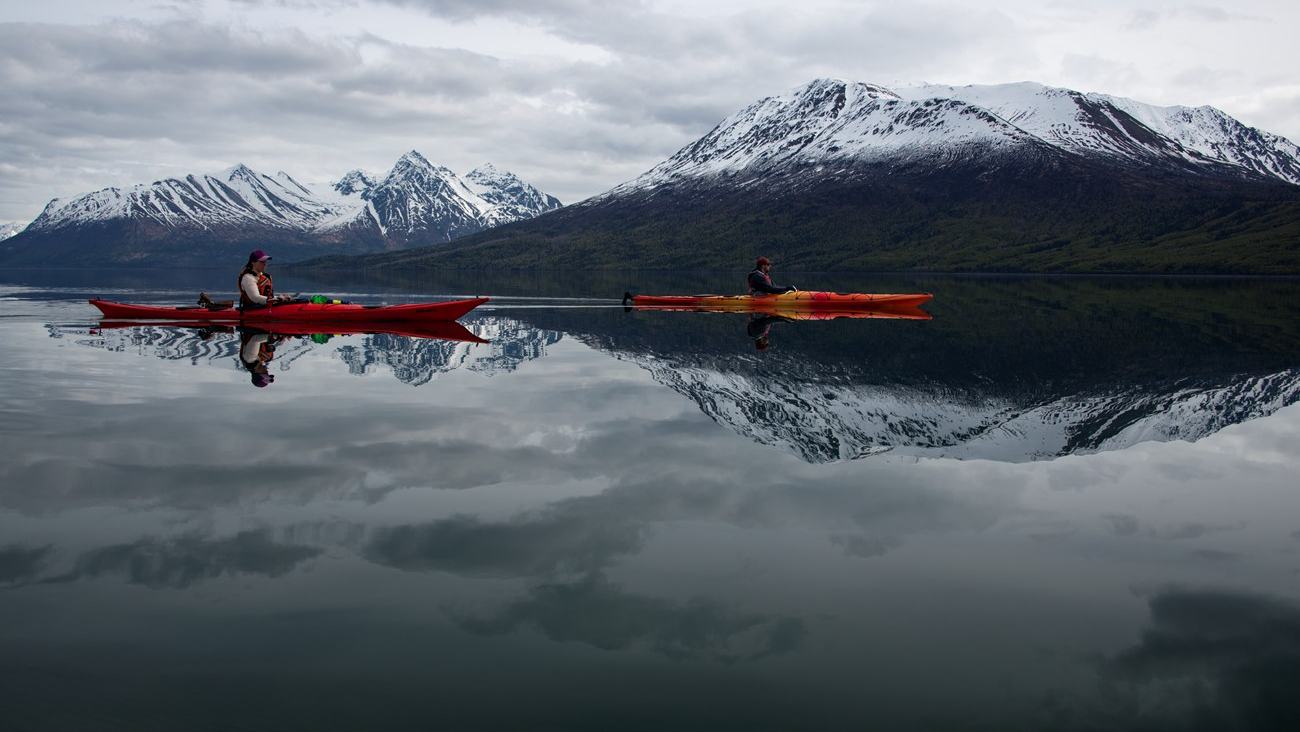
Lake Clark National Park offers exceptional mountain-lake kayaking but most visitors arrive by aircraft, creating special demands for equipment and safety planning.
A mountain lake reached by a different route
Lake Clark National Park and Preserve in Alaska is a destination where the journey to the water is part of the adventure. Most access is by small aircraft, and a lake framed by mountains can offer a striking setting for sea kayaks or suitable inflatable craft. The official National Park Service photograph shows two paddlers on remarkably still water beneath snowy peaks, illustrating why the region attracts people seeking quiet wilderness experiences.
Such scenery should not make the trip sound effortless. Remote access, cold water and rapidly changing weather create demands far beyond those of a sheltered lake near a road. For many holidaymakers, a guided outing or a shorter visit organised with a competent local operator is more appropriate than an ambitious independent expedition.
Air transport shapes the equipment choice
The National Park Service explains that a full-size boat, passengers and supplies may not fit into a small aircraft. Travellers need to discuss cargo allowances and loading arrangements with their intended air-taxi provider before buying flights or equipment. An inflatable canoe, packable kayak or folding boat may provide a practical alternative to a rigid craft when access depends on limited aircraft space.
Weight is only part of the problem. Bulky equipment may exceed dimensions accepted by the aircraft, while paddles, dry bags and safety gear need space of their own. A visitor should provide the operator with accurate measurements and verify whether equipment can be secured appropriately. Assuming that an ordinary car-top kayak can simply be carried on a light aircraft is a recipe for disruption.
Guided outings reduce logistical complexity
An organised kayaking trip may include equipment, knowledgeable staff and help coordinating transport, allowing guests to focus more on the water and less on managing unfamiliar systems. Local guides can discuss weather, permitted routes and the difficulty of specific locations. A guided service also provides a realistic way for travellers without experience of Alaska's remote waterways to enjoy a modest introduction.
Not every itinerary or guide company operates throughout the year. Alaska's weather and access windows are seasonal, and availability should be checked directly with an authorised provider. A booking should make clear which equipment and protective clothing are supplied, what experience is required and how the group will be supported if a departure is delayed.
Lake conditions can change very quickly
The NPS warns that Alaska's waters remain icy cold even when the air temperature feels pleasant. Immersion in cold water may become serious long before a person can swim to a distant shore. Paddlers therefore need clothing appropriate to possible immersion, correctly fitted flotation equipment and practical skills for self-rescue or assisting a companion.
Wind is another significant factor. A lake that appears mirror-still at sunrise can develop challenging waves across open water, while rain or low cloud may affect visibility and aircraft operations. The crew must be prepared to change or cancel a route, and should avoid scheduling a tight connection that creates pressure to depart when the conditions are poor.
Choosing a boat for the intended trip
An inflatable or folding kayak may solve the transport problem, but the selected model must still be suitable for the water, load and paddler. A short, lightly built craft designed for a calm city lake may be inappropriate for exposed wilderness travel, even if it fits easily into an aircraft. Manufacturer guidance and competent local advice should shape the choice.
Carrying food, clothing and emergency supplies also affects the way the hull handles. Equipment should be packed securely and the entire load kept within the recommended capacity. Paddlers should practise assembling, launching and recovering the chosen boat before travelling into a region where a small missing component can have significant consequences.
Wildlife demands distance and restraint
Lake Clark is home to varied wildlife, and observing animals can be a memorable element of a paddling trip. The quiet movement of a kayak may allow a visitor to see the shoreline without an engine, but it should never be used to approach bears or other animals deliberately. A surprising encounter can place both paddlers and wildlife at risk.
Food storage and campsite selection need particular attention on overnight trips, following the Park Service's current guidance and any conditions set by the local operator. A camera with an appropriate lens can create meaningful photographs from a safe distance. An unforgettable wildlife observation is not worth compromising the crew's safety.
A small outing can be more rewarding than a crossing
The scale of Lake Clark might tempt an experienced visitor to plan a long exploration, but the pleasure of a wilderness paddle does not depend on crossing the largest possible distance. A sheltered route with mountain views, careful breaks and enough time to return may provide a deeper experience than a tiring journey into exposed water.
A slower approach also leaves room for the unexpected. Changing light, a bank of low cloud or a quiet shoreline may be worth enjoying without checking the time constantly. Experienced guides often understand the advantage of flexibility and may recommend a route that looks modest on a map but provides memorable scenery.
Building a realistic wilderness itinerary
Before booking, visitors should consult the official Lake Clark boating guidance, discuss gear capacity with the air-taxi service and confirm where the chosen trip will begin and end. Emergency communication, a detailed float plan and realistic alternatives for delayed flights are especially important. Independent travellers should not assume that normal mobile service or prompt rescue will be available.
The official photograph by Kara Lewandowski shows genuine kayakers in the Lake Clark landscape, offering an accurate visual introduction without generated imagery. The reality behind the beautiful scene is careful organisation and respect for cold, remote water. With suitable skills and support, the trip can provide a rare and memorable encounter with Alaska from the level of a small boat.