
An Uganda Lake Bunyonyi canoeing guide covering Kabale, traditional dugout boats, the island landscape, community-led visits, birdwatching and safe local operators.
A highland lake with an island landscape
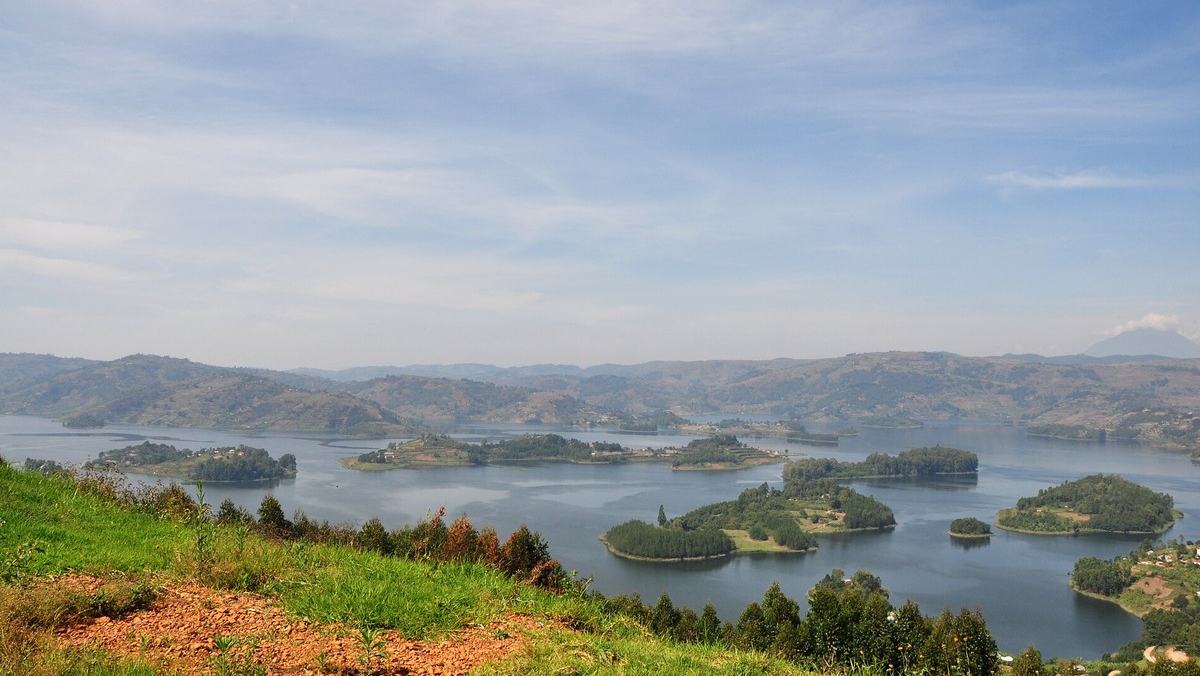
Lake Bunyonyi in southwestern Uganda is one of the country's distinctive water destinations. Its narrow channels, island-dotted surface and terraced green hills offer a different kind of experience from the open savannah landscapes that many travellers associate with Uganda. The Uganda Tourism Board's Explore Uganda material identifies canoeing on Lake Bunyonyi as a significant visitor activity, while tourism information for the Kabale area describes dugout canoe trips, birdwatching and visits to islands and local communities. This is a place where a small boat can be a meaningful part of understanding the surrounding landscape.
The appeal does not make boating automatically safe or unrestricted. A traditional dugout requires appropriate balance and skill, and local conditions can change with wind and rain. A visitor unfamiliar with the lake should use a reputable local guide or appropriately qualified operator, confirm a suitable craft and wear a properly fitted personal flotation device. Good arrangements can turn a scenic afternoon into a respectful encounter with both water and community.
Kabale as the arrival point
The lake lies close to Kabale in Uganda's southwest, and the town is a common gateway for travellers exploring the area. Uganda Tourism Center describes Lake Bunyonyi as west of Kabale and surrounded by steeply terraced hills. Arriving from the town, a visitor may see the water from above before reaching a lodge or landing. That aerial perspective is striking but can mislead somebody about distances between islands.
Plan the actual departure location before leaving accommodation. A road that ends near the water does not necessarily reach the pier from which a canoe or motorboat tour operates. Ask the provider for clear directions and arrange the return journey in advance. Visitors combining the lake with another regional excursion should allow time for local roads, weather and the slower pace of a boat trip.
Why a dugout canoe is part of the experience
Dugout canoes have a longstanding connection with everyday movement on Lake Bunyonyi. The Tourism Board's adventure material highlights canoeing as a way to explore the lake and its islands, and local visitor information refers specifically to dugout canoe treks. This offers more than a different style of holiday photograph. Travelling in a simple craft can bring the passenger close to the water and introduce the methods by which local people have navigated their environment.
A dugout should not be treated as a novelty that any tourist can safely operate without instruction. Its handling, stability and loading differ from those of a modern wide recreational kayak. Ask a responsible guide to explain how to sit, where to place belongings and how passengers should behave when the boat moves. A calm approach respects the knowledge of the people who use these vessels and protects everyone aboard.
The value of hiring a local guide
A knowledgeable local guide can identify suitable waterways, explain community arrangements and judge which trip is realistic in the day's conditions. The guide can also help visitors understand the meaning of individual islands and the surrounding agricultural landscape. This is particularly valuable for travellers who might otherwise use an online map to draw a route between points without knowing whether landing is permitted or welcomed.
Choose a reputable provider and establish the price, duration, number of passengers and equipment before departure. Ask whether the boat is operated by a guide or whether visitors are expected to paddle. A guided trip should include clear information about safety and the route, not simply a promise to see a certain number of islands. Paying for genuine local expertise can improve the experience while supporting people who work around the lake.
Many islands, different stories
Travel material often describes Lake Bunyonyi as having around 29 islands, and Uganda Tourism Board information names several of them. The number is useful for conveying the character of the landscape, but it should not be interpreted as a request to visit every island. Each has its own physical features, access arrangements and associations with local people. A short outing to a small number of appropriate places may be far more enjoyable than a hurried circuit.
Island names can also carry complex histories. The locality commonly described as Punishment Island, or Akampene, is associated in tourism material with harsh past social practices. Visitors should approach such history with sensitivity and use reliable interpretation rather than treating it as a dramatic story invented for entertainment. A community guide can provide context and explain why certain sites should be observed respectfully from a boat or visited only with permission.
The terraced hills from water level
From the shore, Lake Bunyonyi's hills are a patchwork of cultivation, paths and vegetation. From a canoe, those terraces rise above the water and change appearance as the boat moves between inlets and islands. The landscape tells a story about people living and working in the highlands, not just about scenery provided for visitors. A slower trip offers time to notice farming patterns and settlements without intruding on the activities of residents.
Photography should be conducted with respect. Ask permission before closely photographing people or private homes, and do not expect a guide to arrange access to a village without prior agreement. A person working beside the lake is not an attraction to be approached without consent. The most rewarding photographs may be broad landscape views that capture the relationship between water, terraces and the surrounding hills.
Birdwatching from a quiet craft
The lake's name is often translated in tourism material as a place associated with many small birds, and birdwatching is among the activities promoted locally. A dugout canoe can move quietly enough to make observing shoreline species enjoyable. However, quietness alone does not justify approaching nesting or resting birds closely. A guide familiar with the area can help identify suitable viewing places and explain what to expect in different seasons.
Keep the canoe at a respectful distance and avoid repeated attempts to force birds into flight for photographs. Do not feed wildlife or enter sensitive reeds. A patient outing may reveal interesting behaviour without any need to disturb the habitat. For visitors with a strong birding interest, it can be worthwhile to arrange a dedicated guided trip rather than expecting a general island cruise to include specialist identification.
Islands and community visits
Uganda Tourism Board material presents the Lake Bunyonyi area as a place where travellers can combine boating with cultural and community experiences. Such visits should be organised through people who have proper local arrangements. An island that appears attractive in a photograph may be someone's home or working land, and arrival by canoe does not confer an automatic right to walk through it.
Ask whether the proposed excursion includes an authorised community visit, what payment arrangements apply and whether photography is appropriate. Travellers should respect local customs and allow residents to define how they share their lives with visitors. A meaningful encounter is not necessarily lengthy; a short conversation with consent may offer more insight than a hurried tour of several locations.
Choosing between canoe and powered transfer
Some visitors will prefer to paddle in a traditional canoe, while others may choose a powered boat or an organised transfer between accommodation and an island destination. The difference is more than speed. Canoeing requires more direct awareness of balance, exertion and wind, whereas a powered trip places navigation with the operator but may involve a faster ride or different boarding arrangements. The party should choose based on ability and the experience desired.
Ask the provider what boat is used and whether it has sufficient capacity for passengers and baggage. Children and people with limited mobility may need particular assistance when boarding, especially from an uneven or slippery bank. The operator should explain where passengers may sit and what happens if weather makes the original route unsuitable. The simplest outing is the one that everyone can complete comfortably.
Water safety without misleading assurances
Lake Bunyonyi is sometimes described in travel marketing as safe for swimming, but a visitor should never treat such statements as a guarantee. Water depth, water quality, local hazards and health risks require current local assessment. A beautiful lake can still be dangerous to someone who falls unexpectedly from a boat. Wear a suitable personal flotation device and do not rely on unsupported assurances about the absence of particular animals or disease.
A traditional canoe may feel calm until a passenger leans, stands or changes position suddenly. Keep weight low and follow the boatman's instructions. Secure cameras and bags and avoid reaching into the water to retrieve a dropped item. The crew should understand what to do in an emergency and have a workable method of contacting assistance. A locally guided outing is especially valuable when visitors are unfamiliar with the environment.
Wind and rain in the highlands
The landscape around Lake Bunyonyi can produce changing weather. A sheltered channel may be comfortable while a broader section becomes exposed to wind. Rain can affect visibility and make boarding areas slippery. Check the forecast, ask the guide about local patterns and be willing to shorten or cancel the outing when conditions are unsuitable. A paid booking is never a reason to proceed into weather that challenges the safety of the boat.
For a hand-paddled canoe, the return effort matters. A following breeze may make the outward leg deceptively easy, while the same distance becomes demanding on the way back. An experienced local operator can choose a route appropriate to the conditions and the ability of the party. Travellers should be honest about their fitness and confidence rather than insist upon a planned island destination.
Respecting the pace of local travel
A canoe trip is enjoyable partly because it does not move quickly. Visitors may see people travelling between islands or using the shoreline for everyday work. Give other boats room and avoid blocking a landing that residents need. If the route passes close to fishermen or families moving goods, keep noise low and allow them to continue without disruption.
This approach also improves the visitor's experience. A little time spent watching the landscape or listening to the guide can be more rewarding than trying to collect as many photographs as possible. The lake is a lived-in place, and considerate travel acknowledges that reality.
Choosing an island-based stay
Some accommodation providers operate on or near the islands, allowing guests to experience the lake over several days. A traveller should confirm whether the property arranges its own boat transfers, whether those transfers operate after dark and what happens in bad weather. The practical relationship between a lodge, a pier and the road to Kabale can be more important than the distance measured on a map.
Arriving with several bags may call for a different vessel from a short sightseeing canoe. Check boarding arrangements and whether the boat is suitable for luggage and passengers together. For a family, it may be sensible to arrange transfers with the accommodation and book a separate guided canoe outing once everyone is settled, rather than combining transport with an ambitious sightseeing trip.
A full day without rushing
A relaxed programme can begin with a morning canoe trip through a small number of suitable channels and an arranged visit to a permitted island. The afternoon might include a lakeside meal, a guided walk or time enjoying the view. This approach makes room for weather changes and the slower pace of local transport. It also reduces pressure on the guide to navigate an unnecessarily long route.
A traveller interested in the area's birdlife may prefer an early dedicated outing, while another visitor might focus on cultural interpretation. Those are different priorities and should be discussed during booking. A good guide can suggest a realistic experience rather than forcing several unrelated activities into the same short period.
Environmental care on the water
Carry all rubbish back to shore and keep food packaging secured so that it cannot blow from the canoe. Avoid damaging reeds and vegetation when launching or landing. A visitor should not take stones, plants or other natural materials as souvenirs. Respect the lake's wildlife and the places where communities rely on access to water for everyday activities.
Tourism can support the local economy, but it should not create unnecessary pollution or disturbance. Choosing a provider that handles waste responsibly and respects community arrangements is part of responsible travel. Even the smallest canoe trip can make a positive contribution when it is organised thoughtfully.
Confirm the current operator and route
Uganda Tourism Board's Explore Uganda material provides first-party evidence of canoeing as a Lake Bunyonyi activity, while regional visitor information describes the island landscape and community-based trips. These sources establish the nature of the destination but do not reserve a canoe, identify the availability of a particular guide or guarantee safe conditions on the chosen day.
Contact the operator or accommodation directly to confirm the departure point, price, safety equipment, duration and whether landing on a named island is permitted. Do not assume a guide advertised online is available without prior arrangement. A little clear communication can prevent confusion and help local providers design a trip suited to the visitors.
The lake seen from a traditional boat
Lake Bunyonyi offers an experience in which the vessel matters as much as the scenery. A dugout canoe moves at a pace that encourages observation, and a knowledgeable guide can connect the islands with the people and history of the surrounding highlands. The lake's beauty is real, but it is not an excuse to neglect safety or community consent.
Choose a suitable boat, travel within the day's conditions and treat the water and its residents with care. Done well, a modest canoe trip can reveal far more about southwestern Uganda than an ambitious journey made simply to see a long list of islands.
Sources and photograph attribution
Official destination and boating guidance: Uganda Tourism Board / Explore Uganda — Adventure Activities. Current access, rules, weather and reservations must be checked independently before travel.
Photograph: Shaayflix Dr Shaay — “Lake Bunyonyi Islands 06.jpg” (CC BY-SA 4.0), via Wikimedia Commons. Resized to JPEG 1200×800 for editorial display. Source: https://commons.wikimedia.org/wiki/File:Lake_Bunyonyi_Islands_06.jpg. Licence: https://creativecommons.org/licenses/by-sa/4.0. Original rights remain with the credited creator or as specified by the source and licence.
