
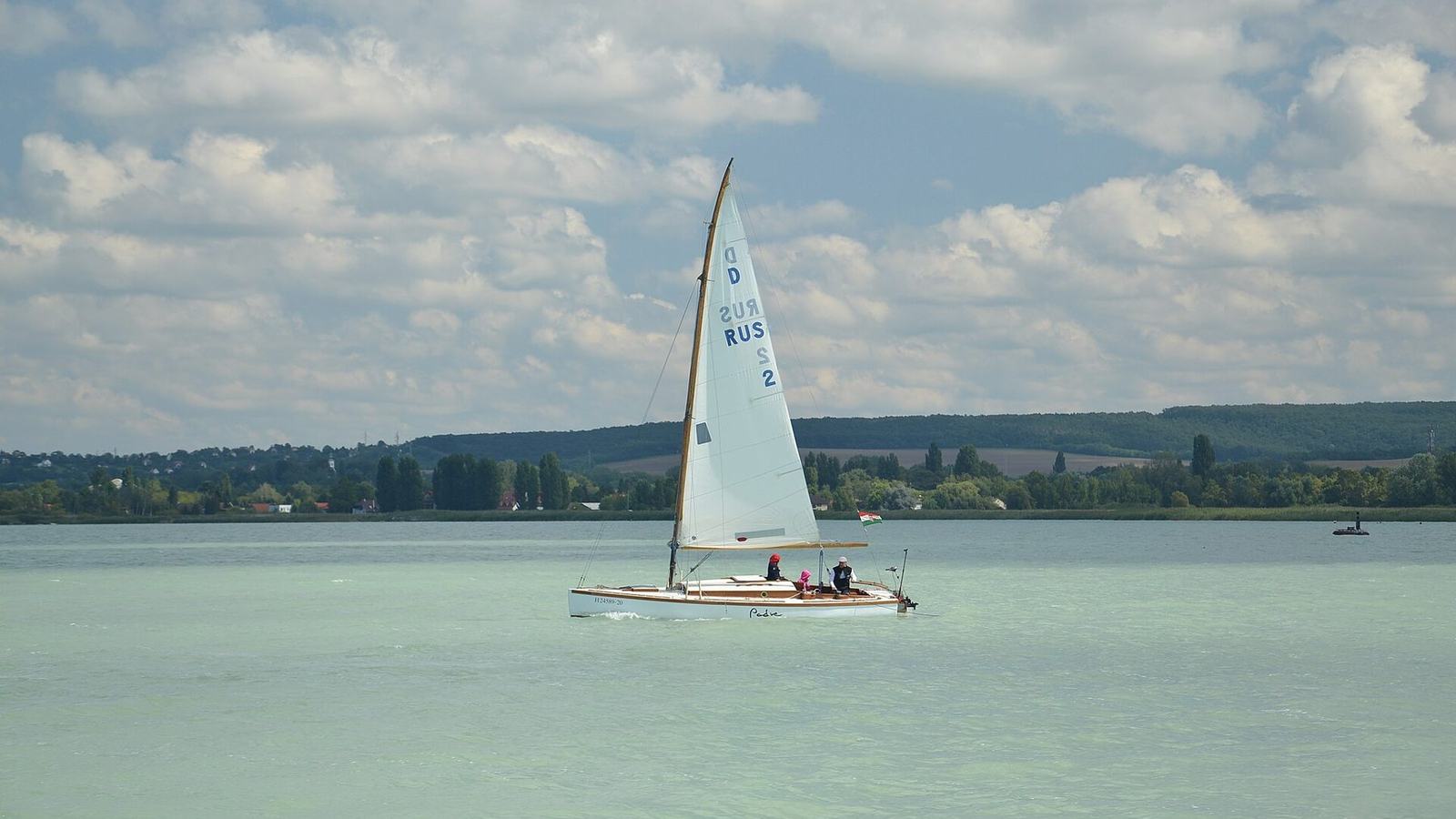
An independent small-boat guide to Hungary’s Lake Balaton, where sailing, rowing and appropriately authorised electric craft shape the boating experience.
A lake shaped by wind rather than engine noise
Lake Balaton is one of Europe’s distinctive inland boating destinations because the choice of propulsion changes the whole experience. A visitor arriving with a conventional petrol-powered tender cannot simply assume that the normal habits of coastal boating will apply. The Hungarian water-transport law places a broad prohibition on operating small boats and dinghies propelled by internal-combustion engines on Balaton, subject to specified legal exceptions. Sailing, rowing and appropriately compliant electric craft therefore become the practical centre of a leisure visit. That is a substantial advantage for people who enjoy quiet water, relaxed short passages and learning to read the breeze. The experience is about choosing a reachable shore, watching the afternoon weather and leaving a generous margin to return safely.
Understanding the engine restriction before travelling
The crucial planning document is Hungary’s Act XLII of 2000 on water transport, particularly section 58. Its language specifically addresses internal-combustion-engine propulsion of small vessels and boats on Lake Balaton. Official exceptions exist, so visitors should consult the current legal text and local water police or harbour operator rather than treating a casual internet summary as a permit. An outboard with an internal-combustion engine should not be brought to the lakeside in the expectation of ordinary recreational use. Nor should an electric conversion be regarded as automatically exempt from every operating, registration or qualification requirement. Establish the lawful category of the particular craft and motor before buying a hire package or launching a privately owned vessel.
Why small sailing boats suit the setting
A modest dinghy or compact keelboat makes Balaton a place to practise deliberate sailing rather than covering maximum distance. The shoreline provides different moods: sheltered water near a departure point can feel reassuring, while an exposed reach may carry short, steep lake waves once wind strengthens. For a first session, arrange a supervised dinghy lesson or a familiar local club outing. More experienced crews can choose a simple day sail with one dependable return route. A boat well below twelve metres is easier to berth and crew, but its limited freeboard and smaller sail area demand proportionate care. Inland water deserves the same respect as a coastal passage, especially when the shoreline looks deceptively close.
Choose the day before choosing the route
The best plan begins with a current local weather forecast, not a line drawn across a holiday map. Check wind strength, gusts, visibility and the likelihood of squalls before deciding whether to sail across an open part of the lake. Balaton uses a storm-warning system that visitors should learn from a local harbour office or instruction provider, including how warning lights and signals affect the safe activities of small craft. A mild morning can change significantly by afternoon. Make the first route short enough to abandon without disappointment. Set a clear point at which the crew will turn back, and treat any official warning as a reason to revise the outing rather than a challenge to be overcome.
Rowing as a genuinely rewarding alternative
A rowing boat opens up a different scale of exploration. Instead of thinking in marinas separated by miles, think in quiet bays, lakeside buildings, reed edges viewed from a respectful distance and a sheltered picnic stop ashore. The important word is sheltered: rowing against fresh wind on broad inland water can quickly become exhausting. Ask a local rental operator which areas are suitable for a novice and whether the boat may be taken beyond its immediate operating zone. Carry a practical means of communication and do not rely on a phone’s map alone. Rowing is an appealing way to enjoy Balaton without propulsion noise, but it is not a way around weather, navigation or protected-area restrictions.
Electric boating without careless assumptions
Quiet electric propulsion appears well matched to the lake’s character, but the actual rules require more than a label saying ‘electric’. Power, vessel classification, local operating conditions and the qualifications of the person at the helm can determine what is permitted. Local safety guidance, including material published by Gyenesdiás, discusses requirements affecting some electric-powered craft. Hire from an operator who can clearly explain where that particular vessel may operate, what documentation is supplied and how battery reserve is managed. A small electric dayboat should leave with a generous charge margin because wind and waves increase energy demand. Return with power in reserve rather than calculating the day around the last possible percentage.
Harbours and launch points are working places
It is tempting to treat every attractive waterfront as somewhere to push off a dinghy or leave a boat for lunch. In practice, harbour approaches, designated slips, swimming areas and private pontoons carry separate rules. Contact the relevant marina or municipality for current access, launching and overnight-berthing information. Never block a ramp while rigging a mast or transferring holiday bags; prepare the craft in the designated area first. Sailors should leave space for commercial movements and follow marked approaches. A friendly harbourmaster can often explain which short outings are practical in the day’s weather and what visitors routinely misunderstand. That conversation is worth more than an unverified list of supposedly free moorings.
A sensible first-day itinerary
For a family or visiting pair, the strongest first day is not necessarily a crossing of the lake. Begin with a safety briefing and a local forecast, then rig or collect the boat early enough to avoid feeling rushed. Sail or row within a clearly agreed operating area, practise approaching the berth at low speed, and return for a long lunch ashore. If the wind stays consistent, there may be time for a second short excursion. Keep the crew count modest and everyone’s role clear. A first Balaton outing should build confidence in the way the lake behaves, how the boat responds and the restrictions around its specific launch point. Longer passages can wait.
Sailing with children and new crews
Small-boat holidays work best when everyone aboard knows what to expect. Fit lifejackets appropriately before leaving shore and rehearse simple instructions: where to sit during a tack, what to hold, and what to do if someone feels unwell or cold. In a dinghy, demonstrate how the boom moves and keep fingers out of loaded fittings. Explain that a wet deck and an unexpected heel are ordinary features of sailing, while a rising wind is a decision point for the skipper. Children need breaks and shade as much as experienced sailors do. Plan a short trip that leaves them wanting another outing, not a long passage justified solely by the distance on the chart.
What to carry on a compact craft
A small vessel has limited stowage, so pack for usefulness rather than volume. Suitable flotation, a charged communication device in waterproof protection, drinking water, sun protection and clothing for cooler wind are baseline preparations. Take the equipment required for the vessel’s legal class and operating area, as confirmed locally. A simple bailer may be relevant in an open dinghy; a working anchor may be essential in another class of craft. Check lines, steering and rig before leaving, and know the harbour emergency arrangements. A lake can create strong reflections and intense sunshine even on comparatively cool days. The goal is a comfortable return, not merely a technically successful departure.
Respect the lake beyond the boat
Balaton is a shared landscape, not a private sailing basin. Swimmers, anglers, passenger traffic, wildlife and residents all have legitimate reasons to value quiet water. Keep a respectful distance from bathing areas and habitat-sensitive shorelines, avoid unnecessary wake and follow designated channels or local notices. Do not land on vegetated banks merely because a rowing boat can reach them. Collect every piece of packaging and fishing line that enters the boat, and avoid cleaning products that can run directly into the water. The environmental rationale behind the lake’s propulsion restrictions is part of the destination’s identity. Visitors who embrace the slower pace are more likely to discover its appeal.
When to postpone rather than press on
Small craft have less reserve when conditions become difficult. An unpredictable wind shift, approaching thunder, poor visibility, tired rower or uncertain battery range is a sufficient reason to shorten the trip. A forecast that would be manageable in a larger cruiser can be unsuitable for a novice in an open boat. Decide in advance who makes the final safety call and agree that nobody has to justify a conservative return. If weather becomes threatening, use the nearest safe and permitted refuge according to local guidance, rather than attempting an exposed crossing simply to reach the original booking point. A changed itinerary is preferable to putting the crew or rescuers at risk.
A quieter sort of European boating break
Balaton rewards people willing to enjoy a half-day on the water rather than a destination-counting exercise. The day’s highlights can be a clean tack, an unhurried row, the feel of a breeze across a deck and time ashore after the sail. The proper preparation is practical: establish the boat’s lawful propulsion category, verify harbour access, read the current forecast and choose a crew and route suited to conditions. With those essentials addressed, a boat under twelve metres offers more than enough freedom to experience one of Hungary’s best-known landscapes. Its attraction is not speed but the unforced rhythm that small-boat sailing brings to inland water.
Sources and photograph credit
Primary guidance: Hungarian National Legislation Database; Gyenesdiás water safety information; Balaton fishing and boat-use information. Photograph: Balaton Lake - small boat.JPG, Pudelek, Wikimedia Commons, licensed under CC BY-SA 4.0. Caption identifies the photographed lake; it is illustrative of the destination rather than an endorsement of any vessel or rental service.