
A practical paddling guide to Lake Atitlán in Guatemala, including an operator's private Antigua-based kayak trip, volcano scenery, village etiquette and water safety.
Lake Atitlán in Guatemala combines a volcanic landscape with the possibility of seeing village shorelines from a small kayak. The lake is framed by steep hills and the cones of nearby volcanoes, giving an ordinary paddling outing a dramatic setting. Experience Guatemala, a local tour provider, advertises a private day excursion that includes kayaking on Atitlán and transport from Antigua, with an early scheduled departure and views of lakeside communities. Its published description provides a starting price and a minimum group basis, but does not claim that every crossing or shore visit can take place in all conditions. For travellers considering the experience, route choice, local knowledge and respect for the people living around the lake matter as much as the scenery.
The lake is more than a volcanic panorama
It is easy to treat Atitlán as a scenic background for travel photographs, but the lake is also a lived-in landscape with communities, fishing activity and transport routes. A kayak brings visitors closer to the water and allows them to appreciate the scale of the surrounding slopes. That pleasure should be accompanied by an understanding that local people use the lake for purposes far beyond tourism. A visiting paddler must share the water appropriately, avoid interfering with working boats and treat villages as communities rather than decorative stops. A small boat is most enjoyable when it allows careful observation without intrusion.
The operator offers a specific private excursion
Experience Guatemala publishes a kayak excursion from Antigua that begins with an early departure, around 6:00 a.m. according to the current description. The tour combines transport to the lake with time on the water and views of the surrounding volcanoes and lakeside villages. This is a first-party service description rather than a guarantee that any chosen day will provide the same paddling conditions. The company says private tours include locally authorised transportation and entrance fees to sites specified in an itinerary, with a guide where the particular tour description includes one. Travellers should confirm exactly what is provided before booking.
Why an early start can help the day
Leaving Antigua in the morning allows more time for the journey, preparation and lake activity without making the return excessively late. It does not guarantee that wind will be light or that the water will be calm when the group arrives. Weather may change rapidly around a large lake and its surrounding terrain. Visitors should ask the provider how the route and duration are selected, what circumstances would lead to postponement and whether the group can choose a less exposed section. A beautiful sunrise or clear morning view is not evidence that all later conditions will remain suitable for a novice kayaker.
The lake's geography can challenge a beginner
Broad open water, steep shores and changing winds can create a very different paddling experience from a small sheltered lagoon. A group should not attempt to cross an exposed reach simply because a distant village appears close in a photograph. Ask for a route chosen around the actual weather and the least experienced participant. Suitable launch and landing places are as important as the distance itself, especially when other boats operate nearby. A beginner may find a short supervised paddle near shore more rewarding than a long one that leaves insufficient strength for the return.
Kayaking changes how the volcanoes are seen
From water level, the surrounding volcanic peaks can dominate the view even when the kayak moves only a modest distance. A gentle trip gives passengers time to study changing cloud, the relationship between villages and hillsides, and the colours of the water under different light. There is no need to pursue the most spectacular distant viewpoint at the expense of safety. An attractive photograph may be obtained from an authorised shoreline stop rather than from the middle of the lake. The purpose of paddling is to experience the landscape, not to compete with motorboats to reach every picturesque point.
Choose equipment around the participant
The source confirms kayaking as part of the excursion but does not specify every craft type available. Travellers should ask whether the operator uses single or double kayaks, whether the boats are suitable for inexperienced paddlers and what weight or age limits apply. The correct seating and flotation equipment should be determined before departure. A person who has only paddled a stable recreational kayak in calm conditions should not assume equivalent handling in a different model. Clear instruction in turning, stopping and maintaining a safe course is essential, particularly where several people are travelling together as a private group.
A safety briefing should come before launching
A competent provider should explain how to enter and leave the kayak, how the group will communicate and what to do if someone capsizes or becomes exhausted. Travellers need to understand the role of the guide, any support vessel and the procedure for returning early. The operator's promotional description does not provide a full technical safety plan, so those details must be requested directly. A personal flotation device should fit correctly and be worn as directed. A waterproof communication arrangement may also be appropriate, but it cannot replace keeping the group within an agreed safe area.
Motorboat traffic demands attention
Lake Atitlán is used by passenger craft and other powered boats serving lakeside communities. A small kayak can be difficult to see from the helm of a larger vessel, particularly against shorelines or in bright reflected light. Paddlers should avoid busy routes or crossings unless directed and supported by a competent local guide. Never assume that a moving passenger boat will stop or change course simply because a tourist is taking a photograph. Bright clothing and predictable manoeuvres can improve visibility, but a lookout remains necessary. Learning the local traffic patterns is a good reason to choose professional guidance.
Village visits require respect, not curiosity alone
Atitlán's shore settlements have their own identities, histories and cultural traditions. Travellers should obtain permission before photographing people, private homes or community events and should follow the guidance of hosts or local guides. Buying goods or food from locally operated businesses can be a positive part of a visit, but visitors should not assume a private courtyard or a working dock is open for tourism. Cultural experiences should be arranged with the relevant community rather than improvised from a kayak. The most rewarding travel usually involves listening and understanding, not treating a village as a succession of photo opportunities.
The price is a starting point, not a final quotation
Experience Guatemala advertises its private Atitlán kayak outing from US$175 per person, based on a minimum of four travellers. The amount is a published starting price and may vary with group size, the confirmed itinerary and additional arrangements. The operator says private tours include authorised transport and relevant entrance fees, with guiding where specifically provided. Ask for a written quote that identifies every inclusion, the amount of kayaking, equipment, safety arrangements, food and any village visits. A cheaper-looking offer may not be comparable if it excludes transport or professional support. Clarity before payment can prevent an uncomfortable discussion on the day.
A day trip from Antigua involves considerable travel
The advertised excursion begins in Antigua, making it convenient for travellers who are based there but introducing a significant road journey before any paddling starts. Participants should allow enough energy for both the journey and time on the water, rather than scheduling a demanding evening activity immediately afterwards. Ask whether the operator arranges hotel pickup, the likely return period and what happens if road conditions delay the group. Anyone prone to motion sickness or fatigue should mention that in advance. A well-paced excursion leaves room for breaks, hydration and changing clothes before the drive back.
Wind determines the safest route
The lake's surrounding slopes and open reaches can influence conditions, and visiting paddlers should be cautious about assuming calm water throughout the day. A local operator should assess the forecast and the actual state of the lake before launching. If conditions worsen, a responsible provider may shorten the excursion or substitute a different activity. Visitors should understand the cancellation and refund arrangements before committing. The desire to paddle beneath a famous volcano should never override a decision that an exposed section is unsuitable. A short journey close to a safe landing may provide a much better experience.
Water quality and swimming should be considered separately
A kayaking tour does not necessarily include swimming, and the source description does not promise that the water will be appropriate for it on a particular day. Travellers should follow local advice about water quality, safe bathing locations and any current warnings. Do not assume that an attractive blue surface indicates uniformly clean or safe water. A capsize may still require immediate recovery, so appropriate clothing and safety equipment matter even if nobody plans to enter the water deliberately. Any optional swim should be discussed with the operator and should never interfere with the kayaking group's safety arrangements.
Small boats can support responsible tourism
Kayaks produce little noise and no engine exhaust at the point of use, which can make them an appealing way to travel near a shoreline. That does not make an outing automatically environmentally harmless. Disturbing birds, damaging vegetation, leaving waste or crowding a sensitive landing area can all create problems. Travellers should use approved access points, take rubbish away and avoid approaching wildlife closely. Supporting a locally operated, well-managed service is preferable to improvising a route through an area where visitors may not be welcome. Responsible travel is shaped by the behaviour of the group, not merely the type of craft.
Photography should not distract from boat handling
The volcanoes, steep shores and colourful settlements make Atitlán a compelling photographic destination. It can be tempting to keep a camera in hand throughout the trip, but a paddler still needs to steer, balance and watch for other vessels. Secure cameras and phones in waterproof cases and pause only where the group can do so safely. A guide may recommend a place to stop for photographs without obstructing traffic or approaching a community landing. Some of the best images can be made from shore after the activity. A dramatic view is not worth losing control of the kayak in wind.
Group fitness affects the experience
The advertised private excursion is priced for a minimum of four people, but members of a small group may have very different kayaking experience and physical stamina. Before booking, describe the ages and abilities of participants, including anyone who has difficulty sitting for extended periods or who is unfamiliar with paddling. The provider can explain whether the proposed duration and route are suitable. A family outing may require a different approach from a trip for experienced adult paddlers. It should be acceptable for the group to choose a shorter or less demanding session rather than allow the strongest member to set the pace.
A licensed photograph of the actual place
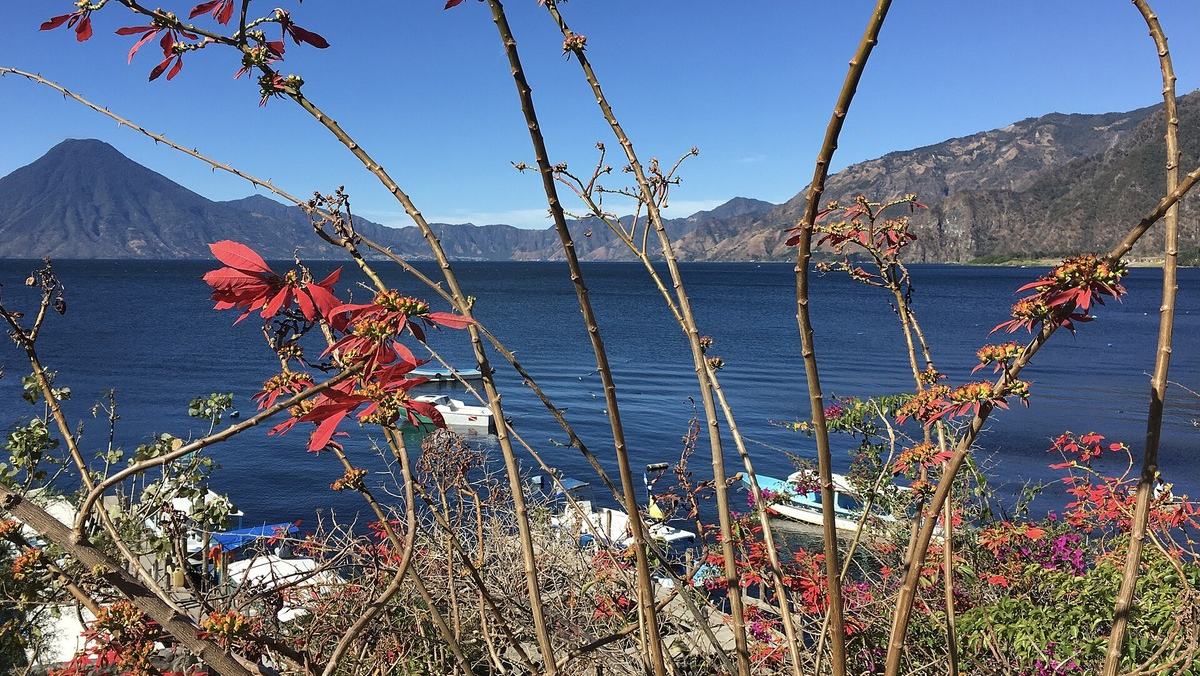
The lead image, “Lago de Atitlán seen from Panajachel,” was made by Vikulinkaaa and shared on Wikimedia Commons under Creative Commons Attribution-ShareAlike 4.0. It documents the genuine Guatemalan lake from the Panajachel area, with the surrounding volcanic landscape, and is credited with its creator and licence. It does not depict a specific Experience Guatemala departure, prove the present water conditions or establish an authorised kayaking route. The distinction is important: a reliable image demonstrates the character of a location, while the operator's first-party description supplies practical details that still require booking confirmation.
Making an Atitlán kayak day worthwhile
Begin by contacting Experience Guatemala for a written itinerary, the current per-person cost and clarification of what kayaking equipment and guidance are included. Ask how weather decisions are made, which shoreline is used and whether the route is suitable for all participants. Plan for the early Antigua departure, road travel and time to change after paddling. Follow local advice around passenger boats and respect residents, wildlife and shoreline access. Lake Atitlán offers an exceptional setting for a modest kayak outing, but its appeal is best enjoyed through thoughtful preparation rather than an assumption that every scenic stretch of water is safe or available for independent travel.
Sources and photograph attribution
Official destination and boating guidance: Experience Guatemala — Kayak at Lake Atitlán private tour from Antigua. Current access, rules, weather and reservations must be checked independently before travel.
Photograph: Vikulinkaaa — “Lago de Atitlán seen from Panajachel.jpg” (CC BY-SA 4.0), via Wikimedia Commons. Resized to JPEG 1200×800 for editorial display. Source: https://commons.wikimedia.org/wiki/File:Lago_de_Atitl%C3%A1n_seen_from_Panajachel.jpg. Licence: https://creativecommons.org/licenses/by-sa/4.0. Original rights remain with the credited creator or as specified by the source and licence.
