
A guide to Lake Anna's 2026 self-service kayak kiosks, Whenever Watersports' single and tandem rentals, Virginia State Park access and responsible family paddling.
A changing way to get on the water
Lake Anna State Park in Virginia now offers a particularly useful proposition for people who want to kayak without bringing their own boat. A self-service rental kiosk operated through Whenever Watersports has joined the range of boating access on this large reservoir. The arrangement reflects a programme announced by Virginia State Parks in August 2026, intended to extend paddling opportunities beyond the shorter periods in which conventional staffed rental desks are available. For a family planning a day in Spotsylvania County, the development makes the practical choices more interesting: carry a private kayak, arrange an operator-led outing or reserve an appropriate single or tandem kayak through a digital service.
The opportunity should not be confused with unrestricted, year-round water access. The operator's Lake Anna page describes its self-service provision and the park authority sets the broader conditions for visiting. The useful first step is to confirm operating availability, park opening arrangements and the forecast on the proposed date. A modest craft gives its crew considerable freedom, but only when the boat, weather and launch area suit their actual experience.
Understanding the self-service rental kiosk
The Whenever Watersports operator describes its station at Lake Anna State Park in Spotsylvania, close to the park beach. Its published information lists single kayaks, with a tandem option providing another possibility for couples or families. The rental process takes place through the operator's application: the user finds a participating location, completes the requested checks and follows the instructions for unlocking equipment. This is different from joining a scheduled boat tour or hiring through a counter staffed by a person who can answer every question before departure.
The convenience comes with responsibility. Customers need a charged phone, the ability to follow the operator's process and enough awareness to assess whether it is safe to launch. Check what paddles, personal flotation devices and other equipment are included, and confirm rules about age, supervision and returns. A kiosk should not be treated as a substitute for proper instruction. Anyone unfamiliar with paddling is better served by a short supervised introduction before setting out independently on a busy reservoir.
The August 2026 state parks initiative
Virginia State Parks announced the partnership in August 2026 as part of a ten-park rollout. The programme was presented as a way to make kayaks and, at some locations, paddleboards available for longer periods than traditional seasonal concessions can support. Lake Anna is listed as a location for single and tandem kayaks. The significant editorial point is not that kayaking was invented at the park in 2026, but that the process of gaining access to rental equipment has changed. Existing owners can still use permitted facilities, while visitors who arrive without a boat may have an additional choice.
A traveller should distinguish between the park's own information and the private operator's offer. The state sets access, safety and other park regulations, while the operator controls its equipment and booking process. If one website shows an appealing activity and the other reports a temporary closure, the sensible choice is to investigate both before making a journey. Technology can simplify a booking but cannot guarantee safe weather or immediate equipment availability.
Why the state park makes a useful starting place
Lake Anna State Park includes a developed recreational waterfront, a boat launch and accommodation options that help visitors organise more than a hurried afternoon. Virginia's Department of Wildlife Resources also identifies the state park and private marinas among the available lake access facilities. That does not mean every stretch of the reservoir belongs to the state park or that an operator can launch anywhere. Establish which parking, launching and shoreline areas are authorised for the intended craft.
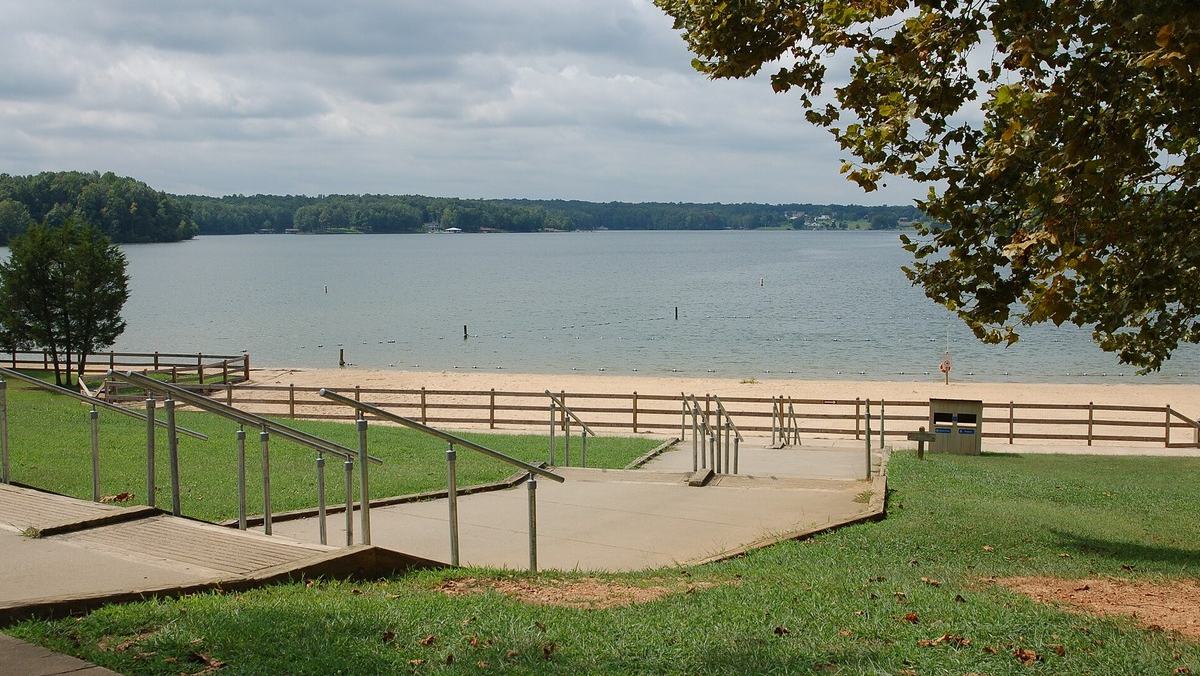
A family unfamiliar with the lake should begin with the official state park map and recent notices, not a route drawn from a social media photograph. In particular, the park's kayak kiosk location near the beach is a convenient reference point, but it must not lead paddlers to enter a designated swimming space. Observe signs and follow the operator's designated departure and recovery instructions. If a launch is crowded or access is restricted, adjust the plan instead of pushing into a narrow area between swimmers and powered craft.
Choosing a single or tandem kayak
A single kayak lets each adult control their own pace and heading, provided the group remains close enough to support one another. A tandem can work well for two compatible paddlers or for an adult accompanying an appropriately aged passenger, but cooperation matters. One person changing stroke or shifting position without warning can unsettle the craft. When selecting a rental, consider the combined weight of people and equipment, whether everyone can enter and leave safely, and whether a beginner will be comfortable in modest waves.
Avoid treating the tandem as a substitute for supervision or physical ability. If one participant has little paddling experience, the other may have to perform most of the work during the return. Decide in advance how long everyone wants to stay afloat and how quickly the group can turn back. The operator should be consulted about specific equipment capacities, since a generic description of a kayak does not establish suitability for a particular party.
The right length for a first outing
Lake Anna is large enough that the opposite shore can tempt visitors into planning a substantial passage. For a first self-service hire, however, a sheltered out-and-back is generally preferable to an ambitious loop. Begin with the approved departure point, identify an unmistakable shoreline feature and turn while everyone still has energy. The distance covered matters far less than the quality of boat control, awareness of traffic and comfort with the conditions.
Before launching, agree on a meeting point, signals for turning and what the group should do if one kayak falls behind. A nervous paddler should be able to ask for an early return without feeling that the holiday has been spoiled. If the weather, water temperature or the crew's confidence suggests a short outing, take that advice seriously. A good first day is often a foundation for a much better second visit.
Powered boats and the wake problem
Lake Anna is used by motorboats as well as paddlers. That mixture makes lookout and route choice especially important. A low-sitting kayak offers a limited view over surrounding waves, while a small powered vessel may create a wake that reaches another craft after the passing skipper has already moved away. Paddlers should avoid active marina and launching approaches where possible, maintain a conspicuous presence and avoid stopping in places where other traffic is likely to converge.
Motorboat operators have corresponding obligations: remain alert to small craft, make intentions predictable and reduce speed or wake as conditions require. Neither side should assume that the other will take the correct avoiding action at the last moment. The most relaxed way to share a reservoir is to give everybody room, even when the manoeuvre takes a little longer than the shortest possible route.
What to take onto the kayak
A suitable personal flotation device is essential for everyone on board, and a rented one must be fitted correctly rather than simply accepted from the storage rack. Carry water, practical sun protection, clothing appropriate for immersion risk and a communication device protected from spray but readily accessible. Make sure keys, glasses and any essential medication are secured. A small dry bag can help, but it should not become a bulky obstacle that prevents a paddler from moving safely.
For an unfamiliar environment, an offline map and a clear shore contact can be useful. Tell someone where you plan to paddle and when the rental is due back. If a phone battery is being used to operate the booking application, preserve enough charge to manage the return and communicate in an emergency. Do not rely on ordinary mobile coverage as the only safety measure, and remain within the area permitted by the operator.
Wind can change the return journey
Conditions may appear calm at the beach while more exposed water is already affected by wind. A kayak travels at modest speed, and even a relatively short headwind can extend the return substantially. Look at an up-to-date local forecast and observe the direction of ripples and wakes before launching. Keep a conservative margin on the outward leg; travelling with the wind can create a misleading sense of effortless progress.
The safest choice may be a short outing near the launch or no outing at all. Families planning a picnic can simply keep the paddle as an optional activity rather than an obligation. A self-service hire does not make it sensible to proceed when visibility is poor, storm conditions are developing or someone feels uncertain. The ability to change the plan without drama is one of the most valuable qualities a leisure boat owner or renter can cultivate.
Wildlife and shoreline etiquette
A quieter craft can reveal aspects of Lake Anna that are easy to miss from a faster boat: water birds moving along the shore, reflections in sheltered coves and changing patterns of vegetation. Approach these scenes carefully. Do not chase birds to obtain photographs or land on a bank merely because it looks inviting. Much of the lake's shoreline is not public park property; legal access should be established before planning a stop.
Avoid carrying food wrappers or unsecured plastic that could end up in the water. Keep fishing lines and loose cords controlled, and clean equipment when moving between waterways. Small acts of care matter across a reservoir that receives frequent visitors. One party leaving a cove undisturbed makes it easier for the next to have the same relaxed experience.
Planning a weekend instead of an hour
The park's cabins, campsites and trails allow a visit to extend beyond boating. A sensible two-day approach is to arrive, check the facility map and spend time learning the local layout before committing to a longer paddle. If the weather is suitable on the following morning, arrange a rental or prepare your own craft and choose a sheltered route. That leaves the afternoon for a walk, meal or quiet time near the water rather than a frantic race between activities.
Visitors staying elsewhere around Lake Anna can still follow the same principle. Plan the boating portion first, identify a lawful parking and launching point, and confirm travel times. A boating holiday often becomes less enjoyable when every hour is filled with appointments. Allow space for equipment checks, a weather-related delay and an unplanned period simply enjoying the setting.
Owners bringing their own boat
The arrival process differs for private craft. Check the relevant boat registration, operator qualifications, launch regulations and whether any aquatic invasive species restrictions affect the vessel. Inspect trailer tyres and lights before towing, and prepare lines and equipment outside the immediate launch lane. A hand-carried kayak is easier to manage but should still enter the water only at a permitted access point. Never assume the presence of a rental kiosk means private launching is automatically permitted at that precise location.
Before leaving home, examine the craft for damage, secure the paddle and flotation device, and make sure a return plan is realistic. Owners familiar with coastal kayaking sometimes underestimate a busy inland lake, while newcomers may assume that proximity to a state park guarantees a quick rescue. Good preparation helps both groups. A safe, modest route is far more useful than an impressive but poorly understood one.
Check today's details with the responsible organisations
Virginia State Parks' published programme confirms the 2026 introduction of self-service kayak kiosks, and Whenever Watersports identifies Lake Anna State Park as one of its locations. Those are the right sources for the central claims in this guide. Their information must nevertheless be checked immediately before a booking for current operating hours, inventory, rental terms and any park closure. The Department of Wildlife Resources provides additional context about public and private boat access, but it does not reserve a parking or launching space for a visitor.
Lake Anna's new self-service option is attractive precisely because it can make a straightforward paddle easier to arrange. The benefit lasts only if visitors treat the water with the respect it deserves. Pick an appropriate boat, read the conditions, travel with an achievable plan and return without rushing. That combination turns a digital rental from a convenience into a genuinely satisfying small-boat experience.
Sources and photograph attribution
Official destination and boating guidance: Virginia Department of Wildlife Resources — Lake Anna Access and Boating. Current access, rules, weather and reservations must be checked independently before travel.
Photograph: Virginia State Parks staff — “Lake Anna State Park (7987032462) (2).jpg” (CC BY 2.0), via Wikimedia Commons. Resized to JPEG 1200×800 for editorial display. Source: https://commons.wikimedia.org/wiki/File:Lake_Anna_State_Park_(7987032462)_(2).jpg. Licence: https://creativecommons.org/licenses/by/2.0. Original rights remain with the credited creator or as specified by the source and licence.
