
Padre Island National Seashore offers small-boat enthusiasts a choice between the sheltered character of a coastal lagoon and the much more exposed conditions of the open Gulf. At Bird Island Basin, the attention of many visitors turns inland towards the Laguna Madre, a broad, shallow waterway where fishing, paddling and wind-powered recreation can form the basis of a memorable coastal holiday.
A different kind of Texas coastal holiday
Padre Island National Seashore offers small-boat enthusiasts a choice between the sheltered character of a coastal lagoon and the much more exposed conditions of the open Gulf. At Bird Island Basin, the attention of many visitors turns inland towards the Laguna Madre, a broad, shallow waterway where fishing, paddling and wind-powered recreation can form the basis of a memorable coastal holiday.
The setting is particularly relevant to owners of compact trailer boats and portable paddle craft. A visitor does not need a large yacht to appreciate the seascape, and in many circumstances a smaller vessel is the better match. That does not mean every shallow-water craft is suitable for the trip. Lagoon navigation, wind direction and the crew's ability to recover or return to safety all require consideration.
Why shallow water changes boat choice
The National Park Service describes the Laguna Madre as having an average depth of approximately 4.5 feet, or 1.4 metres. Averages tell only part of the story. They are not navigational soundings for a proposed course, and a boat owner should not assume that the entire lagoon is navigable at that depth. Conditions and local features need to be assessed using suitable, current information.
For a motorboat owner, draught is more than a measurement of the hull floating at rest. Propellers, steering components and the loading of the craft affect the practical clearance it needs. Consult the vessel and engine manufacturer for operation in shallow water. Avoid the temptation to press on simply because the surface appears calm; there may be insufficient water or sensitive habitat beneath it.
Bird Island Basin as a starting point
Bird Island Basin is a useful focal point for planning because the park identifies a boat ramp and a day-use area serving different recreational activities. Before travelling with a boat on a trailer, confirm current access, applicable fees and launch conditions with the park. A straightforward launch site can become unsuitable when occupancy, weather or site restrictions are different from those expected.
A group bringing paddle craft should investigate the day-use area rather than assume it must share the launch arrangements used by powerboats. The park lists kayak and stand-up paddleboard rental among the services available through its local concession arrangements. Check those arrangements in advance, along with equipment suitability, opening hours and any eligibility requirements for a lesson or rental.
The deeper channel is not a shortcut for everyone
The maintained Gulf Intracoastal Waterway channel borders the national seashore on the western side. The park describes this shipping route as substantially deeper than the lagoon, with an average depth of around 12 feet. The greater depth is attractive on a superficial reading of a chart, but a maintained commercial navigation channel is not automatically the best place for a leisurely outing in a small boat.
Commercial traffic may include vessels and barges considerably larger than a kayak, paddleboard or compact recreational launch. Their operators face different manoeuvring constraints, and the wake or changing water conditions created by traffic may be significant for a small craft. Plan to avoid unnecessary interaction with larger vessels. Learn the applicable navigation rules and local guidance instead of relying on the expectation that another vessel will change course.
A place to learn wind-powered recreation
The park identifies Bird Island Basin as an important windsurfing location, helped by its steady winds, relatively warm water and shallow areas. Beginners may find that the combination of instruction and an appropriate choice of equipment makes the learning experience less intimidating. The authorised concessionaire has been listed as supplying windsurfing lessons and rental gear, but visitors should confirm the current offering before their trip.
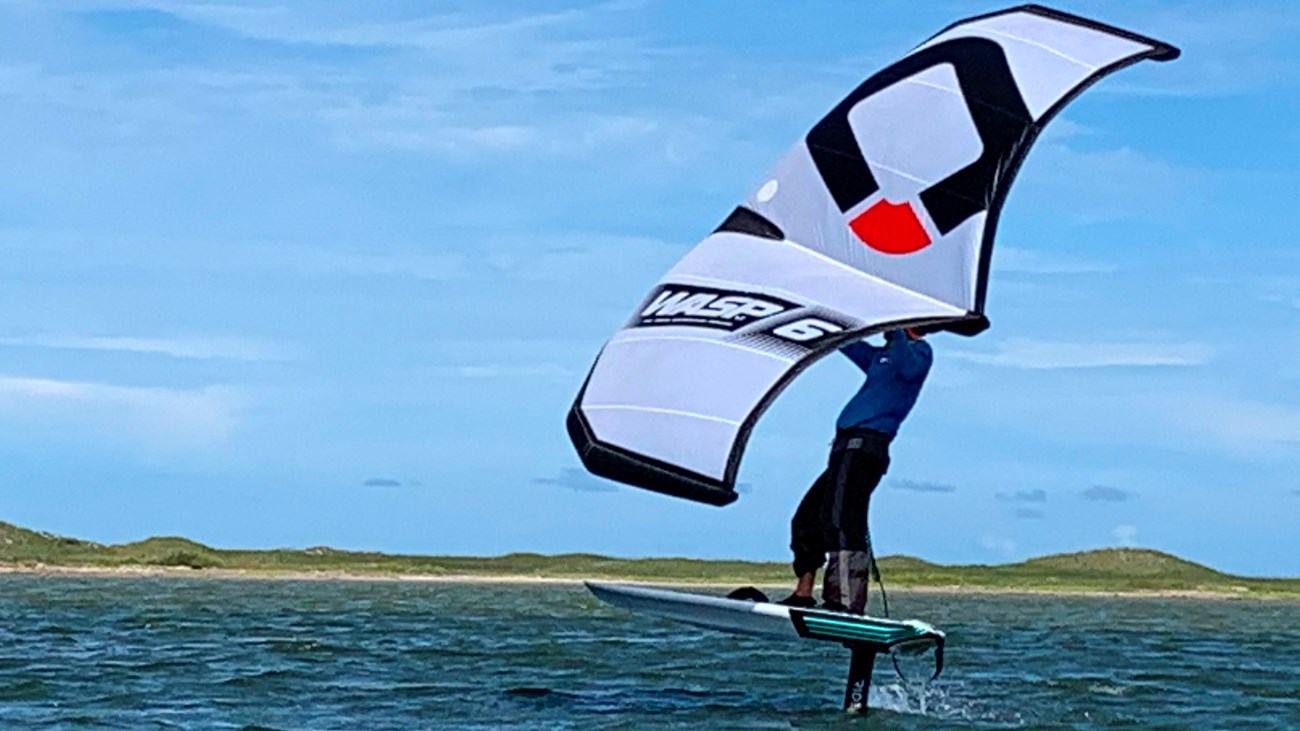
Wind can be both the attraction and the constraint. A beginner may associate strong wind with an exciting session, yet a suitable learning day depends on direction, strength, equipment and the ability to return to the chosen landing. A professional instructor can help evaluate these factors. Avoid making assumptions about unfamiliar wind sports, because the demands placed on a windsurfer, a wingfoil rider and a sailing dinghy are not identical.
Paddling the sheltered side
For those who prefer a quieter day, a canoe, kayak or paddleboard provides an opportunity to explore selected parts of the lagoon at a slower pace. Choose a modest outing appropriate to the least experienced member of the party, especially if the group includes people who have never paddled on a coastal waterway before. The ability to advance upwind can become important during the return leg.
A sensible plan considers how far wind might push the craft and whether the party can return without becoming exhausted. Locate practical places to stop, understand any landing restrictions and keep safety equipment accessible. Check the marine forecast before launch, not only the general weather predicted for a town inland. Even shallow water can present a dangerous situation when wind, fatigue or immersion prevent a person from returning.
Fishing from a suitably equipped boat
The park describes fishing as a popular reason to launch into the Laguna Madre. Angling from a small boat allows the crew to spend time close to the character of the water, but the practical emphasis should be on a suitable platform and respectful use of the fishery. Check applicable licences, restrictions and species-specific rules through current state and park sources.
A compact fishing vessel with a well-organised cockpit can support a more relaxed day than a boat crowded with equipment. Keep unused lines, loose hooks, rods and storage containers from interfering with safe movement or the operation of the helm. Distribute loads within the limits specified for the craft. If children are fishing, organise the trip around supervision and manageable distances rather than around an ambitious catch target.
The Gulf-facing beach is a different environment
The outer shore demands separate judgment. The National Park Service warns inexperienced sea kayakers against attempting the exposed Gulf, where waves, wind and currents can present serious difficulties. It also describes limited possibilities for launching approved soft-hulled vessels from particular parts of South Beach. Visitors must consult the park's current rules rather than interpret that description as permission to launch any craft anywhere.
A boat that performs well on the lagoon may be inappropriate for a surf launch. Transporting equipment down a beach and recovering it again can also introduce problems that an ordinary slipway does not present. For a family on its first visit, the inland side may offer the more sensible focus. An exposed outing should require suitable craft, appropriate training, current local advice and conditions within established personal limits.
Stewardship in a very shallow ecosystem
The character of a lagoon depends on what lies beneath its surface as well as the appearance of the water. Small craft can travel quietly and can be operated with considerable care, but their owners have a responsibility to avoid creating unnecessary disturbance. Do not use a shallow habitat as a convenient substitute for a marked or otherwise appropriate navigation route.
Respect wildlife, observe current restrictions and pack equipment and rubbish away securely. Learn how invasive-species prevention requirements apply to your craft, particularly if you move it between different water bodies. The smallest actions can matter here: preventing loose fishing line from entering the water, avoiding a landing that damages vegetation, and planning the day so there is no incentive to rush through an area that requires care.
Build a flexible Padre Island itinerary
A good Bird Island Basin visit might combine an instructor-led windsurfing session, a short paddle or a fishing outing with time on shore. There is no need to attempt all three on the same day. Consider which activity makes the best use of the expected conditions and the experience of the group, and keep another option available if the original choice becomes unsuitable.
Confirm park access, fees, concession availability, launch rules and current restrictions before departure. In particular, distinguish windsurfing from other wind sports: the park's information identifies kiteboarding as prohibited under its rules. Check the current superintendent's compendium when arranging the trip. The best reason to come to the Laguna Madre is not to accumulate miles on the water, but to experience a distinctive coastal environment at a manageable and thoughtful pace.
Official source: National Park Service visitor information. A board rider using a hand-held wing at the Laguna Madre; National Park Service photograph by Audrey Hill. Public-domain federal agency photograph.
No claim to original U.S. Government works.
Source
National Park Service