
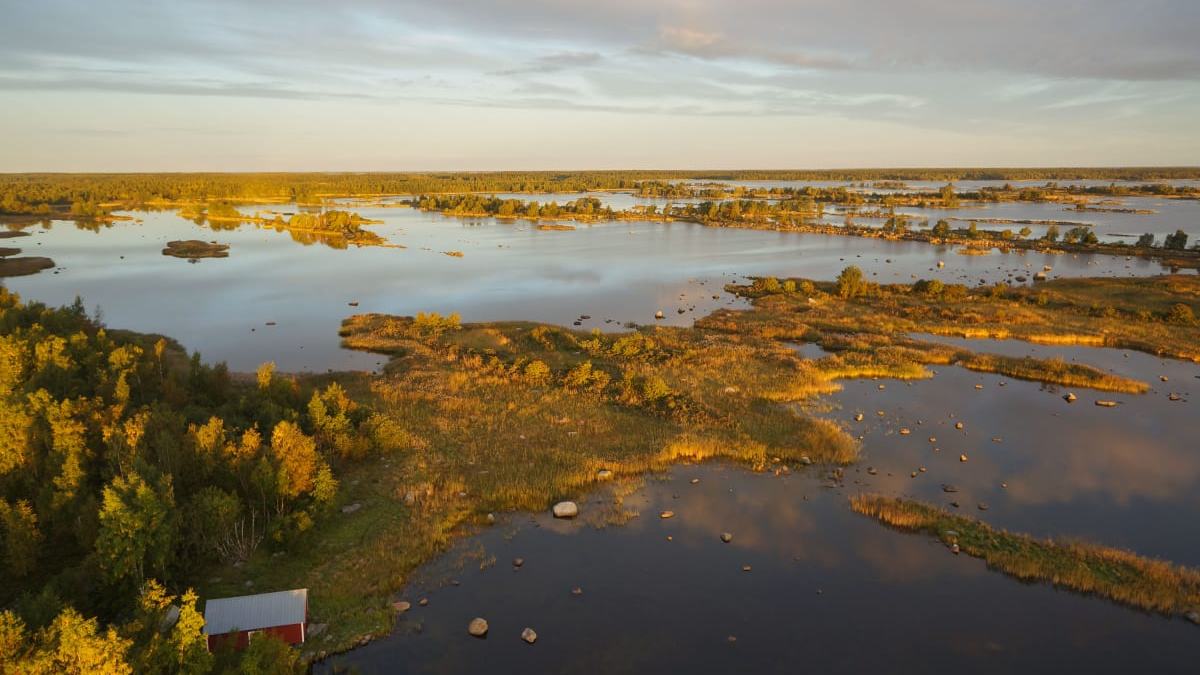
Discover Finland's UNESCO-listed Kvarken Archipelago by small boat, with low islands, sheltered shore visits, practical safety advice and a landscape still rising from the sea.
An archipelago where the shoreline keeps moving
A small-boat cruise through Finland's Kvarken Archipelago is unlike a familiar marina-to-marina Mediterranean holiday. Here the Gulf of Bothnia holds a maze of low islands, boulder-strewn shores and quiet fishing communities that seem inseparable from the sea. The most distinctive feature is that the landscape is still changing. Land continues to rebound after the weight of the last ice sheet disappeared, gradually raising ridges and closing off shallow bays. The changing coast is part of the adventure, but it is also a warning to navigate with care.
The Kvarken forms the Finnish half of the transboundary UNESCO World Heritage property shared with Sweden's High Coast. UNESCO identifies thousands of islands and distinctive ridged moraine formations left behind by glaciation. For visiting boaters, that geological story is visible in a much more immediate way: islands appear low on the horizon, stony reefs punctuate the water, and waterways that seem broad from a distance can be unexpectedly shallow. A sound plan begins with up-to-date official charts and local knowledge.
Begin with the Björköby and Svedjehamn landscape
The village of Björköby and its Svedjehamn area offer an appealing introduction for people who want to mix a boat day with a walk ashore. Svedjehamn is featured in official Visit Finland photography, where the sheltered water, boats and low wooded islands convey the archipelago's character. A road-based visit can complement boating, particularly if weather is unsuitable for exposed island passages. Planning a land outing first also helps guests understand what they are seeing once they travel by water.
Rather than treat the area as a launch point to race offshore, allow time for coastal trails, viewpoints and explanations of land uplift. The protected landscape is home to small communities with working traditions, not merely a scenic playground. Check current local landing facilities and visitor information before arriving, and remember that a jetty used by residents or fishers may not be intended for visiting craft. A respectful visit makes use of designated access points and leaves shore operations undisturbed.
Why careful pilotage matters more than speed
The unusual geology that makes Kvarken attractive also complicates navigation. Glacial boulders, moraine ridges and an abundance of small islets mean that an apparently direct track is seldom the wisest choice. Use updated Finnish maritime charts, electronic positioning as a cross-check rather than a substitute, and the appropriate marked fairways. Soundings should be interpreted alongside the boat's draught, margin beneath the keel and expected changes in water level. Avoid extrapolating from the passage taken by a smaller local craft.
Planning should include daylight, visibility and places to turn back if conditions deteriorate. A cool Baltic breeze can build uncomfortable waves in open stretches, even when the inner coves appear placid. Have an alternate destination and sufficient fuel or battery reserve, and equip crew and passengers for water temperatures that can be far colder than the air suggests. Children should wear properly fitting buoyancy aids, and everyone should know the procedure for recovering a person from the water.
Island stops with a story beyond the mooring
Metsähallitus, Finland's state land and water manager, describes former pilot and coastguard islands that now welcome carefully managed visitors. Mickelsörarna, for example, includes a nature information station on Kummelskäret, while other islands retain buildings that recall the region's navigation and fishing history. Such places provide an absorbing reason to leave the cockpit. They can also offer simple walks and outlooks over the distinctive succession of lagoons, new land and coastal vegetation.
Facilities should never be assumed to remain unchanged from an older guidebook. Some sites operate seasonally, some services require booking, and landing or mooring space may be limited. Check the latest information from the relevant authority or operator before departure, including any draught restrictions. Make the excursion achievable for the least mobile passenger and carry water, suitable footwear and clothing even on a short shore visit. An island may feel close to a home port yet be isolated when the weather turns.
Wildlife, nesting seasons and low-impact visits
A respectful small-boat itinerary pays as much attention to wildlife as scenery. Metsähallitus describes the islands' role as habitats for birds, including places where access is restricted in the nesting season. On several sites its visitor guidance asks people to keep to marked trails during the spring and early summer. Individual restrictions vary by island and can be more stringent than a general advisory. Check the specific destination's current rules, notices and maps before landing rather than applying one date to the whole archipelago.
Keep dogs under control wherever they are permitted, watch wildlife from a distance and avoid beaching a boat on a sensitive shore. Take all litter away, minimise noise close to birds and never disturb signs, nests or protected vegetation. Even an apparently empty stone island may be an important breeding site. Photography is often best from a boat that holds position safely outside restricted zones, where the movement of birds across the sky tells the story without disturbing the animals themselves.
Boulders, lagoons and the science of land uplift
The land-uplift phenomenon becomes most interesting when paired with an explanation of the landscape. In parts of Kvarken, low moraine banks create long parallel patterns across the terrain. As land rises, shallow sea inlets can become sheltered lagoons and then small lakes, changing the habitats available to fish, birds and plants. UNESCO uses this region as a globally significant illustration of the planet's recovery from the last Ice Age. No single boat trip can show the whole process, yet a guided viewpoint walk makes the broad concept tangible.
The constant evolution of the coast is also a practical reason to take charts and notices seriously. A harbour approach described in an old cruising anecdote cannot be accepted as a modern navigation recommendation. If the plan involves a very shallow bay, choose a suitable smaller craft or use an established local tour operator. A visitor learns more by travelling safely and observing carefully than by pushing into an unsuitable passage merely to reach a photogenic shoreline.
A flexible day on the water
A practical day might begin with a weather briefing and review of the marked route, followed by a modest passage to a designated visitor stop with verified access. Leave enough time to walk a short trail, admire the shoreline from a recognised viewpoint and return before dusk. A picnic or simple meal ashore can be part of the pleasure, provided food waste is removed and any fires follow local rules. If wind or visibility makes the passage doubtful, a land-based nature visit still captures the spirit of Kvarken.
For a longer stay, work with local visitor services to combine different islands without relying on speculative berth availability. The official visitor information identifies opportunities for organised boat transport as well as sites accessible by private boat or kayak. A skipper with limited experience of the area may gain more from a local guide than from an ambitious self-planned circuit. The aim should be time in nature and a deeper understanding of the archipelago, rather than the number of waypoints logged.
What to check before departure
The essentials are straightforward but deserve disciplined attention. Confirm the weather and sea state, consult the current Finnish navigation information, inspect boat safety equipment and identify suitable legal landing points. Record the intended route and estimated return with someone ashore, and bring a means of calling for help appropriate to the cruising area. Mobile coverage should not be treated as guaranteed in every sheltered channel or island group. A paper or offline backup remains sensible even when modern navigation equipment is aboard.
Kvarken is most rewarding for crews who embrace patience. Its appeal comes from quiet harbours, geology, birdlife and the intimacy of moving slowly between islands that have shaped generations of local life. Official guidance from UNESCO, Visit Finland and Metsähallitus provides a reliable starting point, but on-the-day decisions belong to the skipper using present conditions. When that distinction is respected, a small boat offers a wonderful view of one of northern Europe's most unusual coastal landscapes.