
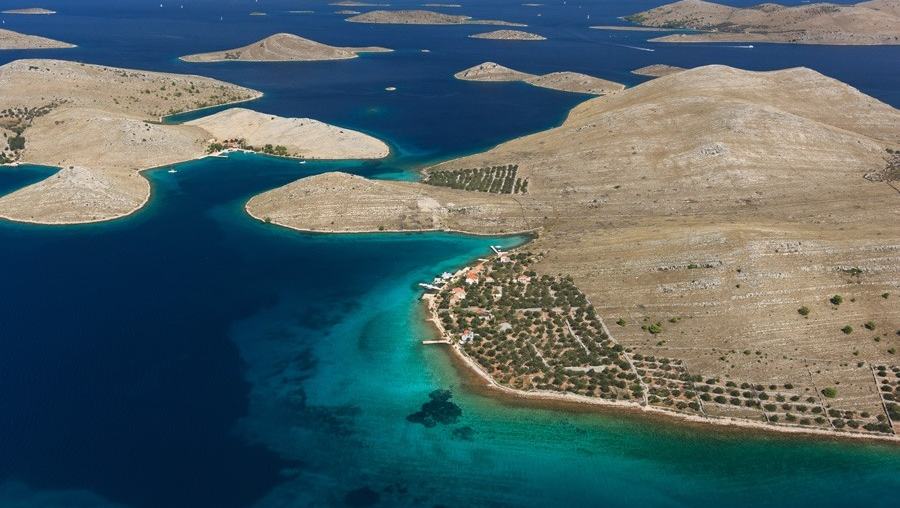
Croatia's Kornati National Park is a memorable short-cruising destination, but protected areas, designated anchorages and mandatory entry tickets make careful planning essential.
A landscape best understood from the water
Kornati National Park is one of Croatia's most distinctive small-boat destinations, with rocky islands, intricate passages and clear Adriatic water. The national-park authority describes its protected waters as a place where maritime beauty comes with specific conservation responsibilities.
The wider Kornati area contains many islands and reefs, while the park authority describes 89 protected islands, islets and reefs in its visitor materials. From a low boat, the changes in rock colour and the shape of the channels can be especially striking.
The natural temptation is to stop wherever a sheltered cove looks inviting. That approach is not appropriate in a regulated national park, where access, anchoring and overnight stays are restricted to identified locations.
A successful visit therefore starts before the engine is switched on. Find the latest official chart, park-entry arrangements and weather forecast, then select a route that matches the boat's size and the crew's experience.
Understand the strict-protection areas
The national park identifies four strict-protection areas around Purara and adjacent reefs, Mrtenjak, Kolobučar and the Obručan islets. Visitors are not allowed to enter these zones, regardless of whether they are sailing, motoring or swimming.
Elsewhere, the authority allows navigation subject to the park's rules. This does not confer a general right to anchor or remain overnight wherever there is enough water beneath the keel.
The park specifies permitted bays and coves for anchoring and overnighting, including names such as Stiniva, Šipnate, Lučica, Opat, Lavsa and Piškera–Vela Panitula. The official list is longer and should be consulted in full rather than abbreviated into an informal cruising recommendation.
Names and boundaries can be difficult to interpret when approaching an island for the first time. Use current nautical information and the park's own map; do not rely on a social-media photograph or an outdated anchorage pin.
Entry, swimming and diving
Park admission is regulated, and the authority publishes boat-based ticket options that vary by length, season and purchase arrangements. A small craft is not exempt simply because it is operated privately or makes only a short visit.
Buying the appropriate ticket in advance may be convenient, but the current official system should be checked before travelling. Published tariffs and procedures can change, and an old cruising blog is not a reliable basis for budgeting.
Swimming is generally permitted within the park except in strict-protection zones. That broad allowance still requires attention to boat traffic, local conditions and the need to avoid damaging the seabed or marine life.
Scuba diving is a different matter. The authority permits autonomous diving only through authorised organised arrangements and with the required permit, so ordinary snorkelling and licensed diving must not be treated as interchangeable activities.
The particular responsibilities of small craft
A small outboard boat gives access to attractive corners of the archipelago, but it also brings limits in fuel, shade, water and safe operating range. Carry enough supplies for delays rather than assume that every island offers a shop or filling station.
The national park notes that food and provisions can be obtained in Murter and other places outside the protected area. Crews planning to stay overnight should stock the boat before entering and confirm any booked mooring services separately.
Wind can funnel through channels and make a peaceful-looking cove uncomfortable for a lightly loaded vessel. The decision to turn back or choose a safer permitted harbour should be made early, not after conditions have become difficult.
Operators must also prevent rubbish, sewage, oil or fuel entering the sea. Quiet approaches, limited wake and care around swimmers are ordinary boating duties made especially important by the park's conservation role.
A shore visit without damaging the park
The park authority states that land within the protected area is privately owned and that walking is permitted only on marked paths and trails. A beautiful hillside is not automatically public access from whichever landing place appears most convenient.
Protecting plants, wildlife and historical features is part of the visitor experience. The park's rules prohibit damaging vegetation, disturbing animals and collecting natural materials, so photography is preferable to taking souvenirs.
For families, a thoughtful day could combine a quiet permitted anchorage, a swim in safe conditions and a short approved shore walk. There is no need to rush between several coves merely to increase the number of islands visited.
Kornati rewards the skipper who treats rules as part of seamanship. The national park's current guidance should remain the primary reference for tickets, protected zones, authorised overnight locations and any seasonal notices.
Before entering the park, check the emergency plan for the entire boat, not only the skipper. Everyone should know where lifejackets, communications equipment and the first-aid kit are stored, and which person will call for assistance if needed. On a small craft the safest route may be the shortest return to Murter rather than continuing deeper into the islands. National-park protection and comfortable recreation are compatible when a crew accepts that not every attractive bay is a legitimate place to stop.