
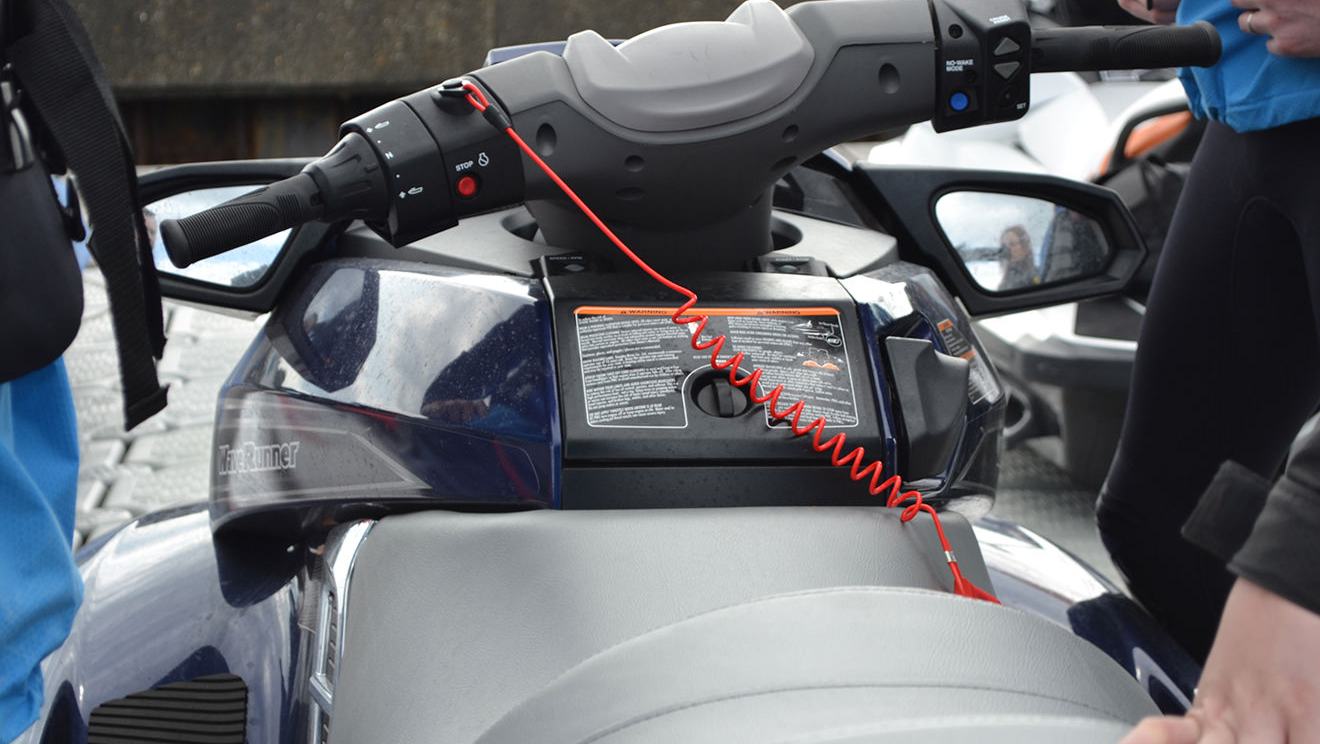
A correctly worn and tested engine cut-off lanyard can help prevent a runaway powerboat or personal watercraft. Drawing on RYA guidance, this guide explains attachment, testing, spares, wear and wireless alternatives.
A small red coiled lanyard is among the least expensive items at the helm of many open powerboats, yet its purpose is fundamental. A kill cord is designed to stop the engine when a driver is suddenly separated from the normal operating position. The Royal Yachting Association's published safety guidance explains how the device works, why its attachment point matters and why operators should check it before each day afloat. The advice is especially relevant to family runabouts, rigid inflatables and personal watercraft.
The danger is easy to underestimate on a calm day. If a driver falls away from the controls while the engine remains running, the craft may continue moving without effective command, creating a hazard to people in the water and to nearby boats. A properly fitted and used cut-off device is one safeguard against that sequence. It cannot prevent every accident or replace responsible speed, lookout and training, but it gives the operator and passengers a vital additional layer of protection.
What a conventional kill cord actually does
A traditional engine cut-off lanyard has a fitting that connects to the engine-stop mechanism at the helm and another section worn by the driver. The cord is coiled to allow the normal amount of movement needed to steer and use the controls. If the driver moves far enough from the position, the lanyard disconnects and the engine should stop. The RYA notes that this can also allow a crew member to stop the engine if the person in charge becomes incapacitated.
The device must be suited to the particular engine and switch assembly. It is not simply a decorative red cord, and a replacement that looks similar may not operate the same release. Owners should follow their engine maker's instructions and ask a qualified dealer if the correct fit is unclear. A boat without a functioning cut-off arrangement deserves professional attention before it is returned to operation.
Attach it to the driver in the correct place
The RYA recommends that, on a powerboat, the kill cord be secured around the driver's knee or thigh and clipped back onto itself. It warns against clipping it to a loose item of clothing, where the fitting might detach without pulling the engine-stop mechanism. The cord must also be positioned so that it cannot interfere with steering, throttle movement or the operator's ability to maintain control. A snug, practical attachment is part of the pre-departure routine.
Personal watercraft involve a different riding position, with more active shifts in body weight. The RYA advises attaching the cord around a strong webbing strap on the wearer's buoyancy aid when operating this type of craft. Operators should use the attachment method specified for their vehicle and protective equipment rather than improvising a long extension. The difference is about reliable activation under the movements expected from each kind of boat.
Why longer cords can make protection worse
A driver may be tempted to lengthen the cord to reach more of the cockpit without removing it. That defeats part of its purpose. The RYA explains that an overly long lanyard may take longer to activate the stop mechanism if the driver is thrown clear of the normal helm area. The correct answer is not to stretch the protected operating zone beyond what the equipment was intended to cover.
If the operator must move away from the command position or transfer control to another person, the guidance is to stop the engine first. The new driver can then secure the appropriate cord before restarting and taking command. On a family boat, this is a useful procedure to explain before departure, particularly when more than one adult may steer during an outing. A moment of discipline at the helm can avoid a confused exchange while the craft is under way.
Make the daily test a normal habit
The RYA recommends checking the kill cord at the beginning of each day or operating session. The principle is to confirm that the engine shuts down when the lanyard is deliberately released, using the manufacturer's test procedure in a controlled and safe setting. Everybody should remain clear of the propeller and the boat must be secure during checks. Any test that does not produce the expected shutdown is a reason to stop and obtain proper advice, not a fault to ignore until the next service.
A short routine can include inspecting the cord, checking that the fitting is sound and confirming that the engine-start arrangement behaves as expected. Owners should not treat yesterday's successful test as proof that today's equipment has not been damaged or tampered with. The mechanism is exposed to normal boat vibration, weather, corrosion and handling, all of which make regular attention sensible. A documented checklist can help a family, club or shared-boat scheme keep the habit consistent.
Carry a compatible spare
A cut-off switch is often arranged so that the engine cannot be started when its operating fitting is absent. That is useful for preventing uncontrolled running, but it raises a practical question if the driver and attached cord go overboard. The RYA advises carrying a second compatible kill cord on the boat. Passengers need to know where that spare is stored and what steps are safe in the particular vessel.
A spare must not be used as an excuse to bypass the engine-stop system during normal operation. It is an emergency recovery item for a trained person able to use the boat safely. The crew's first responsibilities remain the immediate safety of everyone aboard or in the water and obtaining assistance when necessary. A clear pre-departure briefing is more effective than assuming that passengers will know how unfamiliar controls work in a stressful moment.
Recognise wear before it causes a failure
Like other equipment left in an open cockpit, a lanyard can deteriorate. Strong sunlight, temperature changes and exposure to the elements may make its material brittle, stretched or less elastic. Metal fittings can also corrode or become difficult to operate. The RYA recommends checking for such damage and replacing a worn cord before returning to the water. It also advises choosing a quality replacement with a strengthening element through its centre.
Keeping the lanyard protected between trips may help preserve its condition, but storage does not replace inspection. Owners should check for kinks, cracks, worn clips and any evidence that the coil no longer returns to its normal shape. If a fitting becomes unreliable or there is doubt about compatibility, seek a correct replacement rather than attempting a makeshift repair. A reliable engine stop depends on the complete assembly, not merely the visible length of red cord.
What about wireless engine cut-off systems?
Wireless alternatives use a device carried or worn by the operator and a receiver linked to the engine-stop system. Depending on the product, the engine is designed to stop when the operator's device moves beyond its operating range or loses the appropriate connection. They may offer greater freedom of movement at the helm, but that convenience is only useful if the installation is suitable for the engine and the system is maintained correctly. The RYA explicitly advises researching compatibility and seeking advice before choosing one.
Owners should understand how a particular system handles battery warnings, loss of signal and restarting after an activation. The manufacturer's testing and operating instructions remain essential, including any limitations on the number of connected users. Wireless equipment does not remove the duty to brief passengers and operate the craft responsibly. Whether wired or wireless, the purpose remains the same: interrupt propulsion promptly if the driver can no longer control the boat.
Build the habit into every boating day
The strongest safety routines are simple enough to repeat. Put on the appropriate flotation equipment, attach the correct kill cord, confirm that it functions and explain the spare and emergency arrangements to the crew. Combine that with checks of weather, local hazards, communications and the boat's condition. None of those steps guarantees a trouble-free trip, but each addresses a foreseeable source of risk.
For new powerboat owners and families sharing helm duties, the RYA's guidance provides a clear starting point. Clubs can reinforce the lesson during launch briefings and refresher training, and experienced skippers should model the same behaviour they expect of newcomers. A kill cord is only effective when it is in the right place and working. Making that a non-negotiable part of every departure is a practical expression of good seamanship.