
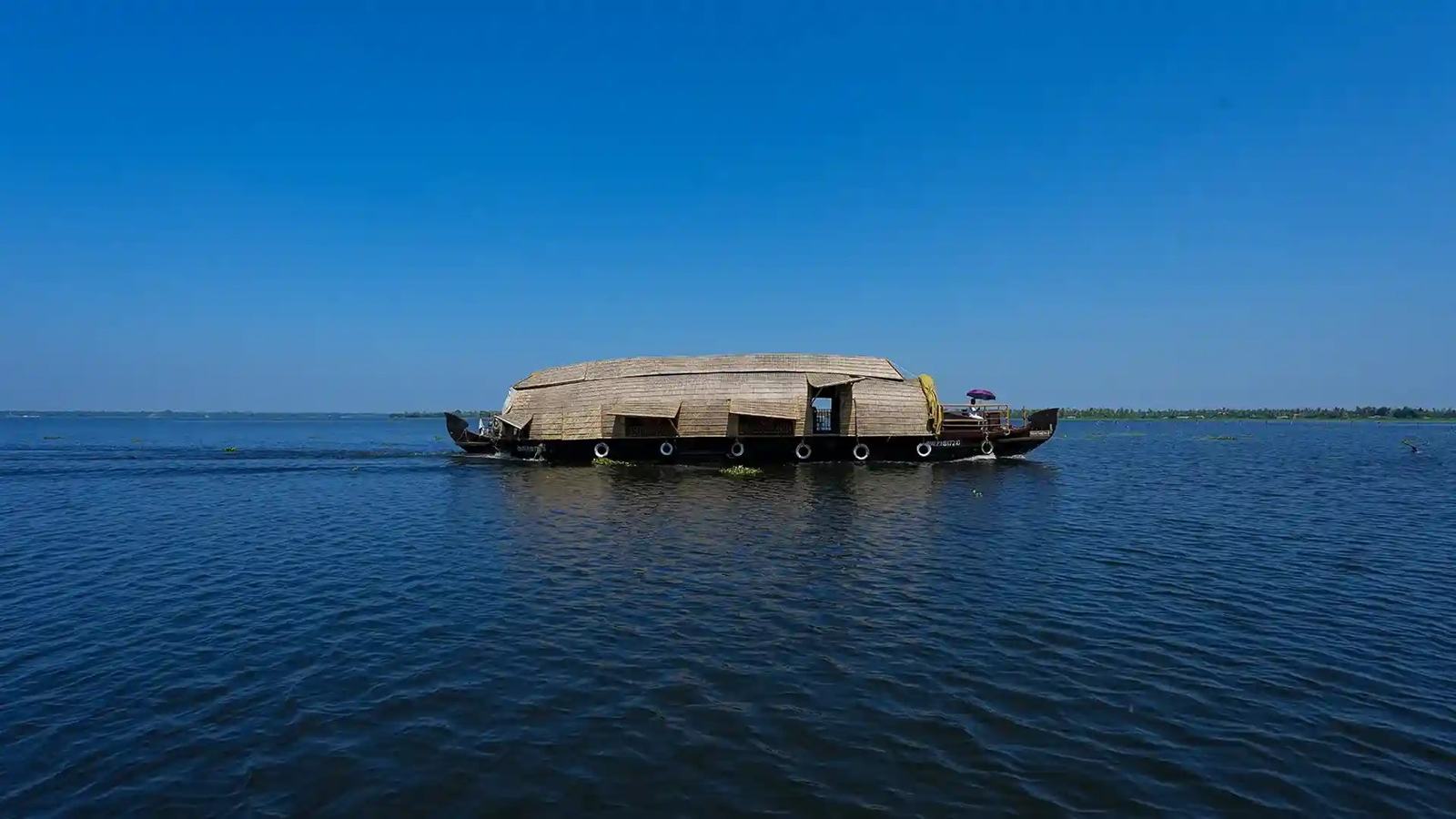
Traditional kettuvallam houseboats make Kerala's backwaters a distinctive boating holiday. Explore the waterways near Alappuzha, village scenery and the details that matter when booking.
A landscape designed for slow travel
Kerala's backwaters offer a kind of boating holiday that is measured in small observations rather than miles covered. A network of lakes, canals and sheltered waterways runs through settlements and fertile countryside behind the Arabian Sea coast. From a houseboat near Alappuzha, daily life appears at the water's edge: boats carrying local people, narrow footpaths, coconut palms and homes whose outlook is directly towards the canal. The journey becomes an introduction to how water shapes a region.
The classic vessels are called kettuvallams, a tradition associated with moving goods before tourism adapted the form for travelling accommodation. Kerala Tourism explains that contemporary houseboats commonly contain bedrooms, bathrooms, kitchens and open areas for observing the scenery. They vary significantly in scale and standard, however. A photograph of a beautiful timber roof tells only part of the story; travellers should check the actual boat's facilities, maintenance and crew arrangements.
Alappuzha is among the best-known departure points for backwater cruises. The attraction is not high speed or adventurous navigation but the chance to spend long periods at water level with an uninterrupted view. A family, couple or small group can settle into the rhythm of the waterways while an experienced crew handles the vessel. For many visitors, that is a welcome contrast to a packed programme of road journeys and crowded sightseeing stops.
Village life, paddy fields and Kuttanad
Kerala Tourism describes the route through the Alappuzha backwaters as passing traditional villages, canals and broad stretches of lake scenery. The landscape is remarkably varied at close range. Some reaches are edged by dense tropical vegetation, while others open into long views of rice fields and scattered houses. From the deck, ordinary moments become points of interest: a fisherman working beside a bank, a pedestrian crossing a small bridge or a ferry linking opposite shores.
The Kuttanad region is particularly distinctive because of its extensive low-lying agriculture. Kerala Tourism notes the area's below-sea-level farming and its importance as a rice-growing district. The interaction between cultivated land and navigable channels helps explain why houseboats are a natural way to explore this landscape. Passengers should observe quietly and avoid treating private homes and working fields as attractions open for intrusion; they are part of living communities.
A cruise may pass through areas close to Kumarakom or other waterside destinations, depending on the operator and the length of the programme. Routes differ, and a short excursion should not be confused with a multi-day passage through the region. Ask a prospective operator to show the intended route in writing, including expected cruising time and overnight mooring location. The most attractive itinerary is one with enough variety without spending the whole visit moving hurriedly between landmarks.
Living and eating aboard a houseboat
The onboard experience is often the main reason to choose a traditional houseboat rather than a conventional day tour. A shaded seating area allows passengers to watch the water while sheltered from strong sun, and a simple meal becomes memorable because of the setting. Kerala Tourism highlights traditional local cuisine as part of many houseboat experiences and notes that some vessels carry their own cook. Specific menus, dietary requirements and the extent of included meals should be confirmed in advance.
Accommodation ranges from modest cabins to more elaborate arrangements, and a description such as luxury is not a reliable technical specification. Check whether the sleeping areas are cooled, what power is available overnight, how bathrooms and hot water are provided, and how much private space the party will have. Ask for current photographs of the exact vessel rather than the operator's fleet in general. These small checks do more to shape comfort than broad promises of an unforgettable cruise.
Houseboats also bring environmental responsibilities. Waste handling, fuel use and wake management affect waterways that are simultaneously transport corridors, livelihoods and delicate ecosystems. A responsible operator should be willing to explain disposal arrangements and how the vessel minimizes disruption along narrow banks. Passengers can contribute by avoiding litter, respecting wildlife and using water and electricity sensibly. An enjoyable holiday should leave the waterway in a condition that supports the people who live beside it.
Booking wisely and letting the water set the pace
Decide first whether the trip is a few hours on the water or an overnight stay. The former can introduce the backwater scenery without a major commitment, while an overnight houseboat creates time to watch changing light and the slower movements of local life. Compare written inclusions, check-in arrangements, meal plans, cancellation terms and the vessel's actual capacity. The best value is usually clear, credible service rather than a very low headline price with important extras left unspecified.
Warm weather calls for light clothing, sun protection and drinking water, but evenings near open water may bring insects and humidity. Comfortable footwear with secure soles helps when moving between the quay and a boat that may sit differently as passengers board. Keep valuables protected against rain and splashes. Families should discuss safety rails, sleeping arrangements and the available lifejackets before arrival, especially where young children may be unfamiliar with being on a boat.
Kerala's backwaters are at their most rewarding when treated as an encounter with an inhabited waterscape rather than a set of photographs to collect. Look beyond the best-known views, listen to the sounds from passing villages and allow the pace of the craft to influence the day. A well-managed kettuvallam offers something relatively rare: a comfortable platform for watching how a place works. The reward is not the distance sailed, but the attention the journey makes possible.