
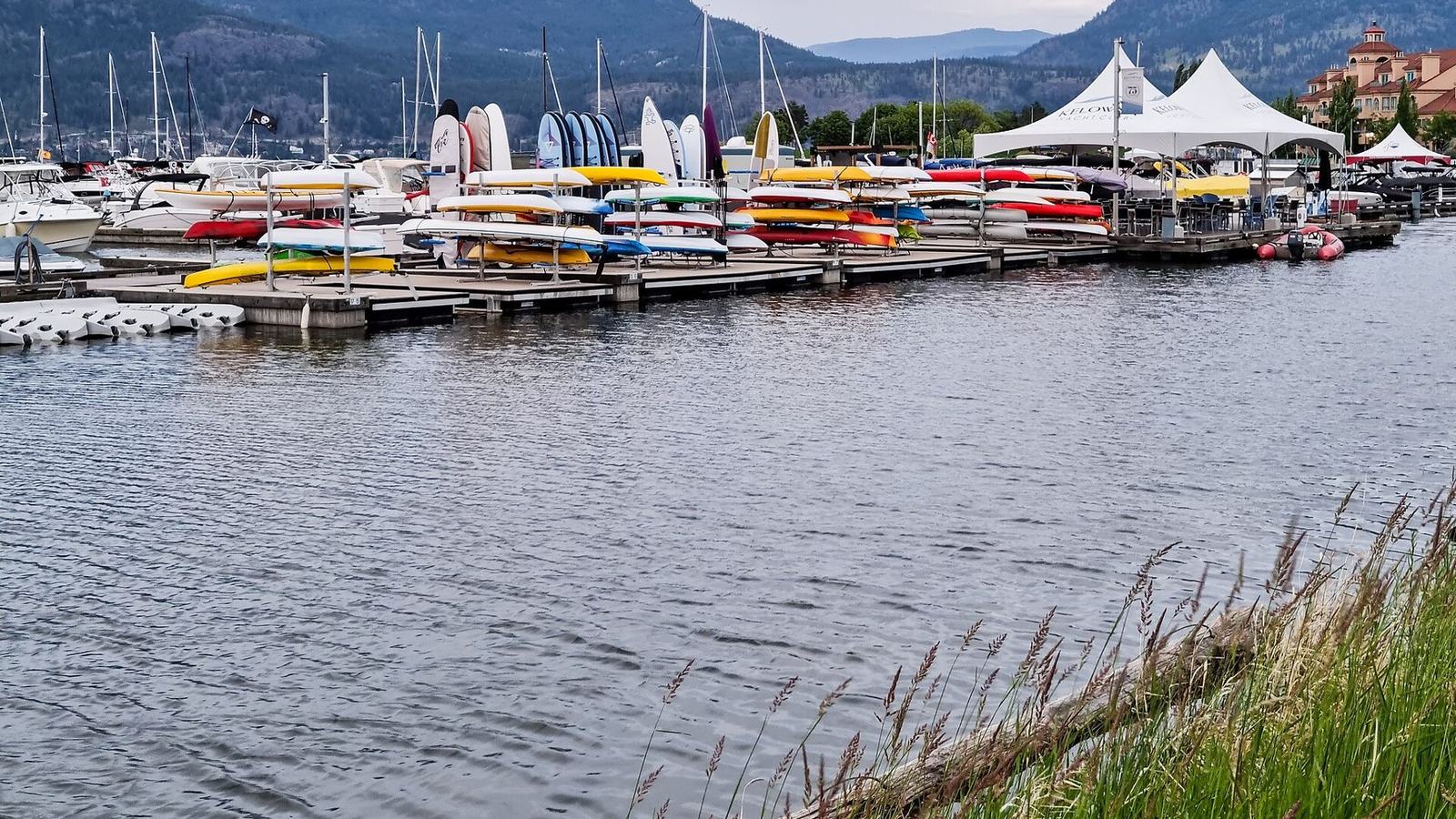
Kelowna’s waterfront is an appealing starting point for small-boat days on Okanagan Lake, but the city’s 2026 low-water warnings show why ramp conditions must come first.
The lake looks simple from the waterfront
Kelowna offers a compelling picture of a leisure-boating day: urban waterfront, mountain-backed water, swimming beaches and space to explore in a small motorboat. The temptation is to arrive with a trailer, follow the queue at a boat ramp and decide where to go once afloat. Okanagan Lake deserves a more deliberate approach. It is a substantial inland lake, with changing winds, long stretches of shoreline and access points that do not always function equally well. The City of Kelowna maintains information about its boat launches and warned in July 2026 that low lake levels were affecting their usability. That notice is a useful case study in how quickly a pleasant launch plan can become an expensive mistake. The starting point for a good day is not a picturesque photograph of the marina, but an up-to-date check of ramps, depth and local conditions.
Why the 2026 water-level notice matters
On 24 July 2026, the city reported reduced water depth at launch facilities and said functionality at Cedar Creek and Sutherland Bay was already significantly compromised. It warned that demand could shift towards Water Street. Those statements described a particular period in 2026; they must not be mistaken for a live measurement on the day you intend to launch. Lake level and access can change with season and weather. The lasting lesson is that a ramp listed on a municipal map is not automatically suitable for every boat and trailer combination. Before travelling, inspect current city updates, contact the relevant operator if necessary and confirm that the boat's draft, propeller position and trailer geometry suit available depth. An extra phone call at home beats discovering a problem while the queue grows behind the vehicle.
Choose the ramp to suit the craft
Kelowna’s official boat-launch directory identifies several public access options, including Cook Road, Water Street and Sutherland Bay. They are not interchangeable merely because they open onto the same lake. Access roads, parking arrangements, congestion and shallow-water behaviour all influence the practical choice. A small inflatable on a light trailer may cope with conditions that are unsuitable for a deeper-draft runabout; a heavy vessel may need a better gradient and more room to retrieve. The boat's draft underway is only part of the equation: the propeller, lower unit and trailer must clear the bottom during launch and recovery. Check published notices and on-site signs rather than assuming historic access information remains current. If the preferred ramp is restricted, treat postponement or a different authorised location as a normal decision.
Make the first mile deliberately slow
After launching, a busy waterfront is no place to test the top speed of a planing hull. Check the chart and any marked restrictions, identify the route out of the immediate harbour or ramp area, then ease away at a speed that keeps wash under control. Keep a lookout for swimmers, paddleboards, kayaks, sailboats and other motorboats. They can be difficult to see against bright water, particularly in late afternoon glare. Okanagan Lake's open reaches can invite a straight-line run along the shoreline, but that does not mean shoals and nearshore hazards can be ignored. Avoid passing close to unfamiliar docks and private waterfronts. A measured departure gives the crew time to settle, check that equipment is secure and listen for anything unusual in the engine or steering before committing to a longer outing.
Work with lake weather, not the clock
A sheltered launch area can give a false impression of conditions farther along the lake. Wind direction, opposing waves and local exposure may turn a fast outbound run into an uncomfortable trip back. On a small open craft, passengers and equipment can get wet even without dramatic weather. Consult a marine-suitable forecast, observe actual conditions and calculate a conservative operating area based on the weakest member of the crew. If the breeze is building, keep the destination closer to the ramp and arrange a return with daylight in reserve. Do not rely on the general city forecast alone to describe conditions on the water. Changing shorelines, hills and open reaches can produce local effects. The most enjoyable itinerary has an obvious place to shorten it without disappointment.
Take advantage of Kelowna’s shore side
The pleasure of boating from Kelowna is not measured by how many kilometres are covered. A morning cruise can be paired with time ashore at the city waterfront, a short walk or a meal, provided an authorised visitor berth or landing is arranged. A photograph of the downtown marina shows why the city is attractive from the water, but appearance is not a promise that casual stopping is permitted at every dock. Check visitor-berth rules and reservation requirements with the facility concerned. Beaches are not default moorings, and public waterfront paths should not be blocked by a boat pulled up without permission. For families, a properly planned shore stop often makes the day more comfortable than spending hours underway. The boat provides a changing perspective; the city supplies the complementary experience.
The lake is shared space
On a warm day, the water near Kelowna supports many activities at once: wake sports, gentle cruising, paddling, swimming and people enjoying the shore. Give small craft generous room and choose a line that avoids crossing repeatedly through congested recreational areas. Water-skiing or towing activities introduce particular lookout and operator responsibilities; they should be planned within applicable Canadian regulations and local restrictions, not improvised when an empty patch of water appears. Near a marina, speed reduction is essential for safety and comfort, even if the helm feels impatient. Remember that a boat's wake continues to travel after the vessel has passed. An undramatic manoeuvre from your cockpit may cause a much less pleasant experience for someone beside a dock.
Manage fuel, temperature and comfort
A modest outboard boat should begin the day with known fuel quantity, working engine cooling, charged batteries and a reliable means of communication. Carry appropriate approved flotation equipment for everyone, as well as required safety items for the craft's size and jurisdiction. Bring drinking water and sun protection, because time on an open lake can be surprisingly tiring. The change in temperature between a sheltered cockpit and a breezy return is another reason to pack spare layers. Plan fuel based on actual consumption and a reserve, not the optimistic speed displayed on a sales brochure. Decide in advance who can take the helm in an emergency and what the crew should do if the engine stops. Basic preparation makes an ordinary boating day feel reassuringly uncomplicated.
Protect the shore and the water
Boating has a footprint even when the trip is short. Use proper shore facilities for litter, sewage and fuel and avoid allowing loose packaging to blow overboard. Watch for signs and restrictions intended to protect shoreline habitat. If an anchor is necessary, select a suitable location where it will not damage sensitive areas or obstruct traffic; know the bottom and use appropriately sized ground tackle. Wash created unnecessarily close to shore can disturb both wildlife and people. When trailering between water bodies, follow applicable aquatic-invasive-species inspection and clean-drain-dry requirements rather than assuming a hull that looks clean poses no risk. These habits are part of responsible recreational access and help preserve the appeal that draws boaters to the Okanagan in the first place.
Launching and retrieval deserve a plan
The busiest moment may come not on the lake but on the slipway. Prepare lines, plugs, fenders and safety equipment in the designated staging area instead of stopping on the ramp itself. Use a competent driver and a clear signal plan. On recovery, account for wind pushing the boat sideways, the trailer's position under the water and the risk of a submerged obstacle in unusually shallow conditions. The city’s 2026 warnings make this especially pertinent: a ramp that allowed an easy launch early in a season may be harder to use later. Where the site is crowded, wait your turn without blocking access or creating pressure for another boater. A successful outing ends when the vessel and trailer are secure, not when the bow first reaches the ramp.
Keep city infrastructure plans in perspective
The city has discussed and advanced work relating to the Cook Road Boat Launch replacement, including access and environmental improvements. Such projects matter to the long-term boating experience, but construction schedules and permitting can shift. Do not plan a trip on the assumption that a proposed upgrade is finished. Check the latest municipal project page, any temporary construction restrictions and the boat-launch directory. This is also a useful reminder that small-boat infrastructure is not glamorous, yet it determines who can safely use the lake. A beautiful destination without reliable launching capacity is of limited use to an owner arriving with a trailer. Good municipal information should be read alongside weather and navigation updates.
A realistic Kelowna day
A sensible introduction begins with a confirmed working ramp, a route short enough for the prevailing conditions and an authorised place to stop if a shore visit is part of the plan. Launch early enough to avoid rushed handling, check the nearshore traffic pattern and keep a backup outing in mind if wind or low water interferes. Rather than aiming for the farthest point visible on the chart, choose a comfortably reachable stretch and spend time enjoying the lake. Photograph the landscape only when navigation is under control. Watch the return conditions throughout the trip. Kelowna's appeal lies in the meeting of lake and city, and a small boat can experience both exceptionally well when access, weather and shared-water etiquette receive the same attention as the scenery.
Sources and photograph credit
Official access: City of Kelowna, July 2026 low-water update and City boat-launch directory. Photograph: Dietmar Rabich, Kelowna Downtown Marina (2022), CC BY-SA 4.0; resized without cropping.

Source
City of Kelowna