
Enjoy a slower Nova Scotia paddling holiday at Kejimkujik, from the Mersey River to lake islands, with rentals, portages and responsible trip planning.
Kejimkujik National Park and National Historic Site is a distinctive place for a small-boat holiday in Atlantic Canada. Its waterways and forested islands invite slow travel, while the landscape holds deep connections with Mi'kmaw history. Parks Canada describes short paddles on the Mersey River, longer outings among Kejimkujik Lake's islands and routes that reach smaller lakes by portage. Rentals, guided programmes and backcountry camping create choices for people with different abilities, but these are not interchangeable experiences. The large lake is exposed to wind, some routes demand navigation without buoys and motorised boats are generally prohibited under the park's 2026 rules. The attraction lies in using a canoe or kayak thoughtfully, matching a particular outing to real conditions rather than treating every waterway as an easy extension of the shore.
The value of travelling slowly
A canoe gives visitors a low perspective on Kejimkujik's forested banks, boulders and changing water. The pace can make a short trip feel substantial, particularly when the intention is to watch birds or observe the colours of the shore rather than cover a fixed distance. Some locations are sheltered and suitable for a modest introduction in good conditions; others open onto larger water where wind can become a serious factor. The small-boat experience is most rewarding when paddlers appreciate those differences. A clear launch, agreed turnaround time and sensible equipment may contribute more to a pleasant holiday than an ambitious route chosen mainly for a photograph.
Waterways with a longer history
Parks Canada emphasises that the area's lakes and rivers have been travelled by the Mi'kmaq for thousands of years. The national park is also designated a national historic site, reflecting the significance of that cultural heritage. Visitors should approach the subject through the park's official interpretive programmes and respect any restrictions around culturally important locations. Recreational canoeing is not a reenactment of Indigenous travel, and a holiday guide should not invent stories or claim special access to heritage sites. Understanding the wider human connection to the waterways can nevertheless add depth to a journey, reminding paddlers that the landscape has meaning beyond its recreational appeal.
Starting at Jake's Landing
Jake's Landing provides a practical starting point for several trips. Parks Canada lists Whynot Adventure, The Keji Outfitters, as offering canoes, kayaks, paddleboards and guided experiences, with rental pickup at the landing. The agency recommends reserving at least twenty-four hours ahead. This arrangement can make paddling accessible to travellers who do not own a craft, provided they understand the conditions of use and their own capabilities. Rental availability, operating periods and included equipment need direct confirmation before travel. A visitor should also tell the outfitter whether the plan is a short river paddle or a more demanding venture onto the lake.
A family-friendly Mersey River option
The park describes a one-to-two-hour route heading upriver from Jake's Landing as particularly suitable for families and less experienced paddlers when conditions are appropriate. Red maples hang over sections of the water, and quieter side streams provide habitats where turtles, frogs or herons may sometimes be observed. Such wildlife encounters are possibilities rather than guaranteed features. Paddlers should avoid approaching animals closely and keep the boat away from sensitive vegetation. The route offers an appealing way to get acquainted with the park while remaining on a relatively manageable section, but a beginner should still wear the correct flotation equipment and understand basic boat handling before launching.
Downriver to Kejimkujik Lake
Heading downstream from Jake's Landing leads toward Kejimkujik Lake and its many islands. A larger body of water changes the planning requirements. A canoe may be comfortable in a sheltered inlet but exposed to wind and waves during a crossing. Parks Canada recommends careful weather checks and warns that the lake can be particularly windy around midday. Early morning or late afternoon may offer alternatives, though neither period is guaranteed calm. The appropriate journey for a newcomer might be a short paddle near the launch, while an experienced group may choose to explore farther. No island should be treated as a compulsory destination if conditions make reaching it unsuitable.
An alternative from the Visitor Centre
Parks Canada also describes a short Mersey River outing beginning at a small dock behind the Visitor Centre. The approximate ninety-minute trip moves through stillwater and vegetated islands, giving visitors another way to enjoy the park without committing to a long crossing. This can suit a holiday that includes walking, heritage interpretation and paddling in the same day. The published duration is a guide, not an assurance that a trip will take exactly that long. Current access and suitable equipment need checking, and travellers should not assume that an unstaffed dock includes a rental service.
George Lake and a short portage
From Eel Weir Bridge, paddlers can undertake a different trip involving a portage of roughly 200 metres toward George Lake. Parks Canada's description includes sheltered waters, islands and opportunities to observe loons or other wildlife. A portage adds physical work that is easy to underestimate when reading a route description. A loaded canoe is awkward to carry, and the ground conditions may make the task difficult for some people. Any crew considering this option should evaluate the weight of its boat and gear in advance. A route without a portage may be a better choice if the group cannot manage the carry safely.
Big Dam Lake offers another perspective
The park lists an outing to Big Dam Lake involving a portage of about 400 metres from the parking area. Its shoreline includes pine and hemlock forest, while the lake has contrasting spring-fed and bog-fed sections. That makes it attractive for paddlers interested in the changing character of smaller waters. Again, access is part of the experience. Carrying a boat to the water and back can be harder than expected, especially after several hours afloat. A successful day should leave enough energy and daylight for returning equipment safely. The reward lies in the quiet setting, not in the number of different lakes visited.
Navigation without former buoys
A particularly important current detail is that navigation buoys are no longer present on Kejimkujik Lake. Parks Canada instructs backcountry visitors to arrive prepared to navigate using an appropriate map, compass or GPS-enabled device. No one should depend on buoy positions remembered from a previous trip or an older photograph. Electronic equipment is useful but can lose power or become damaged, making an independent means of orientation sensible. A paddler seeking a remote campsite needs to identify it correctly and know how to return if weather deteriorates. The absence of buoys increases the need for planning rather than making the area unsuitable for everyone.
Canoe camping and permits
Kejimkujik is well known for wilderness canoe trips, but a pleasant-looking island is not automatically a legal campsite. Parks Canada specifies that backcountry sites are for registered campers and provides official maps, reservation information and safety guidance. Overnight travellers must plan food, dry clothing, shelter and a safe route between authorised sites. Strong wind may delay a journey, so extra time and provisions can be important. A canoe can carry equipment, but overloading changes stability and may make rescue harder after a capsize. Anyone without experience in remote canoe camping should consider instruction or a more modest itinerary before committing to a multi-day journey.
The current motorboat restriction
As of 2026, Parks Canada prohibits motorised watercraft within Kejimkujik except with written authorisation for park administration. That restriction is relevant to visitors who own small outboard boats or electric tenders. The lake should not be presented as an ordinary open-motorboat cruising destination. Human-powered craft are the focus of recreational travel here, and the operator must still follow the applicable safety and access rules. A quiet electric motor should not be presumed exempt without explicit official authorisation. The restriction helps explain why paddling has such a central place in the park's visitor experience.
Essential equipment and water awareness
The park's paddling safety guidance requires a personal flotation device for every person and identifies a bailer, whistle and fifteen metres of buoyant rope for each canoe or kayak. Visitors should check current Transport Canada regulations and any additional park conditions. Weather is another concern: high winds can leave a group waiting ashore, even when its planned route appears short. Parks Canada also warns about cyanobacteria, or blue-green algae, in lakes and waterways. Avoid affected water and consult current advisories rather than relying on a clear appearance in old photographs. Taking these details seriously makes a relaxed day more likely.
Photography and protection of the setting
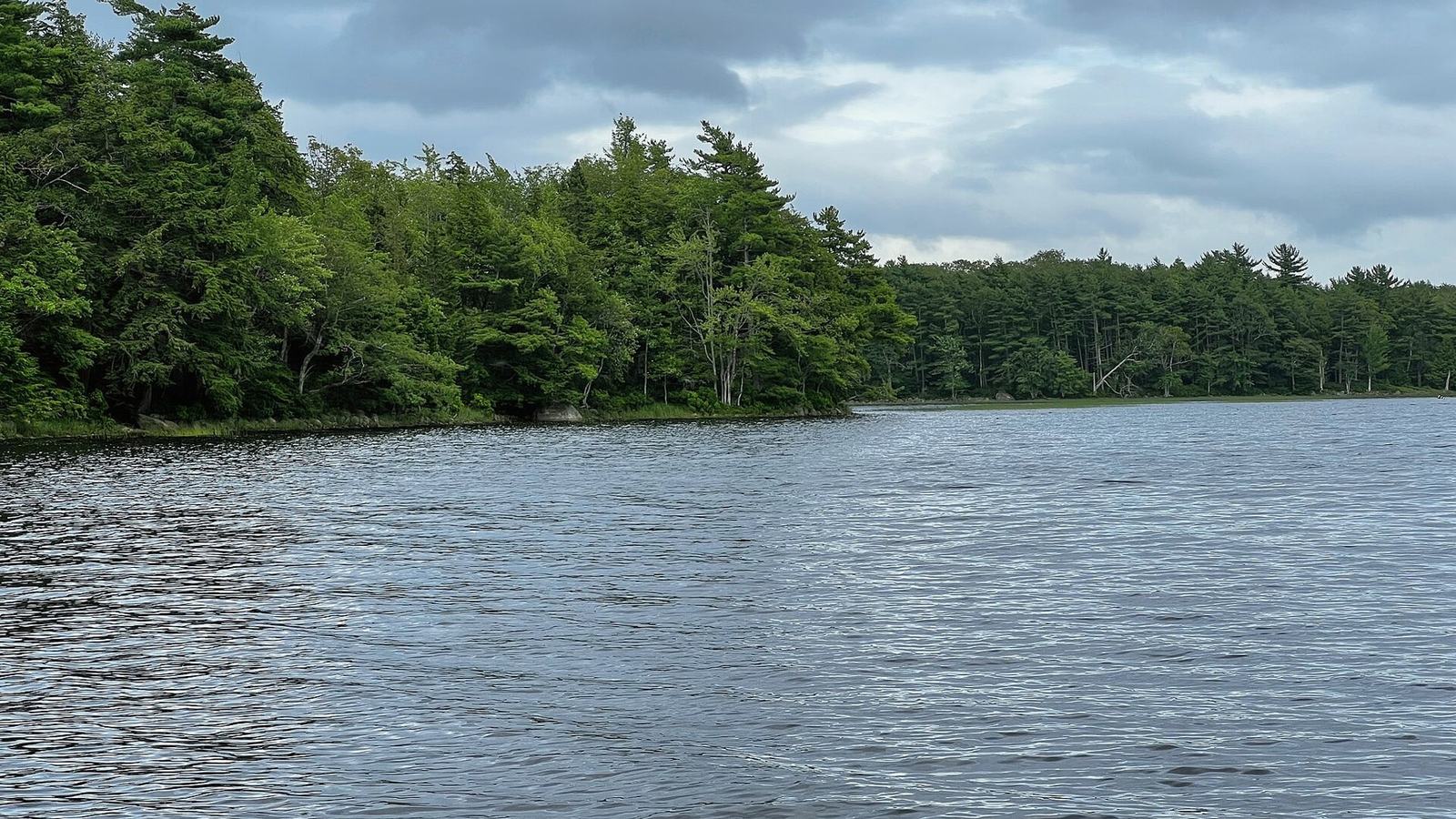
The lead photograph is a genuine view of Kejimkujik Lake from Kedge Beach by Z3lvs, released on Wikimedia Commons under a Creative Commons Zero public-domain dedication. It shows the real landscape without pretending to depict a particular guided canoe programme. The image has been resized for this article, and the creator and original file are credited. On the water, photographers should keep equipment secure and avoid disturbing wildlife or landing on sensitive islands to obtain a better picture. The park's natural and cultural significance makes restraint an important part of the experience.
A distinctive Nova Scotia canoe holiday
Kejimkujik offers several ways to experience the water, from a short Mersey River excursion to carefully planned backcountry travel. Those possibilities differ in difficulty, equipment and logistics, and the right choice depends on weather and the paddler's ability. Parks Canada's official canoeing guidance provides the foundation for route selection, rental information and current rules. A visitor who follows that guidance can enjoy the lakes and forests without treating the park as a place where anything afloat is automatically permitted. The enduring appeal is straightforward: a small boat, a quiet waterway and time to appreciate a landscape whose significance reaches far beyond recreation.
Sources and photograph attribution
Official destination and boating guidance: Parks Canada — Kejimkujik Canoeing, Kayaking and Paddleboarding. Current access, rules, weather and reservations must be checked independently before travel.
Photo: Z3lvs, “Kejimkujik Lake from Kedge Beach - Kejimkujik National Park.jpg”, CC0, via Wikimedia Commons. Cropped/resized as needed for editorial use. Source: https://commons.wikimedia.org/wiki/File:Kejimkujik_Lake_from_Kedge_Beach_-_Kejimkujik_National_Park.jpg. Licence: http://creativecommons.org/publicdomain/zero/1.0/deed.en. Original rights remain with the credited creator or as specified by the source and licence.
