
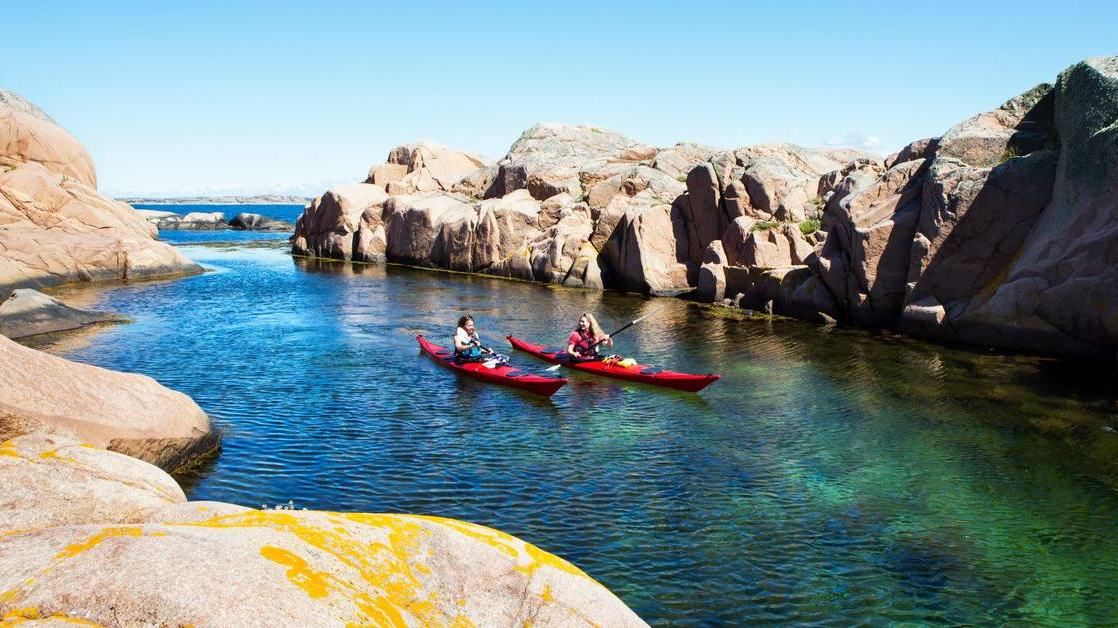
Bohuslän’s skerries, sheltered passages and marine protected areas make Sweden’s western archipelago a memorable kayaking destination. Here is how to explore responsibly and choose a route matched to experience.
Why Bohuslän belongs on a paddler’s map
Sweden’s western archipelago offers a kind of boating that rewards attention to small details. Granite islands, colourful fishing huts and protected channels create journeys in which the shoreline changes continually. Bohuslän stretches along the Skagerrak coast, with places to explore ranging from the approaches to Gothenburg in the south to the Koster islands farther north. It is an environment suited to slow exploration as long as the route is chosen for the party’s experience and the weather.
Visit Sweden highlights Bohuslän as a kayak destination because its islands create an extraordinary variety of passages and stopping places. A sheltered paddle close to shore may suit a newcomer, while outer skerries exposed to open water deserve more preparation and judgement. The region is not one continuous easy lagoon. Tidal movement may be modest compared with some coasts, but wind, waves and traffic can change the character of a channel quickly.
For leisure-boat owners, kayaking can complement a short cruise or become the centrepiece of a shore holiday. A family might travel between harbour towns by motorboat and join a guided paddle in suitable conditions. Those without their own craft can select a licensed local operator. The joy lies in discovering the coast at eye level without overestimating what a pleasant photograph says about the actual passage.
Kosterhavet and the value of protected waters
Kosterhavet National Park is a defining feature of the region. Visit Sweden identifies the marine national park and the Koster Islands as important destinations, with habitats that include coral environments and distinctive marine life. Protected status is an invitation to observe carefully, not a licence to disturb wildlife or ignore access rules. The exact restrictions on landing, mooring and activities should be checked against current national-park guidance before departure.
Snorkelling and paddling can each reveal a different part of this coastal landscape. From a kayak, visitors can take time to notice shoreline plants, sea birds and the patterns of water between islands. They should remain aware of other users, including working vessels and commercial passenger boats. A guide can make an especially useful contribution by explaining which channels are practical and where sensitive habitats are best left undisturbed.
Not every family trip needs to reach the national park. An enjoyable route nearer a mainland base may offer calmer water and simpler logistics. The right destination is the one that matches the forecast, available daylight and the least experienced person in the group. For a visitor unfamiliar with Swedish coastal rules, local orientation is not an optional extra but a sensible part of enjoying the landscape.
Fjällbacka, the Weather Islands and Lysekil
Visit Sweden also points towards the Fjällbacka archipelago, where granite formations and small islands provide a striking backdrop. Paddlers should not confuse the apparent shortness of a crossing on a map with ease on the water. Exposed stretches can become tiring, and landing options are not always obvious from the cockpit. A modest itinerary with time to stop, eat and turn back is often more rewarding than a long point-to-point target.
The Weather Islands farther offshore are noted for their remote character and wildlife. Their appeal can be powerful, but a group should treat a trip into more exposed water as a separate planning exercise rather than a casual extension of an inner-coast outing. Check the forecast and sea conditions, assess equipment and communications, and use experienced local support where appropriate. A prudent decision to remain closer to shelter is evidence of good seamanship.
Lysekil and the nearby island of Skaftö offer another entry point to the western coast. Visit Sweden notes year-round paddling opportunities in the area, but winter and shoulder-season trips bring obvious demands in clothing, rescue readiness and daylight. Warm weather alone does not guarantee warm water. Suitable immersion protection and a realistic plan for an unexpected capsize belong at the top of the checklist.
Small-boat safety and simple daily planning
A well-designed day begins before the first kayak is launched. Check wind direction, gusts, visibility, local traffic and any forecast shift expected before the return. Match the craft and clothing to the water temperature rather than the air temperature, and carry an appropriate buoyancy aid, communication device and route plan. A companion or guide reduces the risks associated with paddling alone in unfamiliar coastal waters.
Families may find it easier to choose one base and explore several short routes than to move accommodation every night. That leaves space for changing weather and different levels of enthusiasm. A half-day paddle followed by time in a harbour village can be a satisfying experience. Young paddlers and first-time visitors should be given a route with simple escape options, not an exposed channel chosen merely for its scenery.
Access and respect for local communities matter too. Many seemingly empty islands have protected wildlife, privately managed facilities or seasonal limitations, and small fishing harbours remain workplaces. Visitors should use authorised access points, leave no waste and keep clear of working gear. Quiet, considerate use of the coast helps preserve the atmosphere that makes Bohuslän appealing in the first place.
The reward is a slower view of the coast
Bohuslän does not require a race between famous landmarks. It invites travellers to notice the changing colour of rock, the movement of sea birds and the way a village appears between two islands. A local guide can turn that scenery into a richer experience through knowledge of maritime history, sheltered routes and the natural environment. Even a short, well-timed paddle can feel more memorable than a hurried whole-day expedition.
A small motorboat holiday and a kayaking holiday can work together if transfers, storage and safe launching are planned. Leave enough flexibility that wind or rain can change the programme without spoiling it. Where conditions are unsuitable for paddling, harbour walks and coastal food offer their own rewards. The best itinerary is one that can absorb uncertainty without requiring the group to take unnecessary risks.
Sweden’s west coast is at its finest when explored with care. Choose a realistic route, confirm the rules of any marine protected area and allow time to appreciate the landscape. The freedom of a kayak is real, but so is the responsibility that comes with entering a changing coastal environment. Thoughtful preparation makes the two compatible.