
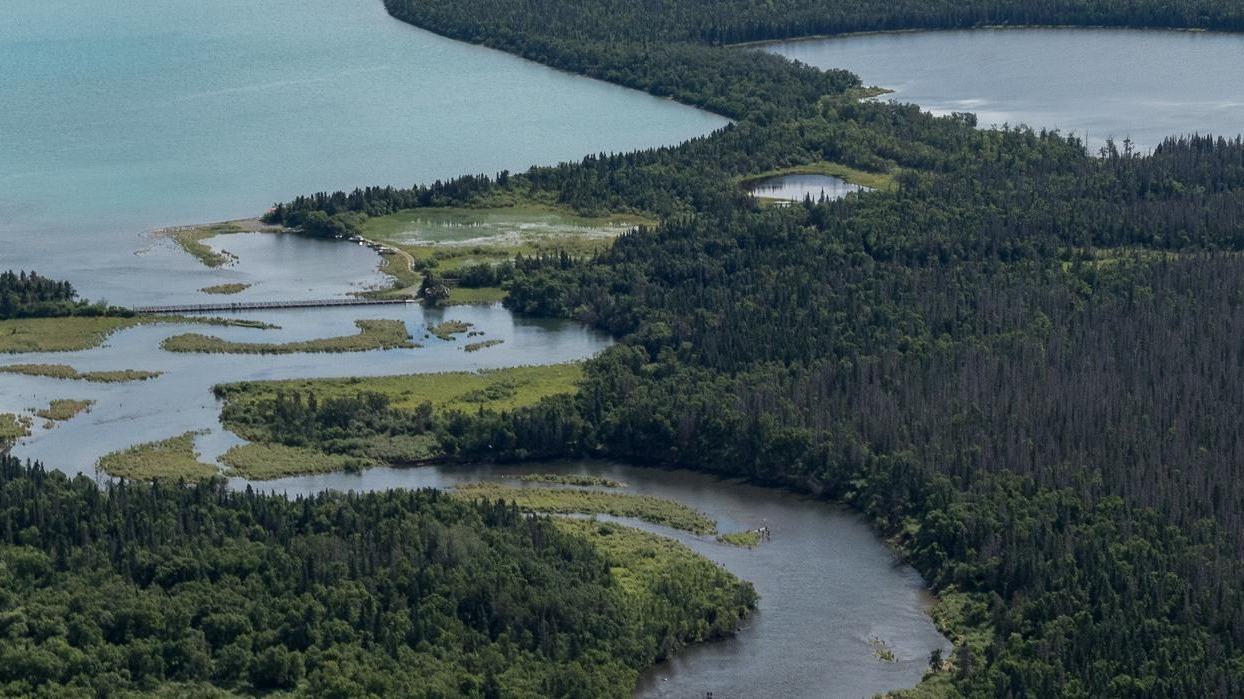
Katmai offers wild Alaskan lakes and the demanding Savonoski Loop. Cold water, bush-plane access, bear country and self-sufficient trip planning define the experience.
Alaska's paddling experience is a wilderness commitment
Katmai National Park and Preserve is famous for brown bears and the falls near Brooks Camp, but its lakes and rivers also offer serious journeys by canoe, kayak and raft. To paddle here is to enter a landscape where distances are large, infrastructure is sparse and weather can overwhelm the assumptions made on a comfortable lake close to home. The water is the transport route and an important source of risk.
The National Park Service identifies Naknek Lake as a major route for boat-based exploration. Destinations include the Bay of Islands, the Iliuk Arm, Brooks Camp and Fure's Cabin. These names may appear close together on a general map, yet a route can require many hours or several days on exposed, cold water. Planning begins with the actual distance, forecast and possible places of shelter.
Use Naknek Lake as a route, not a playground
The large lake rewards a crew interested in quiet scenery and the sense of crossing a vast northern landscape. Its scale also means that a small craft can be caught far from a convenient landing when wind rises. Before setting out, examine the park's Naknek Lake boating guidance for shore hazards, navigation concerns and suitable travel routes. Do not treat the lake as consistently sheltered simply because it is inland.
Brooks Camp is a key reference point and an unusual place to arrive by water. The park has rules about unattended equipment and food near the shoreline, reflecting the need to manage encounters with bears. Coolers, personal flotation devices, packs and loose gear may not simply be abandoned in a boat on the beach. Proper secure storage and use of provided caches need to be part of a landing plan.
The Savonoski Loop is a substantial expedition
For experienced paddlers, the Savonoski Loop offers a more demanding route through Katmai's backcountry. National Park Service route information describes an approximately eighty-mile itinerary and suggests roughly four to ten days, depending on weather, experience and the path selected. This is not an ordinary weekend circuit. It calls for multi-day wilderness skills, self-sufficiency and an appreciation that a delay may last longer than expected.
The published route begins and ends around Brooks Camp, crossing lake and river environments. A party should understand how to deal with both open water and the character of the moving sections it intends to use. The NPS guidance recommends intermediate paddling ability and experience travelling in wilderness and bear country. A participant who has only paddled in supervised, sheltered waters is likely to be better served by a shorter guided outing.
Fure's Cabin is more than a line on a map
Fure's Cabin lies on the Bay of Islands section of Naknek Lake and is a notable feature of the park's water-based journeys. The National Park Service describes it as a public-use cabin that must be reserved, rather than an accommodation stop that can be taken for granted. Paddlers travelling from Brooks Camp should allow ample time for the more than thirty-mile journey, which may take one to three days depending on conditions.
There is no public transport service linking the cabin conveniently to the main visitor area. That makes the decision to continue toward it consequential: a party must have the right equipment, itinerary and exit plan before committing. A cabin reservation does not remove the need for suitable shelter, communications, dry clothing and a contingency if wind or weather makes the intended day impossible.
Bears influence every practical choice
Katmai is a habitat in which bear encounters are a realistic planning factor, not a decorative element of the trip. Food and scented items should be stored according to park instructions, and landing sites must be chosen with awareness of wildlife and local restrictions. The paddling group must know how to respond to bears and avoid approaches that pressure animals or place people between bears and an important route.
Photography is often the reason visitors first dream of this part of Alaska, yet the best trip keeps a respectful distance from wildlife. Do not land a kayak simply because a bear is visible on shore, and avoid leaving equipment unattended in a place where animals could investigate it. Review the current National Park Service bear-safety information and the specific Brooks Camp rules before arranging an itinerary.
Water, wind and travel arrangements are inseparable
Remote Alaskan paddling requires serious protection from immersion. The right personal flotation device, clothing selected for cold water rather than comfortable air temperatures, waterproof supplies and the ability to recover from an incident are essential. A communication method suited to remote areas should accompany a detailed float plan. Weather can change the character of a long crossing quickly, so reserve extra days and avoid fixed connections that depend on perfect conditions.
The park can be reached in ways unlike an ordinary road-accessible recreation area, which makes air and boat transport a major element of an expedition budget. Arrange people, boats and supplies with the transport operator before departure; not every aircraft can carry a rigid canoe. A multi-day trip should be equipped for complete self-sufficiency and should not depend on unplanned resupply or a casual boat pickup.
Make the journey answer to the group's experience
For some visitors, a carefully guided lake excursion near a managed access point will deliver the most rewarding introduction to Katmai. Others may be ready for the demanding Savonoski Loop, with several days devoted to exploration and the possibility of weather delays. The appropriate choice depends on technical paddling skills, wilderness experience, group health and the ability to handle an emergency without rapid outside help.
What makes Katmai exceptional is the scale of the landscape and the way water connects its different environments. The experience is strongest when the itinerary respects that scale. Consult the current National Park Service boating and wildlife guidance, plan realistic distances and give every participant the authority to call for a safer alternative before a remote departure becomes unavoidable.
For changing conditions and access rules, consult the official National Park Service Katmai boating guide. Hero photograph credited to National Park Service, official Katmai landscape with the Brooks River and lake.