
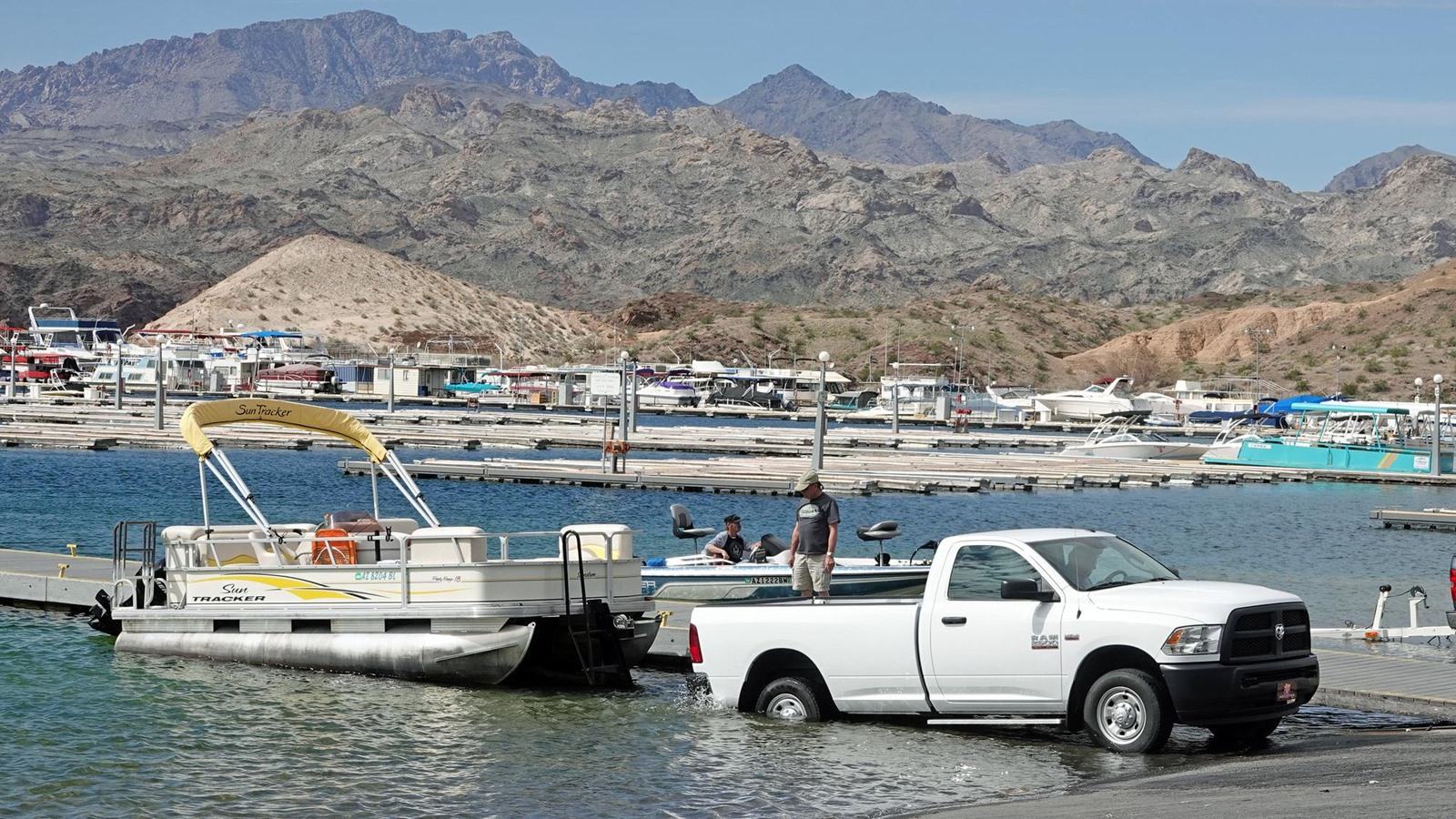
An independent boating guide to Katherine Landing on Lake Mohave, covering the launch ramp, marina, fuel and slip services, desert coves, navigation, invasive-species controls and a safe day cruise.
Lake Mohave's southern boating gateway
Katherine Landing offers a practical entry to Lake Mohave for recreational boaters who want to combine an organised marina base with the open desert scenery of the Colorado River. Situated on the Arizona side just north of Davis Dam, the landing lies close to Bullhead City and Laughlin, making it an accessible starting point for a day afloat. The landscape shifts quickly from developed shore facilities to broad blue water framed by brown hills and sparse vegetation.
This is a different kind of boating holiday from a coastal passage or a narrow canal cruise. The attraction is the contrast between a working launching and marina area and the spacious reaches of water beyond. For visiting crews, the first priority is to understand which facilities are managed by the National Park Service and which are operated by a commercial marina concessioner, because availability and booking procedures may differ.
What Katherine Landing actually provides
The National Park Service identifies a launch ramp, courtesy dock, campground, picnic area and other shore facilities at Katherine Landing. It also describes a privately operated full-service marina with boat slips, a fuel dock, repairs, equipment shops and a restaurant, along with rental craft. Those features make the location useful for experienced trailer boaters, day-cruisers and families seeking a structured starting point rather than an isolated beach launch.
Not every facility should be assumed available on a particular date or suitable for every vessel. Before making a journey, contact the marina operator for slip dimensions, fuel arrangements, opening hours and current rental inventory. Confirm with the park whether the public ramp is operating and what seasonal or water-level restrictions apply. A pleasant day begins with these simple checks, not with the crew discovering a closed ramp after towing the boat across the desert.
Approaching the launch ramp safely
The official NPS place page lists Katherine Landing as a recognised launch location and reminds visitors that launch conditions must be checked against changing lake levels. A ramp that was straightforward on a previous visit may have a different waterline or maneuvering area later in the year. Drivers should prepare the vessel before entering the launch queue, attach a suitable line and make sure the engine and essential safety systems are ready.
Courteous launching matters at busy leisure sites. Keep children and bystanders clear of reversing trailers, avoid delaying others with equipment sorting at the ramp and do not leave a boat unattended where it could obstruct the courtesy dock. Trailer depth, ramp traction and the boat's loading weight remain the skipper's responsibility. The National Park Service explicitly advises boaters to monitor their surroundings and expect waiting times during busier periods.
Reading the lake rather than a postcard
Lake Mohave's desert setting can create an impression of tranquil, predictable water, but open reaches can become uncomfortable as wind strengthens. Before departure, examine the current local forecast, expected gusts and the possibility of thunderstorms. Develop a route with realistic distances and sheltered alternatives, bearing in mind that a small speedboat may behave very differently from a larger cabin cruiser in short, wind-driven waves.
Visibility and horizon clues can be deceptive against the surrounding hills. A distant point that looks close on the chart may take longer to reach than expected, especially after the return begins against wind or chop. Keep enough fuel for the whole itinerary with a conservative reserve, and decide on a turnaround time while everyone is still enjoying the outward journey. The skipper should never make a safe return dependent on the last available light.
A sensible first day on the water
For a first-time visitor, a modest out-and-back route from Katherine Landing can be more rewarding than a long dash toward a far cove. Take time to become familiar with the marina basin, the shoreline's appearance from seaward and the lake's local navigation patterns. Once clear of developed waters, cruise at an appropriate speed that allows everyone to enjoy the scenery without placing unreasonable strain on the boat or its occupants.
A morning departure generally creates the most scheduling flexibility, although actual weather must determine the hour. Choose a sheltered and permitted stopping area for a picnic or swim, assess depth and underwater hazards before entering, and leave a generous margin for retrieving the boat or returning to a reserved slip. A carefully paced day makes room for photography and relaxed conversation while preserving the skipper's attention for changing conditions.
Desert coves demand close attention
The National Park Service warns that water levels change throughout the year and that shallows and submerged debris can make shoreline approaches hazardous. Any attractive bay should be approached with an updated chart, attentive lookout and a speed appropriate to the visibility and depth. A beach that appears free of obstacles from a distance may conceal rocks, tree debris or a sharp change in bottom profile.
Before anchoring, judge whether the holding ground, depth, wind and boat swing offer a defensible margin. Use suitable ground tackle and keep clear of other boats and swimming areas. Do not treat every quiet shore as a legal landing or camping location; protected areas, posted restrictions and park regulations still apply. Staying afloat can be a better choice than bringing a propeller into shallow water simply to reach the sand.
Swimming and children's safety
Hot sunshine makes the water inviting, but the park's safety guidance is direct about the need for proper personal flotation devices. Anyone aboard a personal watercraft or being towed must wear a life jacket, and children under thirteen are subject to specific underway requirements unless they are in a fully enclosed area. Rangers recommend life jackets more widely because lake conditions can change without much warning.
The National Park Service also cautions that there are no lifeguards at many lake swimming locations and that inflatable toys are not substitutes for protective equipment. Use a designated swimmer lookout, stop engines before anyone enters the water and select a suitable location away from other moving vessels. Bring enough drinking water and sun protection for the whole group; dehydration in the desert can spoil a day faster than people expect.
The nuisance that can travel on a trailer
Lake Mead National Recreation Area has a continuing invasive-species problem with quagga mussels, and both Lake Mead and Lake Mohave are affected. These small molluscs can spread when water and organisms are carried in engines, livewells, bilges or other damp equipment. For boaters who visit several lakes, preventing that transfer is part of responsible preparation rather than an optional environmental gesture.
Before travelling to another waterbody, follow the applicable cleaning, draining, drying and inspection requirements for the vessel and trailer. Some jurisdictions require an aquatic invasive species decal or other formal compliance. Check the current Arizona and Nevada requirements relevant to your craft and launch location, and consult the National Park Service's quagga-mussel guidance. This is especially important for craft with complex plumbing and difficult-to-drain compartments.
Weather can change the plan quickly
Desert weather is capable of sharp transitions. The Park Service warns that thunderstorms can bring dangerous lightning and that sudden heavy rain may generate flash flooding in washes away from the place where the rain actually falls. On open water, a crew may have little shelter from electrical storms or gust fronts. Avoid a forecast that depends on outrunning bad weather on a small boat.
If a storm builds unexpectedly, the park recommends seeking a suitably protected cove and waiting until conditions improve. This advice should be interpreted with real-time judgment about safe navigation, proximity to hazards and the suitability of any anchorage. A float plan filed with someone ashore and dependable communications arrangements remain valuable, particularly in areas where mobile telephone reception cannot be relied upon.
Fuel, repairs and the value of a real base
The marina at Katherine Landing is useful because a boat can begin with a more predictable fuel and servicing plan than it would from a remote beach. Even so, do not assume the fuel dock's opening hours or stock without confirmation. A larger outboard installation, a thirsty older engine or a day that runs into headwinds may use considerably more fuel than an optimistic distance estimate suggests.
For an overnight or multi-day holiday, ask the concessioner about slip booking, shore power, permitted vessel types, repair availability and secure storage. Those details determine whether the marina is an appropriate base for a particular boat. The surrounding commercial facilities and campground may support a relaxed stay, but guests should also verify accommodation access and restaurant hours rather than relying on promotional descriptions from earlier seasons.
Activities beyond the helm
Lake Mohave offers more than straightforward motor cruising. Some visitors bring fishing tackle, others prefer paddling or a quiet shoreline picnic, and the wider recreation area contains places where low-speed exploration is the central attraction. The best combination depends on the party's abilities, equipment and the precise part of the lake being visited. Paddlecraft have their own handling and safety needs even when carried aboard a larger boat.
Rules differ across locations, particularly closer to the Black Canyon section of the Colorado River. The park notes primitive-zone restrictions north of Willow Beach on certain days when motorised craft are excluded, so a Katherine Landing cruise should not assume uninterrupted motor access into every reach of the waterway. Check published maps and local regulations before committing to a long route toward another part of the park.
Keeping the shoreline intact
A desert reservoir ecosystem may appear robust because the surrounding rocks look bare, but shore habitats and shallow waters can be surprisingly vulnerable. Avoid striking the bottom with the propeller, disturbing wildlife, carrying away natural objects or leaving food packaging on beaches. Where there is an obvious established route or picnic area, using it generally causes less disturbance than creating a new path through fragile vegetation.
Boating courtesy reinforces conservation. Maintain sufficient distance from divers and their flags, keep wakes appropriate to crowded water, give paddlers a generous margin and avoid running engines near swimmers. Invasive-species controls protect other waterways after the holiday has ended. A memorable outing should leave behind photographs and good experiences, not avoidable damage to the shore or underwater environment.
A practical checklist for an enjoyable return
Before leaving Katherine Landing, check the forecast, park alerts, operating ramp status, boat systems, life jackets, fuel, charting, communication equipment and the crew's plan. Identify a conservative turnaround time and make sure somebody on shore knows the proposed route. Carry a means of navigation independent of phone service, particularly when travelling away from developed facilities or into unfamiliar sections of the reservoir.
On return, approach the developed launch and marina area at appropriate speed, give other users room and prepare lines and fenders before manoeuvring. If retrieving by trailer, use the staging area for final gear sorting so the ramp remains available to others. Katherine Landing's real advantage is that it can provide both a practical beginning and a dependable end to a well-planned Lake Mohave boating day.