
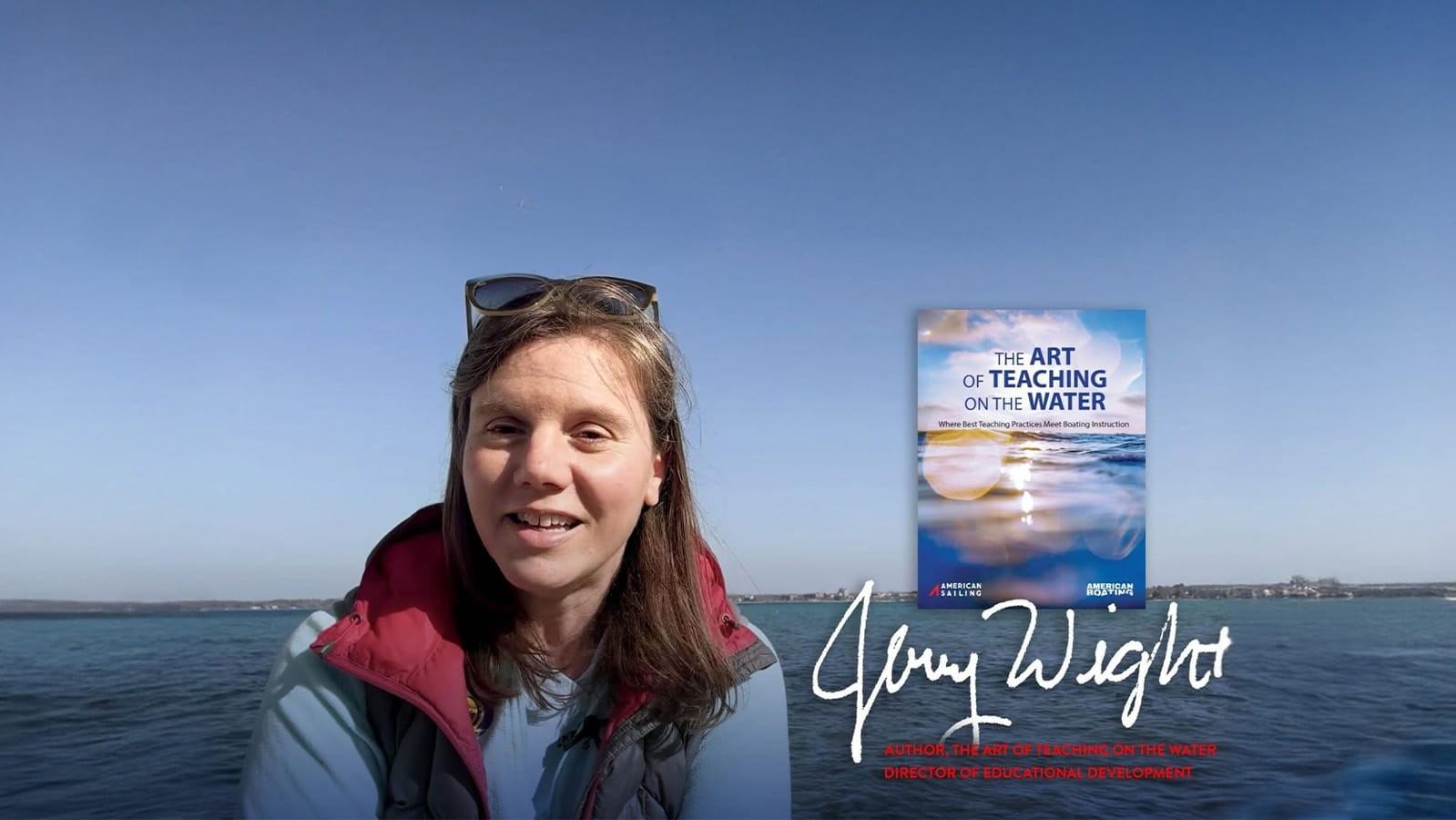
American Sailing highlights Jenny Wight's book The Art of Teaching on the Water, offering guidance for instructors balancing safety, independence and learning.
Sailing instruction is about people
The Art of Teaching on the Water brings a fresh perspective to the way beginners develop sailing skills. American Sailing's educational director Jenny Wight and contributors focus on communication, learning styles and the confidence students need to make decisions.
Wight's career includes sailing instruction, school leadership and teaching outside the marine sector. This combination informs a book concerned with how lessons are delivered rather than merely listing manoeuvres.
Every student arrives differently
Some new sailors are eager to hold the tiller immediately, while others want to understand the boat before taking control. A successful instructor recognises those differences and adjusts a lesson without losing its essential safety structure.
Explaining the purpose of each task can make the experience more rewarding than repeating instructions without context. Students should feel free to ask questions and acknowledge when they are uncertain.
Safety creates room to learn
Clear boundaries allow novices to practise helming, sail trim and communication with an instructor nearby. Safe exercises should suit the weather, the vessel and the student's existing experience.
Giving responsibility gradually helps learners develop judgement instead of becoming dependent on constant commands. The instructor remains accountable for choosing appropriate conditions and intervening when required.
Adult learners may need flexibility
Wight's background includes teaching people with varied learning needs and levels of confidence. A student who has spent years in a classroom or workplace may benefit from practical demonstration rather than an extended lecture.
Regular feedback can help newcomers recognise progress without making errors feel like failures. Lessons are most useful when students understand both what worked and what they can improve.
Better teaching benefits sailing clubs
Clubs and training centres depend on instructors who can welcome newcomers into an unfamiliar environment. Wight's book encourages those teachers to think about motivation, planning and the long-term enjoyment of sailing.
Families choosing a course can ask about instructor qualifications, group sizes and opportunities for practice. The best introductory session is one that leaves participants prepared to return.
Begin with what the learner already understands
A person who has operated a powerboat may be comfortable with steering and navigation but unsure how a sail generates drive. Another student may have spent years crewing on a friend's yacht without making decisions independently. Instructors can learn a great deal from a short conversation about these experiences before assigning activities. A lesson that begins at an appropriate level is less likely to confuse or bore.
Recognising prior experience does not mean overlooking gaps in knowledge. A student who knows sailing terminology may still need practice with a safe lookout, reefing or returning to a dock. The instructor should use simple tasks to assess practical ability rather than rely entirely on a questionnaire or the learner's confidence. This approach helps build a sequence of achievable challenges.
Explain the purpose before the procedure
Instructions are easier to remember when learners understand the result they are trying to achieve. Instead of simply ordering a novice to ease a sheet, an instructor can demonstrate how sail shape and heel change when the rope is adjusted. A short explanation connects action and observation, helping the learner make a better decision next time without being prompted.
Long lectures have their own drawbacks, especially in a moving boat where students must remain aware of traffic and wind. Clear, brief demonstrations followed by supervised practice often work better than trying to explain every possible variation at once. The teacher can return to a technical detail later, once the learner has experienced the basic movement of the yacht.
Different ways of learning on a boat
Some students understand a manoeuvre after seeing it performed, while others learn more readily by trying it themselves or talking through the sequence. Sailing lessons can combine visual demonstrations, practical repetition and short discussions without labelling people as permanently belonging to one learning style. What works best may change with the task and the conditions.
An instructor must also consider hearing, vision, mobility and anxiety when planning exercises. Adjustments can include clearer descriptions, accessible controls, a slower pace or a different crew position. The aim is meaningful participation within the safety limits of the boat and centre, not an assumption that every learner must perform an identical physical task.
Feedback that builds useful judgement
Feedback should identify a specific action and its effect. Telling a student that a tack was bad offers little guidance; explaining that the turn began before the headsail was ready gives them something to practise. A successful manoeuvre should also be discussed so the learner understands why it worked and can repeat it under slightly different conditions.
Students gain confidence when they are permitted to think through a problem rather than immediately receiving every answer. However, the instructor needs to step in promptly where a navigation or safety risk is developing. Finding the right balance requires attention to the learner's skill and the amount of space available around the boat.
Helping students move beyond the first course
A single certificate or weekend class rarely covers every situation a sailor will face. Learners need experience with changing wind, tide where relevant, unfamiliar harbours and different crew responsibilities. An instructor can encourage progress by suggesting manageable next steps, such as a supervised club evening, short coastal passage or additional safety course.
Social support matters as well. Students who finish a course without a way to sail again may struggle to retain new skills. Sailing centres can explain how local clubs, crew opportunities and boat-sharing arrangements work. Clear, realistic guidance gives people a route toward independent, responsible sailing without requiring immediate purchase of a yacht.
After each session, a short debrief can help learners identify the manoeuvres they enjoyed and the tasks that still feel uncertain. A teacher can then plan the next lesson around real progress rather than repeating the same syllabus mechanically. This is especially useful when students sail only occasionally and need a reminder of where they left off.
When several instructors work at one centre, consistent language and expectations can make a newcomer feel more secure. A learner should not have to relearn every basic instruction simply because the person teaching has changed. Centres can agree shared safety routines while allowing each instructor enough freedom to respond to individual students and changing weather.
Source
American Sailing