
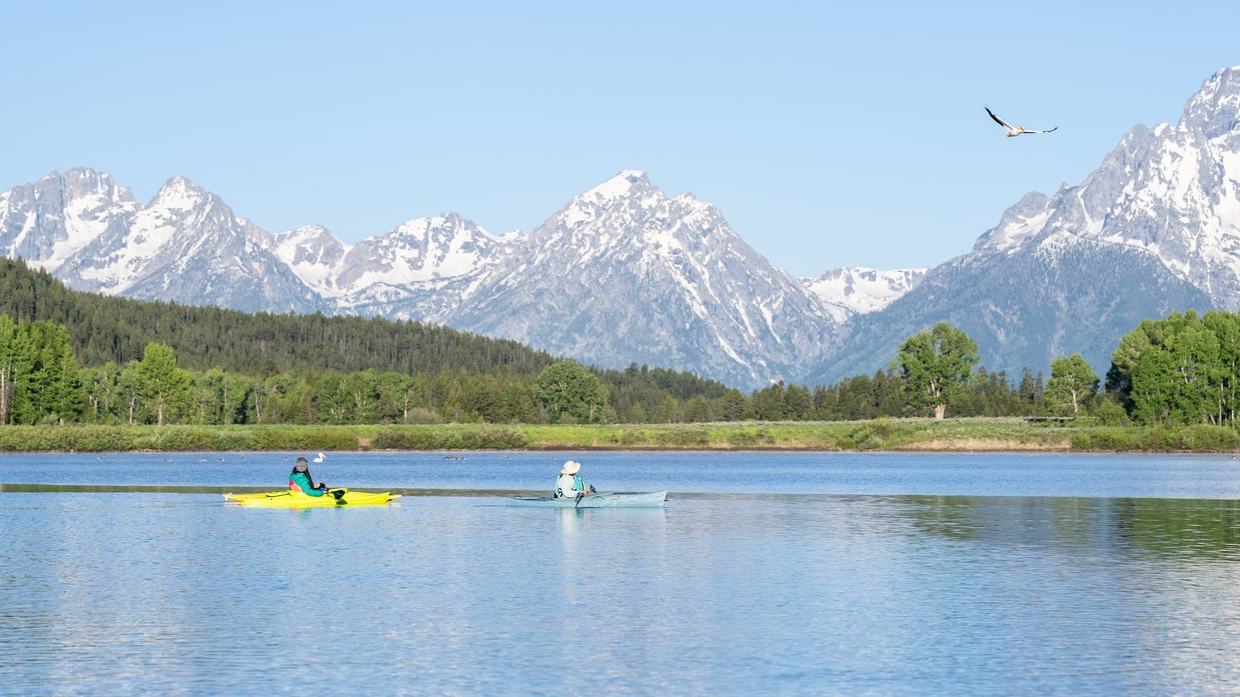
Jenny Lake permits a narrow range of motorised craft and many non-motorised boats, but annual park permits and Wyoming aquatic-invasive-species rules apply. Here is what owners must check.
A mountain lake with important limits
Jenny Lake rests beneath the high peaks of the Teton Range, a setting that can make a gentle paddle feel unusually memorable. Visitors arriving with a canoe, kayak or small motorboat should nevertheless check the rules before lowering a craft into the water. Grand Teton National Park does not treat all of its lakes alike. The National Park Service states that motorised boats are permitted on Jenny Lake only when their engines are rated at ten horsepower or less.
That limit matters to owners of modern tenders and compact fishing boats, many of which may have more power than the Jenny Lake allowance. Larger motorised craft have different options elsewhere in the park, notably Jackson Lake, but that does not authorise them on Jenny. A useful boating holiday begins by choosing a craft that genuinely fits the intended waterbody rather than arriving with an unsuitable engine and hoping an exception will be made.
Permits are not optional
Grand Teton requires an annual park boat permit for privately owned vessels. On the NPS page updated in October 2026, the published rates are seventy-five dollars for a motorised craft and twenty-five dollars for a non-motorised one, including canoes, kayaks, drift boats and stand-up paddleboards. Permits can be arranged through Recreation.gov or at specified park visitor facilities when those offices are operating. The sticker must be displayed as directed.
A state aquatic-invasive-species requirement also applies. The NPS says Wyoming watercraft need a valid AIS decal, and the park outlines inspection and permit steps that should be completed before launching. Boaters crossing state lines or travelling with a craft used on another lake should pay particular attention to cleaning, drainage and inspection requirements. The paperwork is part of protecting the lake, not a formality that can safely be left until the boat is afloat.
Choosing a suitable outing
A kayak or canoe offers a close connection to the mountain scenery, allowing a quiet pace away from the busiest shoreside paths where boating is authorised. Jenny Lake's high-elevation setting means low water temperatures can remain dangerous even on a sunny day. A calm morning is not a guarantee of calm conditions later, particularly when wind funnels across open water between the mountains. The route should leave time to return well before changing weather or fading daylight.
Start with an achievable distance close to a lawful launch and a realistic turnaround point. Plan for the weakest paddler in the group and carry clothing suited to immersion as well as the air temperature. A personal flotation device should be properly fitted and readily usable, while a dry bag for communication and emergency essentials reduces avoidable problems. The mountains provide a wonderful backdrop, but they should not distract from the immediate job of seamanship.
Understanding where motorboats belong
The National Park Service distinguishes Jackson Lake, where motorised craft are allowed, from Jenny Lake, where the ten-horsepower ceiling applies. It also lists several smaller lakes and the Snake River as locations where non-motorised craft may be used, subject to the specific rules for those places. A visitor should not assume that an authorisation for one lake automatically covers every other body of water in Grand Teton National Park.
Some waters have restrictions on launch points, camping or boat use that are independent of the general permit. The Snake River has currents and hazards that make it a different proposition from sheltered lake paddling. If the main aim is casual family cruising, Jenny Lake's restrictions may be attractive because they limit large engines, but families still need to respect conditions and use designated access. Choosing the correct waterbody is as important as choosing the correct vessel.
Seasonal services and practical checks
Visitor facilities in the Tetons follow a strong seasonal rhythm, with some ranger stations and services closing outside the main summer period. The permit guidance mentions several purchasing points but does not guarantee that every counter will be staffed on the day you arrive. Obtaining the necessary authorisation beforehand can avoid a long drive and a wasted launch window. Check park conditions as well as the permit instructions, particularly during autumn and spring.
Weather can turn rapidly at altitude, and mountain-water temperatures may remain unforgiving. A small motor does not eliminate the risks of cold-water immersion, while an inflatable paddleboard can be difficult to control in a sudden gust. Check the forecast, carry suitable layers and have an exit strategy if wind begins to build. It is better to reduce the distance than to rush the return across an exposed section of lake.
The reward for doing the preparation
Jenny Lake is valued for the contrast between water and mountains. From a small craft, the stillness of the surface and the scale of the cliffs can produce a completely different perspective from the roadside viewpoint. That reward depends on handling the ordinary details properly: a legal engine, park permit, AIS compliance, weather assessment and a sensible distance. These are modest preparations compared with the quality of the place they help protect.
Before setting out, consult the current Grand Teton boating page rather than relying on a generic search result describing the lake as open for boating. The ten-horsepower rule and permit requirements are specific, and seasonal launch circumstances can change. With a suitable boat and conservative plan, Jenny Lake can provide a quiet mountain-water experience that feels far removed from busy resort marinas.