
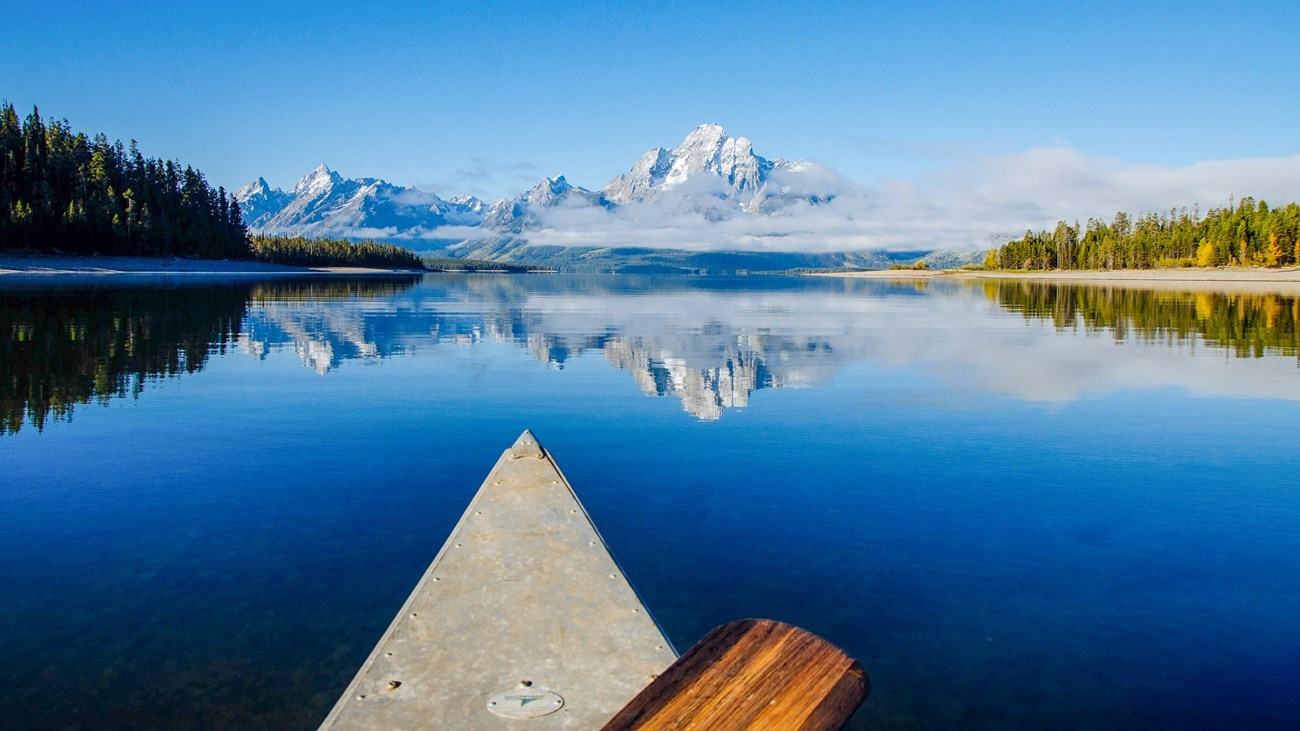
Grand Teton's Jackson Lake is spectacular from a small boat, but September 2026 park notices about marina ramp closures and changing water levels demand a cautious plan.
The lake and the latest access warning
Jackson Lake offers one of the great mountain backdrops for a small-boat holiday in the American West. The peaks of the Teton Range rise beyond a broad body of water, creating an experience that can be memorable whether the crew uses a kayak or a permitted motorboat.
However, a beautiful scene should not be mistaken for an assurance that a launch is operating. The National Park Service conditions notice updated on 30 September 2026 listed the Signal Mountain, Colter Bay and Leeks boat ramps as closed, alongside the related marina closures.
The same official notice warned of fluctuating Jackson Lake water levels and illustrated the difference between July and September shoreline conditions. That combination makes the lake a particularly clear example of why boating access must be checked close to the intended date.
For a visit planned after those notices, do not assume that a ramp has reopened merely because it appears on a tourism map. Confirm current park restrictions and water-level information directly; a closure reported in September is useful context but not an independently verified live status for every later day.
Understand where each boat may operate
Grand Teton National Park distinguishes motorised and human-powered craft. The park allows motorboats on Jackson and Jenny lakes, with a ten-horsepower maximum on Jenny, while paddle craft may use additional lakes that are closed to conventional motorboats.
That flexibility makes Jackson attractive for families who prefer a powered dayboat, as well as touring paddlers interested in the quieter reaches. Yet the best vessel is the one suited to a confirmed launch, the day's conditions and a crew able to operate it confidently.
Any private craft requires attention to the park's permit, inspection and aquatic-invasive-species requirements. Operators should study the current boating page and obtain whatever documentation the park requires before towing a boat all the way to the mountains.
Equipment choices also deserve care at altitude. Weather and wind can change swiftly, cold water increases the stakes of a capsize, and shoreline access may be complicated by low water and exposed shallows that are absent from older photographs.
Plan a visit that can change course
If a marina or ramp is unavailable, the sensible response is to choose another authorised activity rather than trying to improvise a launch at an unapproved shoreline. Grand Teton offers lakeshore walks, scenic viewpoints and other water-related experiences that can preserve the spirit of a visit.
Those with a motorboat should verify trailer access, available fuel, parking rules and any restrictions affecting the intended vessel. A launch plan is incomplete if it covers only the outward trip and ignores the ability to retrieve the boat safely at the end of the day.
Paddlers should be realistic about distance and exposure. A route that seems modest when viewed from the shore can become exhausting against a strong headwind, and a party carrying camping equipment will respond differently from one making a short morning circuit.
Photographers should allow time for changing light across the mountains without allowing a picture-taking stop to delay the safe return. The lake is at its most impressive when the experience feels spacious, not when visitors are hurrying to complete an overlong itinerary.
A mountain-water safety checklist
Every person aboard should have a correctly fitted life jacket, and the group should carry a means of signalling for help that suits the expected coverage. Waterproof layers and a plan for cold-water immersion are more important than the temptation to travel light on a sunny morning.
Before departure, leave a route and expected return time with someone ashore, check the latest forecast and agree on a clear reason to turn back. If the water level, ramp or weather makes the plan unsuitable, postpone rather than searching for a risky workaround.
Visitors should distinguish established park rules from season-specific alerts. The closure list and low-water photographs came from the NPS September 2026 notice; access can change with operations and conditions, so the status on the travel date must be checked again.
Jackson Lake remains a compelling reason to explore Grand Teton, but its appeal is not diminished by a conservative choice. A well-planned future outing, or a scenic shore day while facilities are closed, is far preferable to forcing a launch when infrastructure or water conditions are against it.
For detailed permissions and current launch information, use the official Grand Teton boating and conditions pages together. This guide is intended to help frame the right questions, while park notices and on-site staff provide the operational answer for the particular day.
It is worth making two separate checks before a long drive: one for the status of the particular ramp and one for the permitted type of craft and its inspection requirements. An open road to a lakeside viewpoint does not establish that boat launching is allowed there. That distinction is especially important in a season when the park has documented falling water levels and multiple marina closures.