
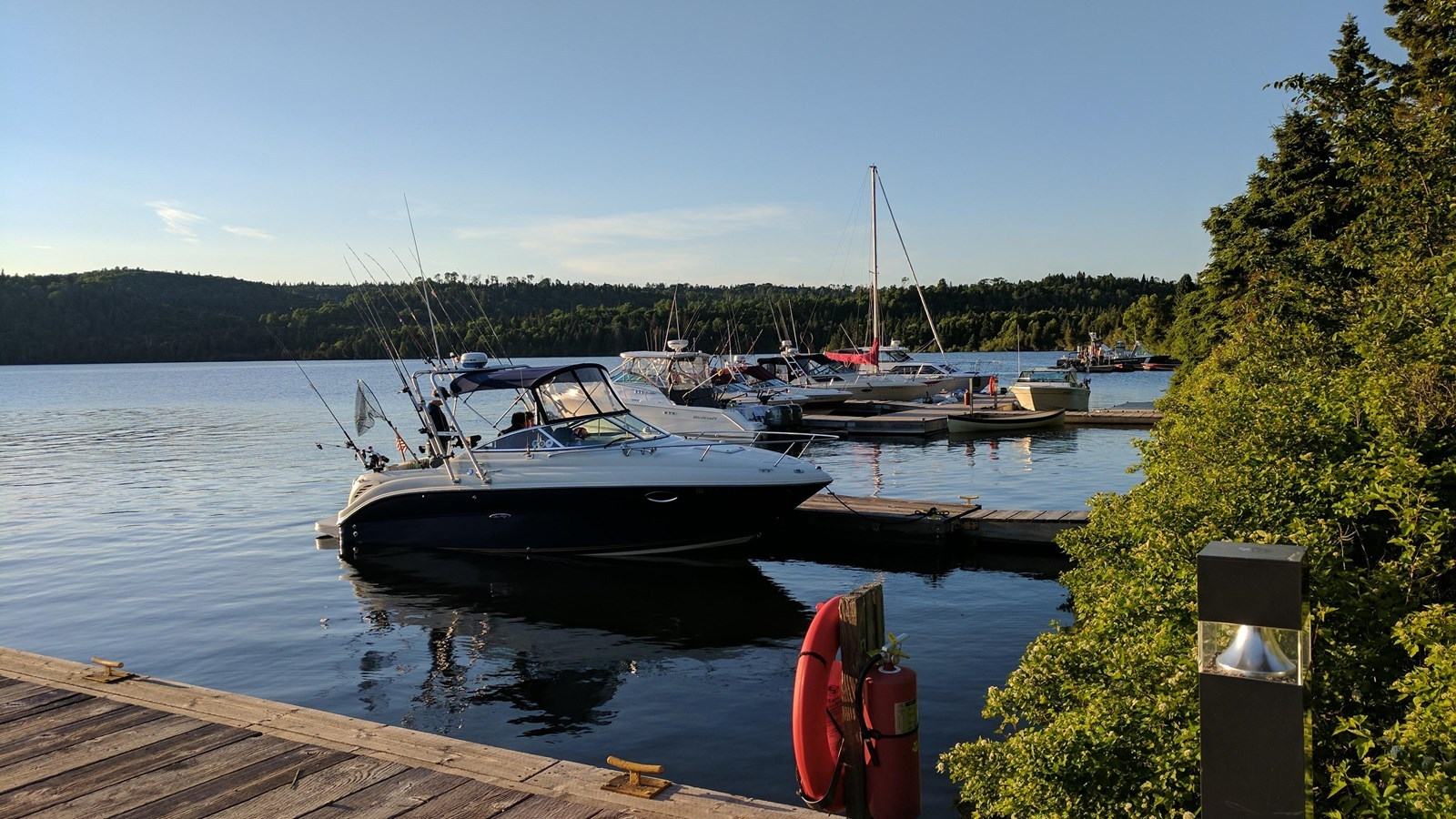
Isle Royale feels like a remote Lake Superior cruising refuge, but overnight permits, restricted docks and quiet-zone operating rules demand careful preparation.
A remote island approached on its own terms
Isle Royale National Park is an unusual destination for a privately owned cruiser or sailing yacht. Reaching the island across Lake Superior is part of the experience, and the sheltered waters, wooded shorelines and simple docks offer a reward quite different from a commercial marina holiday. That sense of remoteness does not remove the need for rules. The National Park Service manages moorings, campsites and sensitive natural areas in a way intended to protect the island's wilderness character.
The park boundary reaches four and a half miles into Lake Superior from the outer islands, or to the international boundary where that is closer. This matters because conduct on the water can fall under park regulations before a crew ever goes ashore. Planning should therefore begin with the park's boating guide and current conditions page, not just a chart showing a deep anchorage.
Overnight visits require advance paperwork
All private boaters staying overnight at anchor, at docks or in campgrounds need an overnight boater permit, and the park says permits should be displayed as directed. Entrance fees also apply, subject to the listed age exemptions and available passes. It is easy to imagine that a yacht remaining afloat does not count as a park overnight visit, but that is not how Isle Royale's rules are written.
The permit requirement should be built into the itinerary well before departure. A crew might plan several sheltered stops, but it must still check what overnight use is lawful at each location. A permit does not grant exclusive possession of a dock or campsite. It demonstrates that the party has complied with the park's management process, while the actual conditions and space remain subject to availability.
A dock is not necessarily a berth reservation
The NPS says most public dock spaces and small-party campsites are first-come, first-served; they cannot be reserved for another vessel. In peak summer months, popular locations may be busy. There are also duration limits and specific rules about campsite occupancy and priority access. Crews accustomed to reserving a marina slip should anticipate a more flexible, self-sufficient approach.
Some Isle Royale docks are for daytime use only, with specified operating hours, and others are closed to the public. Ferry and tour-boat operations also create regular scheduled restrictions at several docks. A chart symbol or a photograph of a pier is not an invitation to tie up overnight. The official boating guide identifies the relevant locations, and operators should recheck it before making a final approach.
Rock Harbor provides a different service level
Rock Harbor Marina provides overnight slip rental with utility hook-ups, distinguishing it from basic wilderness docks. Services such as fuel, water and pump-out may be seasonal. The National Park Service FAQ directs visitors to current conditions for dates and availability and notes that pump-out service is associated with Rock Harbor while concession operations are open, rather than being available everywhere on the island.
The prudent crew arrives with adequate fuel, potable water, provisions and a contingency plan that does not depend on finding a staffed facility at the next stop. Storms may prevent an intended crossing, and a remote island harbour can become busy if several vessels seek shelter at the same time. A conservative range margin is an important element of a relaxed visit.
Quiet zones mean more than travelling slowly
The park has designated quiet and no-wake zones, where vessels must not exceed five miles per hour or create a wake greater than the surrounding seas. These areas are not always marked by buoys, leaving boaters responsible for knowing their locations. The rules help protect small craft, shorelines and the tranquillity that attracts many people to the island in the first place.
Personal watercraft and water skiing are prohibited. Motorised boats cannot use interior lakes and streams, even if an engine is not running. Generator use is restricted by time and location, with different rules at developed sites, anchorages and wilderness docks. These details are especially relevant to motor yachts whose normal hotel systems may be audible to campers or wildlife observers at night.
Keep the island wild from the boat
Pets are not permitted within park boundaries, including aboard visiting vessels, with limited specific provisions for service animals. A dog that stays in the saloon is therefore not a simple workaround. The NPS also places strong emphasis on aquatic-invasive-species decontamination before boats enter park waters, including small non-motorised craft. That responsibility applies to trailers, hulls and associated equipment, not just obvious weeds attached to a propeller.
The best private-boat visit is both well planned and deliberately understated. Make room for weather delays, leave public docks accessible according to the rules, minimise wake and noise and treat the landscape as a place to observe rather than occupy. Isle Royale's solitude is fragile; boating carefully helps preserve the very quality that makes the crossing worthwhile.
Check the official National Park Service Isle Royale boating guide for current access and safety guidance. Hero photograph: National Park Service, boats at Windigo dock on Isle Royale.