
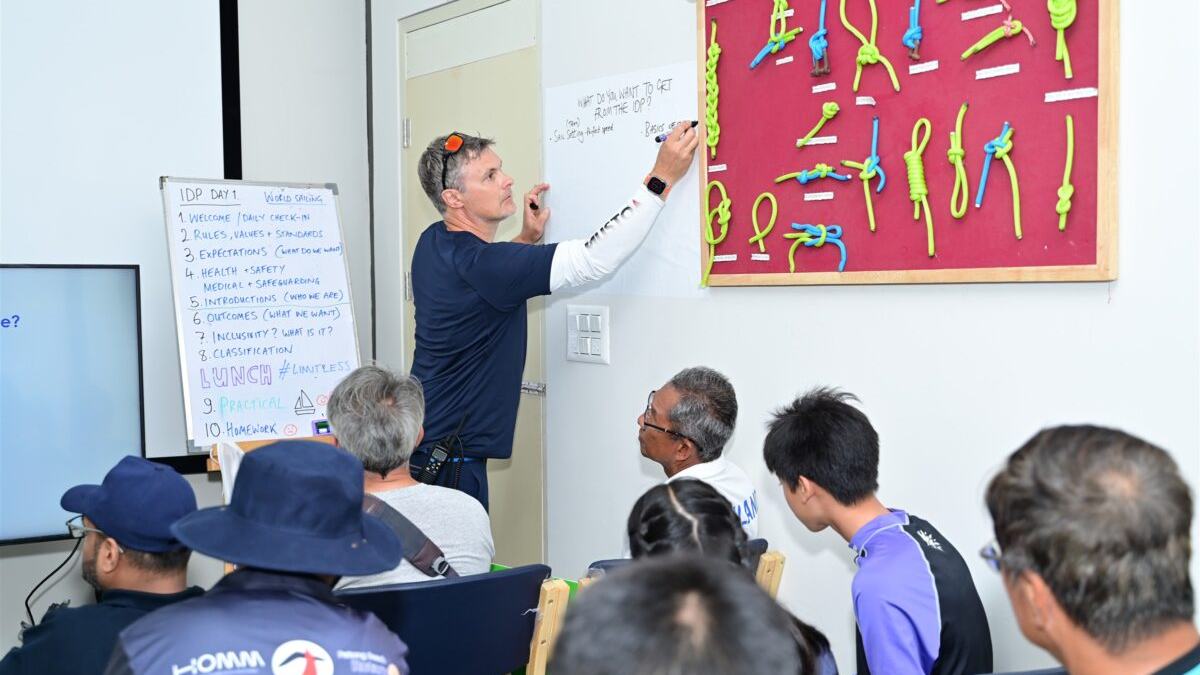
More than 50 sailors, coaches and participants joined World Sailing’s three-day Inclusive Development Programme in India ahead of the 2026 Eurasian Inclusive Cup.
World Sailing’s latest Inclusive Development Programme brought more than 50 people together in India for three days of coaching, learning and on-water development. Hosted by the Royal Mysore Sailing Club, the programme ran ahead of the 2026 Eurasian Inclusive Cup and focused on building practical skills that could continue after the event.
The group included sailors, coaches and other participants interested in Para and inclusive sailing. That combination matters because long-term access depends on trained people around the sailor as well as suitable boats and facilities.
Coaching was part of the inclusion work
The programme covered classification, the future of Para Sailing and coaching approaches intended to support sailors with different needs. Participants then had the opportunity to apply that learning on the water instead of treating accessibility as a classroom-only subject.
For clubs, this is an important distinction because confidence grows through repeated practical experience. A coach who understands how to adapt communication and boat handling can make an ordinary training session accessible without turning it into a special event every time.
Development leads into real competition
Running the programme immediately before the Eurasian Inclusive Cup created a direct connection between learning and participation. Sailors could see that inclusive sailing can lead into organised competition while still remaining valuable as recreation for people who simply want time afloat.
That visible pathway can help clubs retain people after a first taster session. It replaces the vague promise of “more opportunities” with an actual next step that participants can understand and work towards.
Local capability matters most
International development programmes are useful when they leave skills with local organisations that can keep activity going. World Sailing’s approach in India focused on coaches and communities as well as individual sailors, which gives the programme a better chance of creating repeat participation.
For LBG, the wider point is simple: inclusive boating grows when access becomes normal club practice. Small sailing boats can be powerful tools for confidence and independence when the people running the sessions have the knowledge to welcome a wider range of sailors.
Source
World Sailing