
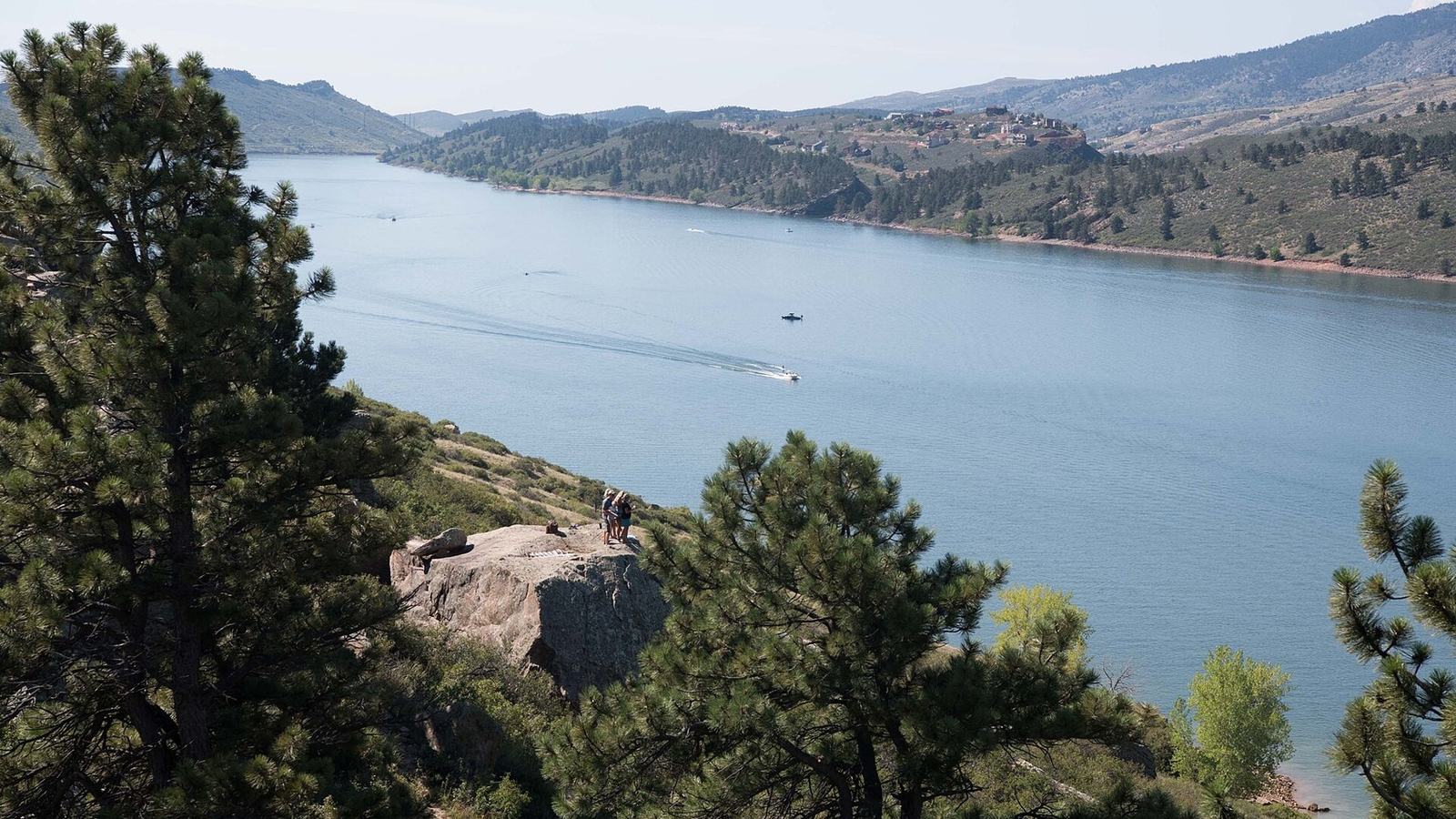
A Colorado small-boat paddling guide to Horsetooth Reservoir, focusing on Lory State Park’s hand-launching, the coves and responsible family outings.
Horsetooth Reservoir near Fort Collins, Colorado, offers an appealing meeting of water and foothill scenery, with a series of coves that can be explored from an appropriately equipped kayak or canoe. Its western shore adjoins Lory State Park, whose official Colorado Parks and Wildlife guidance identifies a hand-launching opportunity near North Eltuck Bay. That makes the area attractive to paddlers seeking a manageable excursion rather than a full-scale powerboat holiday. Yet the reservoir is also busy with larger vessels, and the rules governing boating and invasive-species prevention require attention. The most satisfying outing starts by choosing a sheltered route, arranging valid park access and checking conditions before the boat is carried to the water.
A reservoir beneath the Front Range
The landscape around Horsetooth combines rocky foothills, dry slopes and stretches of open water that feel surprisingly expansive close to Fort Collins. Visitors used to wooded lakes may find its colours and shapes distinctly western: broad skies above the hills, coves tucked into the shoreline and changing shadows as the day advances. A kayak gives the opportunity to observe these features from near the surface rather than from a high viewpoint. The water can also be lively with other recreational users, so the scenery should not distract from keeping watch. It is possible to enjoy an unhurried paddle without travelling far from a suitable launch.
Lory State Park as the starting point
Colorado Parks and Wildlife describes Lory State Park as bordering Horsetooth Reservoir to the east. Its official activities guide says canoeists, kayakers and rafters can hand-launch within a short walk of the North Eltuck Bay parking lot. That is a particularly useful detail for visitors bringing a small portable craft. It is not the same as a full-service boat ramp, and anyone using a heavy kayak should think about how it will be carried from the parking area. The park also has separate facilities and rules for trails and other activities, so it is worth reading the full visitor information before departure. Access and parking arrangements can change with local conditions.
The reservoir has a network of coves
The state park identifies Quarry, Orchard, North and South Eltuck, Soldier and Satanka coves among the places linked to its reservoir access. They provide a more useful way to think about a paddling holiday than simply measuring the reservoir's overall length. Each cove may have different wind exposure, boating traffic and shoreline features, and a visitor should obtain a current map before deciding which area to enter. A novice crew need not attempt every cove in one outing. Choosing a single manageable section allows time for stopping, observing the landscape and returning safely. A cove name on a guide does not establish unrestricted landing access.
Getting the boat onto the water
Hand-launching can be relatively straightforward when a craft is light and the approach is suitable, but a boat that is easy for two adults to lift in a driveway may be awkward on a sloping path. Check whether everyone can carry the kayak and its equipment without damaging vegetation or blocking other visitors. Assemble paddles, flotation and gear before reaching the water, then launch from the location designated or recommended by park staff. A family bringing several boats may benefit from a simple system for loading and unloading so nobody needs to leave gear unattended. A quiet beginning is far preferable to hurrying a launch while other people are waiting.
Boat inspections protect the water
Larimer County's official boating information requires aquatic nuisance species inspections for boats entering Horsetooth Reservoir, and its procedures distinguish between different types of craft. Paddlers should consult the current requirements for their particular kayak or canoe, while anyone bringing a motorboat must understand the available inspection stations and launch hours. The underlying principle is that organisms can spread from lake to lake in damp equipment, hidden cavities and trailers. Clean, drain and dry the hull and accessories before arrival, and do not assume that a previous inspection elsewhere automatically satisfies the local rules. A small-boat holiday is better organised when the relevant inspection and park-access requirements have been checked before leaving home.
The boating season and the clock
Larimer County announced the opening of selected reservoir ramps for the 2026 season on 1 April, but operating arrangements, closures and inspection hours can change during the year. In November, visitors should not assume that summer launch services remain available merely because the reservoir can still be seen from a public road. Check the current county and state park guidance before arranging a trip, especially if transport depends on a particular parking or launch facility. Hand-carried and trailered boats may be subject to different procedures. The calendar date is less useful than actual confirmation of access, inspections and safe conditions for the day intended.
Paddling near motorboat traffic
Horsetooth is used by more than just kayaks, and a small paddlecraft may be hard for a powerboat operator to see against a sunlit shoreline. Paddlers should keep a vigilant lookout, avoid the approach to boat ramps and give commercial or fast-moving vessels enough room to manoeuvre. The size of a reservoir does not create a right to drift into a busy route without regard to other people. If wake is approaching, the crew should be prepared to keep the boat stable and respond with appropriate paddling technique. A route along a quieter shore may be preferable to crossing the broadest section merely for a photograph or to visit a cove visible in the distance.
Wind and weather above the foothills
Colorado's foothill landscape can experience changing wind and weather, and an exposed reservoir may become difficult for small craft even when the outing begins in calm conditions. Kayakers should check the local forecast and look at the water before launching. Wind direction is especially important because a relaxed journey outward can turn into a strenuous headwind paddle on the way back. A planned route should include a conservative turnaround point, with enough time and energy to return without hurry. Avoid committing to an open crossing when a shorter shoreline paddle can offer equally rewarding scenery. If lightning or threatening weather approaches, getting off the water safely takes priority.
Lifejackets are essential equipment
An appropriate and properly fitted personal flotation device belongs on every person in a kayak or canoe. For children, wearing it correctly is particularly important, and adults should demonstrate the same good practice. The crew should also carry drinking water, sun protection, suitable footwear and clothing for the water temperature. A waterproofed phone or other means of contacting help is useful if the route or conditions justify it. Paddlers should understand how to recover after a capsize and how to assist another boat without placing themselves in danger. A beautiful reservoir is not a controlled swimming pool, and a shore that looks close may be much harder to reach after a mishap.
Fishing is an additional reason to visit
Lory State Park's official information highlights fishing access to several of the reservoir's coves, which may appeal to anglers who use small sit-on-top fishing kayaks or canoes. Fishing from a kayak requires a little more organisation than paddling for sightseeing alone. Rods, hooks and landing nets should be secured so they do not interfere with movement or create injuries in the event of a capsize. Visitors must obtain the appropriate Colorado fishing licence and follow current regulations. A quiet cove may also have other paddlers or wildlife nearby, so angling should be conducted with consideration. The presence of good fishing access does not mean every part of the shoreline is open for landing.
Combining the water with a walk
Lory offers a substantial network of trails through hillsides, meadows and rock outcrops, providing a natural alternative when conditions on the reservoir are unsuitable. Visitors can make a mixed day of the park, with a modest paddle followed by a walk or a picnic. This is particularly useful for families whose members have different interests or fitness levels. The trails are not all equivalent in difficulty, so a suitable route should be chosen from the current park map. The most enjoyable plan may include plenty of time on land rather than insisting on remaining afloat if wind or weather reduces comfort. A flexible holiday makes better use of the location.
Picnic stops and shoreline etiquette
Stopping beside a reservoir may be part of the charm, but a kayak should be landed only where access is permitted and safe. Do not push through sensitive vegetation, occupy a busy launching area or block the movement of other boaters. If planning a picnic, carry out all packaging and food waste and keep the equipment secure from wind. Local wildlife should not be approached or fed. The availability of facilities such as toilets and drinking water depends on the park and the access point being used, so checking ahead is sensible. A comfortable shore stop begins with a clear plan and leaves the place as pleasant for the next visitor.
The difference between Lory and other park entrances
Horsetooth Reservoir is associated with several recreational areas and entry points, each of which may have different parking, boating and fee arrangements. Lory's hand-launch access should not be confused with the dedicated powerboat ramp near Satanka Cove that Colorado Parks and Wildlife identifies in its park information. Someone arriving with a roof-carried canoe may have different logistical needs from a trailerable motorboat. Check which agency operates the chosen facility and which permit or entrance fee applies. A single internet map icon marked 'boat launch' cannot resolve those questions. The easiest entry point is the one that suits the actual craft and travel plan.
Invasive-species prevention beyond the ramp
The clean, drain and dry principle should be followed after leaving the water as well as before launch. Small kayaks can retain water inside seat pockets, scupper openings or storage compartments, while paddles and footwear may also carry wet material. An owner planning to visit a second lake during the same holiday needs to know whether another inspection or decontamination process will be required. That can influence the order and timing of destinations. It is worth allowing the craft to dry fully and inspecting the gear carefully rather than simply strapping a wet boat to the roof. Responsible equipment handling helps keep the reservoir and other waters enjoyable for future visitors.
A family outing requires realistic distances
A reservoir can feel very different to a child seated low in a kayak than it does to an adult standing at the shore. Heat, wind, sun and repeated boat wake may make a long outing tiring, particularly for beginners. Choose an easy section close enough to an authorised return point and agree in advance when to turn back. If using a tandem kayak, make sure the adults can handle it comfortably with the planned load. Carry food, water and weather protection, and do not rely on the promise of a distant picnic cove to keep a tired passenger happy. A short paddle that everyone enjoys may be the right way to introduce a family to the area.
Enjoying a place rather than completing a circuit
Horsetooth Reservoir's combination of foothill scenery and accessible coves makes it a rewarding destination for canoeists and kayakers who prefer a measured day on the water. The Lory State Park approach is particularly interesting because its hand-launching arrangement brings paddlers into contact with a less formal section of the lake. The experience still requires attention to local inspections, park access, weather and the presence of larger vessels. The best trip may involve one quiet cove, an unhurried lunch and a walk ashore rather than a complete tour of the reservoir. Good small-boat travel is about choosing a suitable route and enjoying it safely.
Sources and photograph attribution
Official destination and boating guidance: Colorado Parks and Wildlife — Lory State Park Activities and Trails. Current access, rules, weather and reservations must be checked independently before travel.
Photograph: Bureau of Reclamation — “Horsetooth Reservoir, CO (36477738750).jpg” (CC BY-SA 2.0), via Wikimedia Commons. Resized and converted to JPEG for editorial display. Source: https://commons.wikimedia.org/wiki/File:Horsetooth_Reservoir,_CO_(36477738750).jpg. Licence: https://creativecommons.org/licenses/by-sa/2.0. Original rights remain with the credited creator or as specified by the source and licence.
