
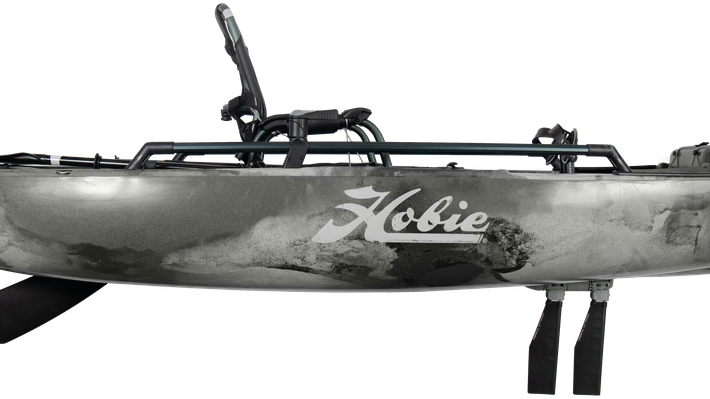
A fishing kayak gives an angler a close relationship with the water but little room for disorganisation. A model such as Hobie’s Mirage Pro Angler 12 illustrates why it matters to keep the deck clear and plan access to the launch.
A fishing kayak gives an angler a close relationship with the water but little room for disorganisation. A model such as Hobie’s Mirage Pro Angler 12 illustrates why it matters to keep the deck clear and plan access to the launch.
A working position afloat
The Pro Angler family is designed around fishing rather than simply adding a rod holder to a recreational kayak. Seating, storage and drive choices should be confirmed for the exact model and year.
A larger platform can carry equipment, yet an overloaded or poorly balanced kayak still handles badly. A trial should establish how the user reaches essentials without losing control.
Choose the launch first
An established slip or beach with a suitable route to the water can save effort compared with extra onboard accessories. Check parking, tides and the way back before travelling.
Coastal current and offshore wind can alter a return journey quickly. A sheltered-water beginner route is preferable to an ambitious crossing.
Keep tackle under control
Store hooks, line cutters and lures in secured containers and keep a landing net accessible. Loose equipment can become a problem during a capsize or hurried return.
Suitable flotation, communication and local fishing permissions are basic planning items. They remain necessary even for a short morning close to the bank.
Finish before fatigue takes over
Leave enough energy to land and move the kayak back to the vehicle without assistance. After use, clean and inspect the drive and hull as the manufacturer advises.
The photograph is Hobie’s official image of the named model. This original feature is an activity guide, not a product test or claimed fishing result.
Official source: manufacturer information. Independently written by Leisure Boat Guide.
Source
Manufacturer